


Raghuram Rajan’s name figures in Clarivate’s list of possible winners of Nobel Prize in economics
Former RBI governor Raghuram Rajan's name figures in this year's list of possible winners of Nobel Prize in economics brought out by Clarivate Analytics.

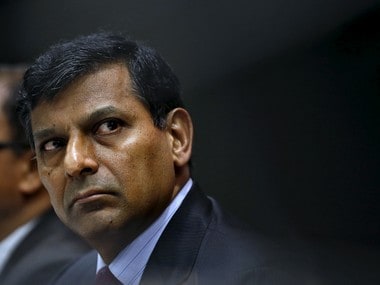
File image of former RBI governor Raghuram Rajan. Reuters[/caption]Giving the list of six possible candidates for the economics Nobel, Clarivate said these were Citation Laureates, standouts whose research is clearly "of Nobel Class" according to its significance and utility, as attested by markedly high citation tallies recorded in the Web of Science.According to information available on Clarivate's website, in the last 15 years, 45 of the selected researchers had gone on to receive a Nobel, nine in the same year in which they were tipped by Clarivate and 18 within two years of the distinction.Rajan's three-year term as RBI governor ended on 4 September, 2016.Exactly one year after his term as RBI governor came to an end, Rajan published a book with his "commentary and speeches" to convey what it was like to be at the helm of the central bank in "those turbulent but exciting times".Rajan, who was considered a vocal RBI Governor, in his book, I Do What I Do, said The demonetisation tool used by the Indian government to drive out black money could have long-term benefits but its short-term economic costs would outweigh them."I was asked by the government in February 2016 for my views on demonetisation, which I gave orally. Although there might be long-term benefits, I felt the likely short-term economic costs would outweigh them, and felt there were potentially better alternatives to achieve the main goal," he wrote.The Indian government undertook the demonetisation drive on 8 November, 2016 by banning high denomination Rs 1,000 and Rs 500 notes.Rajan is said to have predicted the 2008 market crash caused by the housing market crisis in the US that put its economy into deep recession and set off a global slowdown.In 2011, he published the acclaimed Fault Lines on how hidden financial fractures threaten the world economy.He has won the British magazine Central Banking's Central Banker of the Year award for his handling of the rupee crisis in 2013 and bringing back foreign investors to the country.A graduate of the Indian Institute of Technology(IIT), Delhi, Rajan served as visiting professor at Stockholm School of Economics and at Kellogg School of Management.He was also a visiting professor at MIT Sloan School of Management.

J&K cop on Amarnath Yatra duty shot dead in Anantnag terror attack; TRF claims responsibility
Jaishankar meets Canada's Anita Anand, discusses bilateral cooperation and shared interests
Delhi, Bengaluru, Hyderabad... Neet paper leak protest spreads nationwide even as govt reaches out to CJP, Opposition
Why is India seeing 95% cloud cover despite a Super El Niño?
Jaishankar, Rubio review trade, defence, AI cooperation at Manila meeting