
Advertisement


Sections
Lessons from Raisina Dialogue: In a multipolar world, is India truly ready to be a pole?
The second edition of the Raisina Dialogue (held from the 17 to 19 January) tackled the theme of ‘The New Normal: Multilateralism with Multipolarity’.

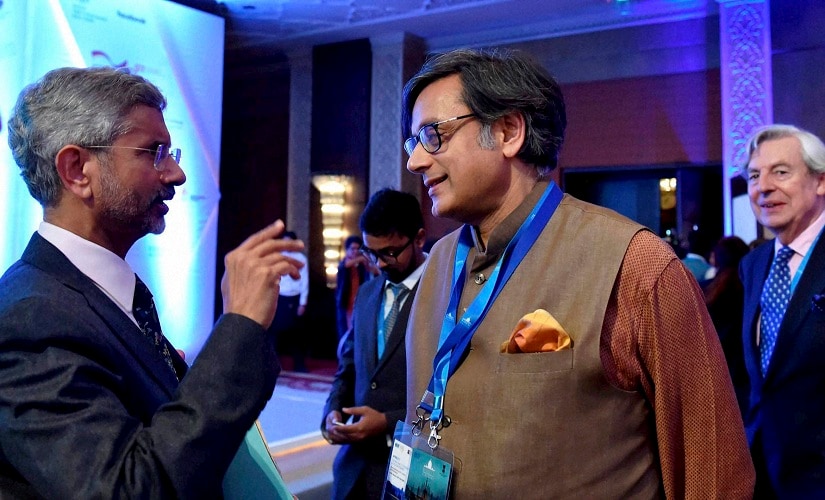 Foreign Secretary S Jaishanker interacting with former external affairs minister Shashi Tharoor at the second edition of the Raisina Dialogue. PTI[/caption]Is India capable of being a pole?Over the course of the Raisina Dialogue, several distinguished speakers ranging from Prime Minister Narendra Modi and Foreign Secretary S Jaishankar to British Foreign Secretary Boris Johnson and Admiral Harry B Harris, the commander of the US Pacific Command, spoke glowingly of India vis-à-vis regional leadership.“We see ourselves both as a source of stability and a key contributor to both growth and security in the region,” said Jaishankar on the second day of the conference. In terms of growth and economic prowess, certainly, India is a regional powerhouse and when it comes to military might — and with the exception of number of nukes in its possession when compared with Pakistan’s arsenal — it is also the regional leader.When it comes to being a key contributor to growth in the region, India has certainly been at the forefront of such regional organisations as Bimstec and the new BBIN grouping that are essentially in place to promote economic development. To address the elephant in the room, Saarc, as Jaishankar pointed out, “has been made ineffective due to the insecurity of one member”. And so, rather than sitting on its hands, New Delhi has been attempting to forge regional relationships through other groupings.And in the process, as Modi noted in his speech to inaugurate the conference, India has helped Afghanistan with reconstructing its institutions and training for its citizens; Bangladesh through initiatives that had been held back by a lack of convergence and political understanding so far; Nepal, Sri Lanka, Bhutan and the Maldives through energy and connectivity projects.Onto the topic of security, India has long harboured ambitions of being a net security provider — something that was articulated in October 2015, as part of the Indian Navy’s strategy document titled Ensuring Secure Seas: Indian Maritime Security Strategy or simply, IMSS-2015.Considering the growing profile and capabilities of the Indian Navy, the document notes its “contributions as a ‘net security provider’ in the maritime neighbourhood, including deployments for anti-piracy, maritime security, NEO (non-combatant evacuation operations) and HADR (humanitarian assistance and disaster relief) operations”.The document adds:“The term net security describes the state of actual security available in an area, upon balancing prevailing threats, inherent risks and rising challenges in a maritime environment, against the ability to monitor, contain and counter all of these.”With an increasing number of naval exercises to improve cooperation with the navies of other countries, participation in HADR operations and anti-piracy operations, India has been moving in the right direction. In summation, having demonstrated its regional leadership, the country certainly ticks the box when it comes to its capability of becoming one of the poles in a multipolar world.[caption id="attachment_3215876" align="alignnone" width="825"]
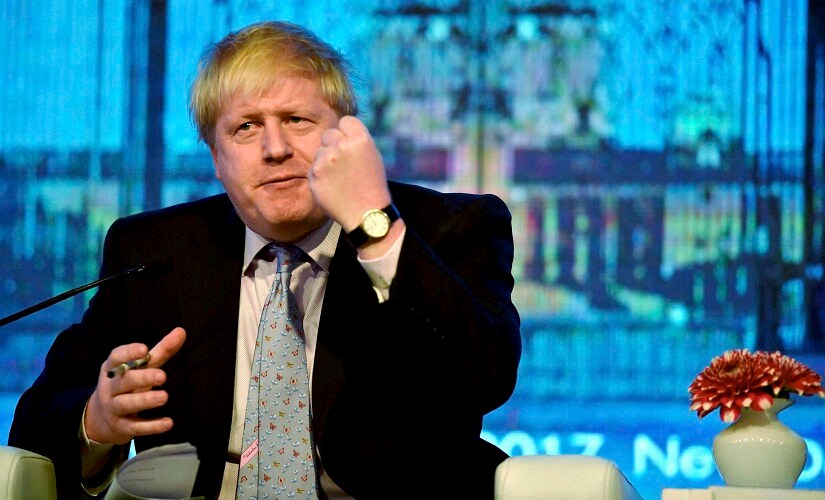 British foreign secretary Boris Johnson speaks at the second edition of the Raisina Dialogue. PTI[/caption]Does India deserve to be a pole? In recent times, India has rarely shied away from projecting its ambitions of growing from a regional to a global power. And if military might was the only metric on which to ascertain whether a country deserves to be a pole, Pakistan would be right up there among the contenders. However, rather than use it to secure the region, Islamabad has primarily (and perhaps exclusively) used this might to antagonise and threaten India. As Raisina Dialogue panelist and outspoken Pakistan-watcher C Christine Fair has noted in the past, even Operation Zarb-e-Azb — Pakistan's crackdown on the Taliban in North Waziristan — has been an eyewash.Fortunately — or unfortunately, depending on where you stand, there are a few more parameters. Security and the economic aspect are certainly important elements, but to be a pole, it is important that the country is seen as stable, responsible and respectful of international law. A variety of speakers over the course of the Raisina Dialogue described India as ‘a source of international stability’. Just as this was a theme that popped up frequently for the duration of the Raisina Dialogue, it is also a theme that will pop up again in a later section of this piece. And in that capacity, India has been a voice of restraint in global fora.Whether it was Russia in Crimea or the expanding Chinese presence in the South China Sea, India has encouraged stakeholders to resolve their differences through dialogue. And when we discuss being a ‘source’ of stability, India’s contribution to UN peacekeeping operations — essentially to lend stability in troubled parts of the world — cannot be understated, with the country having contributed the largest number of troops.When it comes to showing responsibility on the international stage, there are plenty of examples out there. But it’s imperative to look at one in particular. Referred to in some circles as a de facto nuclear power — as opposed to those nuclear powers that are signatories of the Non-Proliferation Treaty — India has never shown any sign of sharing the technology, nor wavered from its ‘no first use’ policy. On a side note, the idea of a de facto nuclear power is frankly strange, since a country either possesses nuclear weapons or does not; there is no grey area. New Delhi’s steadfast refusal to budge from its policy, despite the sort of instigation it has faced from Islamabad, is testament to India’s responsibility.And finally, respect for international law. In July 2014, Bangladesh won a longstanding maritime dispute against India, with a UN tribunal awarding Dhaka nearly 80 percent of the disputed 25,602 square kilometres of the Bay of Bengal. India respected the fact that the judgment was binding and not up for appeal and mobilised to accommodate the contents of the tribunal’s ruling. As a counter-example, compare this with what happened two years later when the Philippines won a case relating to the South China Sea at the UN tribunal against China. In this scenario, Beijing flatly refused to accept the judgment.The above reasons are all buttressed by the fact that four of the five permanent members — it seems somewhat redundant to name the outlier — of the UN Security Council have at one time or another voiced support for India’s inclusion in an expanded permanent membership of the UNSC. Take all these together and what you are left with is a country that very much deserves to be a pole in a multipolar world.[caption id="attachment_3215878" align="alignnone" width="825"]
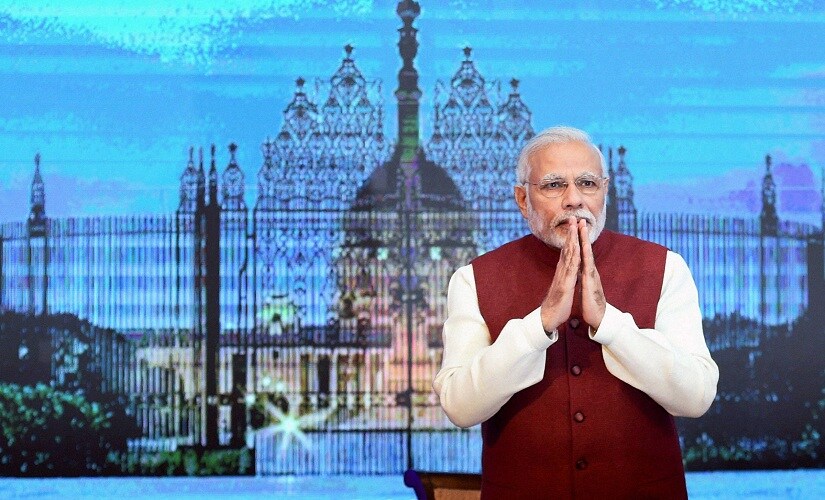 Prime Minister Narendra Modi at the opening session of the Second Raisina Dialogue. PTI[/caption]Is India ready to be a pole?“India’s transformation is not separated from its external context,” said Modi during his speech, adding, “Our economic growth; the welfare of our farmers; the employment opportunities for our youth; our access to capital, technology, markets and resources; and, security of our nation — all of them are deeply impacted by developments in the world. But, the reverse is also true.”To take the concept a little further, India must have stability and security at home to project a sense of stability and security internationally. Unfortunately, India’s progress on certain key indicators has been less than satisfactory. In terms of food security, a most damning statistic is the one that shows that the country has a worse rate of children suffering from malnutrition than even North Korea and a number of Sub-Saharan African countries.The Indian education sector has a long way to go before it can be consistently considered to be high-quality. The gap in standard of living between the wealthy and the impoverished is nowhere close to decreasing. And the fact is that in a city like Mumbai, a large percentage of its 20 million (as per the 2011 Census) residents live in terrible conditions. That the city (and indeed, state) would rather spend crores on a statue in the Arabian Sea than on improving living conditions shows that we are yet to get our priorities in place. While India has a solid track record of conducting free and fair elections, there is no empirical evidence to show that corruption is on the decline. When it comes to safety of women, the less said, the better.And as per the Global Trends report prepared by the US National Intelligence Council titled Paradox of Progress, “the world will look to see how India tames its Hindu nationalist impulses”.It adds, “India’s largest political party, the Bharatiya Janata Party, increasingly is leading the government to incorporate Hindutva into policy, sparking increased tension in the current sizable Muslim minority as well as with Muslim-majority Pakistan and Bangladesh.”
So internally, there’s some room for improvement. But how about on the external front?India’s foreign policy has been a success story for the BJP government that took office in 2014, and has been doing well to cultivate, rebuild and reinforce bilateral and multilateral relations where possible. Unfortunately, far too much of India’s foreign policy focus — as well as the attention of its strategic community — has been on Pakistan. And when it comes to China, India, as former Australian prime minister Kevin Rudd stated, “often views bilateral relations through the prism of what is happening in Pakistan”.This has two implications.The first is that India is allowing the famed 'death by a thousand cuts' strategy to manifest itself, not simply through attacks, but through the capture of its foreign policy bandwidth.The second is that China is able to manouevre effortlessly through getting what it wants in South Asia by unleashing Pakistan on India when required.And so alongside addressing internal issues and factors leading to instability, high on India's priority list should be a reduction in the focus on Pakistan in terms of foreign policy — which will not only allow India to spend more time and effort on working with cooperative partners, but will also send out a firm message to Islamabad. Doing so will help India become a global leader, and not just remain a regional one.But, and to return to the start of the piece, is India ready to become a pole?It's hard to say. Over two-and-a-half days, this question remained unanswered. And with so much uncertainty ahead, perhaps it is safest to say that we will have a definitive answer by the time the next edition of the Raisina Dialogue rolls around.
Author tweets @karanpradhan_
First Published:Jan 23, 2017, 11:17:40 IST
Advertisement
Advertisement

China has dominated Myanmar’s rare earth mines — now India eyes deal to harness country’s critical minerals
India is deepening rare earth cooperation with Myanmar as New Delhi seeks alternative sources of critical minerals dominated by China, including dysprosium and terbium used in EVs, defence systems and clean energy technologies
6 min read
CJP protest in Delhi: New videos of stone pelting, violence emerge as police, agitators trade charges
Fresh videos of violence that broke out during the Cockroach Janta Party's (CJP) protest in Delhi have surfaced, with the police releasing footage showing alleged stone pelting, vandalism and attacks on security personnel
3 min read
'From make in India to launch from India': Skyroot COO on why Vikram-1 could change India’s space sector
Skyroot Aerospace’s successful Vikram-1 mission marks a major milestone for India’s private space sector, as the country seeks to shift from “Make in India” to “Launch from India” and compete in the global commercial satellite launch market
8 min read
Choke terror funding, keep international shipping lanes safe: Jaishankar at Asean Regional Forum
Jaishankar's remarks came against the backdrop of recent terror attacks targeting India and growing threats to commercial shipping amid conflicts in West Asia and Europe
2 min read
PM Modi announces fast-track courts for paper leak cases; CJP responds ‘Dharmendra Pradhan must go’
Amid protests demanding accountability for the leak of medical entrance test Neet and other irregularities in the education system, Prime Minister Narendra Modi has announced that the government has decided to set up fast-track courts to ensure swift and stringent punishment for those involved in paper leaks.
3 min read
Advertisement
Advertisement