


India urges United Nations to impose sanctions on militant organisations carrying out sexual violence
Large scale movements of refugees emanating from armed conflicts increase vulnerability of women to discrimination and exploitation, Paulomi Tripathi said.

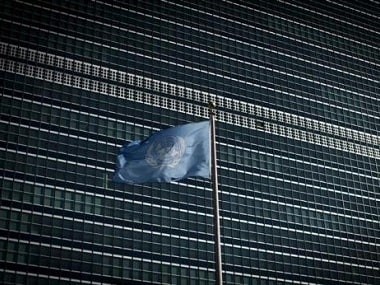
File image of the United Nations flag at the headquarters. Reuters[/caption]Despite these efforts, women's role and perspectives in peace processes remain largely neglected, she said during the UN Security Council open debate on "promoting the implementation of women, peace and security agenda and sustaining peace through women's political and economic empowerment"."Sexual violence, abductions and human trafficking continue to be used as weapons of war in armed conflict by non-state actors and terrorist organisations. Rapidly expanding trans-boundary criminal networks finance terror, supply arms, recruit and train of foreign fighters and destabilise whole regions which disproportionately affect women," she said. "Large scale movements of refugees emanating from armed conflicts increase the vulnerability of women to discrimination and exploitation, she said.Tripathi said India appreciates Secretary General's emphasis and achievement on gender parity in UN's senior leadership. "As the General Assembly focuses on gender sensitive and inclusive development to build peaceful and resilient societies, the Council must push for effective cooperation on countering terrorism that threatens peace and security," she said."The Council must make all efforts to realize the full potential of integrating women, peace and security considerations in sanctions regimes. The sanctions committees of the Security Council need to address the issue of proactively listing terrorist individuals and entities involved in sexual and gender-based violence in armed conflicts," she said. International cooperation for prosecution of criminals engaged in transboundary crimes is important to bring justice to the victims, large number of whom is women and girls, she added.In India, she said the discourse on women's empowerment has progressed from viewing women as beneficiaries of welfare schemes to mainstreaming their concerns and harnessing their leadership for inclusive development. More than 1.3 million directly elected women representatives participate in formulating and implementing gender responsive policies in India.Gender-based budgeting has proved beneficial for mainstreaming of gender perspectives in policy implementation across sectors, she said"India is committed to a higher representation of women in peacekeeping missions and has fulfilled the pledge to have 15 per cent of military observers as women," she said as she cited the example of the landmark first ever deployment by UN of all Female Formed Police Unit in Liberia by India.The deployment became a role model to the local women to participate in policing and in relevant rule of law frameworks. India is also committed to provide another all-female formed police unit," she said.India also fully supports UN Secretary General Guterres' zero-tolerance approach to sexual exploitation and abuse, and strong commitment to achieving gender parity in peace operations, she said."India stands ready to engage with our partners to work towards ensuring the meaningful participation of women and mainstreaming of women, peace and security considerations for building inclusive, peaceful and resilient societies," Tripathi said.

Bharat Forge, Flying Whales sign pact to develop 60-tonne airships for India’s defence logistics
Air India to cut Delhi-Toronto flight time by 3 hours, resume non-stop services from August 1
J&K cop on Amarnath Yatra duty shot dead in Anantnag terror attack; TRF claims responsibility
Jaishankar meets Canada's Anita Anand, discusses bilateral cooperation and shared interests
Delhi, Bengaluru, Hyderabad... Neet paper leak protest spreads nationwide even as govt reaches out to CJP, Opposition