


India should make its own decisions on relationship with Iran, says top US official
India should make its own decisions on the relationship with Iran based on its interests, a top US official has said

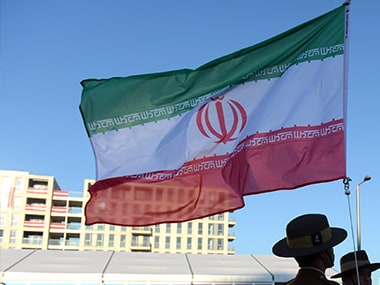
Representational image. Getty Images[/caption]An agreements on the Chabahar port was inked by India and Iran in May 2016 after detailed discussions between Prime Minister Narendra Modi and Iranian president Hassan Rouhani.As per the pact, India is to equip and operate two berths in Chabahar Port Phase-I with capital investment of $85.21 million and annual revenue expenditure of $22.95 million on a 10-year lease. Ownership of equipment will be transferred to Iranian side on completion of the 10-year period or for an extended period, based on mutual agreement."What we're asking is for all countries to take a very hard look at who you're doing business with in Iran and to understand who are the beneficial owners of these companies," the US official said, warning against the business deals with Iran's Islamic Revolutionary Guard Corps-controlled companies.The countries also need to have a look at what is the relationship of these companies with the groups which have contributed to the scourge of terrorism, the official said, referring to the IRGC.Earlier this month, the US slapped sanctions on the IRGC for its alleged support to various terrorist organisations.Countries doing business with Iran also need to ensure that their economic relationships with Iran do not lead to the strengthening of the IRGC in particular and their ability to do so much harm to so many people, the official added.Talks between India and the US in this regard if any are happening through normal channels all the time, the senior administration official said.Trump's Ambassadorial nominee to India Ken Juster, who is awaiting the Senate confirmation process, is "going to just really be a fine representative" who understands the importance that the president places on the US-India ties.And he "is going to do everything he can to advance that relationship to a new level," the official said.Officials from the national security establishment from both the country are in regular contact and discuss a wide range of issues, the official added.This includes, maintaining the non-proliferation regime and the severe danger of weapons of mass destruction and how to "ensure a higher degree of confidence that those" most destructive weapons will never be used.Among other things they also talk about the transnational terrorist threat and how to work together to combat and defeat these enemies of all civilised peoples, the official added."We also talk about geopolitics broadly and geostrategic concerns to ensure that revisionist powers don't advance their interests at the expense of other countries and that we can ensure that all countries have a free and open access to markets," the official said."We talk often in geostrategic terms about the importance of a free and open Indo-Pacific region that allows all countries especially those that are like minded in terms of free and open markets and democratic systems...That all countries in the region enjoy the kind of security and prosperity that they deserve," the official said.

China has dominated Myanmar’s rare earth mines — now India eyes deal to harness country’s critical minerals
CJP protest in Delhi: New videos of stone pelting, violence emerge as police, agitators trade charges
'From make in India to launch from India': Skyroot COO on why Vikram-1 could change India’s space sector
Choke terror funding, keep international shipping lanes safe: Jaishankar at Asean Regional Forum
PM Modi announces fast-track courts for paper leak cases; CJP responds ‘Dharmendra Pradhan must go’