


Generic medicines in India: The myth and the truth behind the healthcare issue
The story of generics versus branded medicine being used to treat patients all over the world is not new.

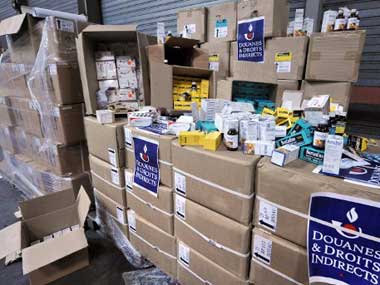
Representational image. AFP[/caption]While in United States, there is a stringent quality control and a serious periodic monitoring of the quality, this is far from truth in India, where to get a drug license through political or bureaucratic connections by corrupt means is as easy as buying vegetables in the market. The drug control mechanisms in India have huge limitations both in terms of availability of manpower and technology. Rampant corruption in the system makes it worse. The other major limitation in our country is the non-availability of qualified pharmacist and dispensers on the medical shops. The pharmacies or the drug shops all across India are largely manned by unemployed and untrained youth or family members. The pharmacist by and large outsources his license and takes his commission out of the contract. Left to them, it could have very serious implications where the technical ingredients of which the dispenser is ignorant could be wrongly dispensed under the huge risk of allergies and side effects. Further, many drug formulations with combinations shall be difficult for the unqualified shopkeeper to deliver.With the mushrooming of pharma companies with incentives, the owner of the drug stores shall be least concerned with the quality of the drug. While it is true that some of the medical professionals have been hand-in-glove with the pharma companies and could have harmed patient interests, by and large a doctor would always like his patient to be cured and would prefer a quality medicine with good bioavailability for primary illness. He may be using certain adjuncts to benefit the company which could always be curtailed by a prescription auditing through the Medical Council. This would certainly be more preferred than leaving patients to the mercy of unqualified drug dispensers. Leaving it to the discretion of the pharmacist could be even more counterproductive. Chemists are unregulated and have no obligations, ethical or commercial for selling products.Regarding the drug pricing, the National Pharmaceutical Pricing Authority can always reduce the maximum retail price and leave very little room for manipulation by the pharma companies. Government could also consider introducing uniform code of marketing for bringing down the cost of medicines.No medical professional would be against the low cost generic, provided it that is a quality drug but it is believed that not more than 1% of generic drugs sold in India undergo quality tests as practiced in USA or Europe. Ensuring availability of uniform quality of generic drugs would facilitate doctors to prescribe them with confidence.If this is ignored it is likely to create a disastrous situation for the common men where his suffering would increase if he is dispensed “cheaper” poor quality generics. The brunt would fall on the have-nots since, the affluent and the powerful would always manage the quality drugs either generic or branded. This has happened in the larger government institutions where the branded medicines were replaced by generics. Remember while comparing generics with the branded medicines, it is just not the content of the ingredient, it is the purity and the concentration producing effective biological levels in the blood.Another fallout of the proposed change would negatively incentivise pharma companies to invest in research and development. Not only will it create huge unemployment issues but will also greatly hamper creation of newer molecules.I strongly urge the concerned authorities to first set their house in order and create a local framework free of corrupt practices to provide quality in generic drug testing and also create stringent process of issuing licenses. Once this is available, the Generics would obviously be as good as the so called branded. That would be a win-a-win situation for everyone.(Dr Ashok Panagariya is Professor Emeritus and former Vice Chancellor of Rajasthan Medical University and a Padma awardee.)

Air India to cut Delhi-Toronto flight time by 3 hours, resume non-stop services from August 1
J&K cop on Amarnath Yatra duty shot dead in Anantnag terror attack; TRF claims responsibility
Jaishankar meets Canada's Anita Anand, discusses bilateral cooperation and shared interests
Delhi, Bengaluru, Hyderabad... Neet paper leak protest spreads nationwide even as govt reaches out to CJP, Opposition
Why is India seeing 95% cloud cover despite a Super El Niño?