


From avian vomitologist, gross stunt testers and snake venom collectors, strange jobs which involve wild animals not only risk them but also humans
From avian vomitologists, langur kidnappers and gross stunt testers, there is more than one strange job in the world which involves wild animals.

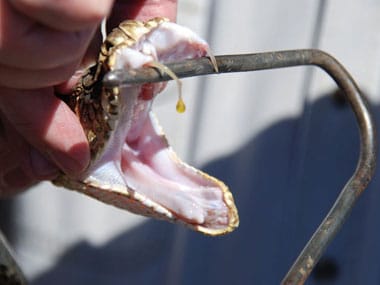
Representative image. Reuters[/caption]Mosquito researchers in Brazil, while fighting malaria, must study the biting habits of the mosquito that spread this deadly disease. In order to study these insects, Brazilian scientists offer themselves as bait. In the early evening, when mosquito activity is the most, a mosquito researcher sets himself up inside a mosquito-netting tent with a gap at the bottom. Mosquitoes fly in and get trapped inside, where the researcher sits. As they bite the legs, he or she draws them into a mouth tube and then into a container, catching up to 500 in at least three hours (which means at least 3,000 bites). Despite precautions, many researchers get malaria.An avian vomitologist is employed by entomology laboratories to collect vomit samples from sick birds, to analyse the avian flu pattern. This means moving through fields and forests in search of vomit.In 2014, the Giant Panda Protection and Research Center, in China's Sichuan, announced its worldwide search for panda cub caretakers. Contenders faced several elimination rounds before getting the job. The ad stated, "Your work has only one mission: spending 365 days with the pandas and sharing in their joys and sorrows."Better that, than working in China’s bear bile centres. Bears have a permanent tube fastened to their gall bladders, and the bile gatherers have to make sure the bile comes out and the bear, though in extreme pain, does not die. The bile is collected in jars and sold for the Chinese medicine industry.Movies, that need insects and bugs, employ a wrangler — someone who grows ants, cockroaches and flies for films and exhibitions. Sometimes they even get exotic insects depending on the movie order. The wrangler directs the insects during filming, by motivating them with food or pushing them away with air, etc. He has trained them to respond.In Thailand, there is a whole industry of jewellery made out of butterfly wings. One can see them on sale at the airport. There are people who actually tear the wings of live butterflies and quickly push them between plastic covers edged with a gold lining. Add a hook and voila – earrings!That is in the same league as snakeskin catchers who pin a live snake to the board and then strip its skin off. This is made into shoes/wallets/handbags for the rich and stupid.Crocodile skinners do the same. Their job is to catch a baby crocodile and tightly shut its mouth. Hammer a nail into the neck which paralyses it and then strip the skin off.For every guy who eats a live grasshopper, on reality shows like Fear Factor and Survivor, there are people who are paid to do the same thing in real life. They are called Gross Stunt Tester and their highly paid job includes doing everything that's gross, like eating worms or cockroaches. The film and television industry employs them to test disgusting items, such as bugs and fluids, to make sure it is safe for others to consume on camera, in order to avoid lawsuits.Professional elephant painters and dressers are hired to paint and decorate elephants during the festivities in Kerala. Sri Lanka has official outfitters for the elephants taking part in festivals. Each elephant has to be measured, and custom made outfits are made for the body, trunk, ears, and tail of the animal. The drapery has to be snug instead of tying it with a rope. The elaborate creations take at least two months to make. The outfits are bought by wealthy families and donated to the temple. Captive elephants are transported across the country to take part in these festivals.Every year, at least ten elephants revolt under the heat of these dresses, the noise and the beating of the mahouts, and run amok. They are either killed immediately or punished for months with beating.Till a few decades ago, leeches were collected to draw blood from patients for therapeutic reasons. Leech-gatherers waded through dense leech-filled areas and allowed them to latch onto their legs and suck, losing tremendous amounts of blood. When they were covered with leeches they waded back and took them off.

J&K cop on Amarnath Yatra duty shot dead in Anantnag terror attack; TRF claims responsibility
Jaishankar meets Canada's Anita Anand, discusses bilateral cooperation and shared interests
Delhi, Bengaluru, Hyderabad... Neet paper leak protest spreads nationwide even as govt reaches out to CJP, Opposition
Why is India seeing 95% cloud cover despite a Super El Niño?
Jaishankar, Rubio review trade, defence, AI cooperation at Manila meeting