


Free news gets harder to find as media organisations look to keep content behind paywalls
For those looking for free news online, the search is becoming harder.

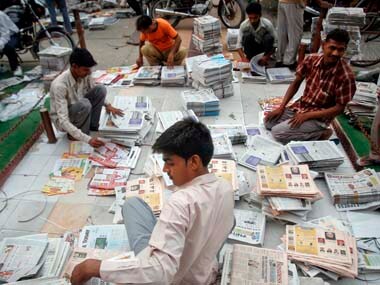
Representational image. Reuters[/caption]The New York Times reported the number of paid subscribers grew to 2.6 million and that subscriptions accounted for 60 per cent of 2017 revenues. The Washington Post last year touted it had more than one million paid digital readers.Not surprisingly, the Times and Post have both tightened their online paywalls by limiting the number of free articles available. Similar moves have been made at The Boston Globe, Los Angeles Times and elsewhere. Magazines such as Conde Nast's Wired and The New Yorker also introduced new online pay models that limit free content. The Atlantic, a media group bolstered by an investment from Laurene Powell Jobs, said this month it is experimenting with various subscription models as it expands.Ad blockers used by some consumers have caused deeper revenue woes for online news. One site, Salon.com, told its readers that if they used ad blockers, their computers would be used to mine cryptocurrency to offset the lost ad revenues.While well-known national publications may be able to navigate digital pay models, it will be harder for smaller, regional and local news organisations on slimmer budgets, said Radcliffe. "Smaller local organizations might find it harder to make their case to readers (to pay), and they have a smaller pool of customers," Radcliffe said.Facebook and Google recently agreed to help support paywalls for news organisations on their platforms, and Apple agreed to waive its commission for subscription sign-ups from the big social network on its devices, according to Facebook's Campbell Brown.These moves could be positive for news organizations after years of tensions with online platforms, according to Lieb. "This means (online platforms) are trying to work for instead of passively against publishers," Lieb said. "This is important because search and social are the way people discover news in the digital age."According to a study by Digital Content Next — formerly known as the Online Publishers Association — news organisations only got around five percent of their digital revenues from the dominant online platforms but accounted for close to 30 percent of the content viewed.The paywall trend may have some other consequences by limiting national "conversations" based on shared news."Content that is behind a paywall does not go viral," Lieb said, but noted that important news scoops can still spark national discussion. Strict paywalls may also lead to a greater "digital divide" with a segment of the population having access to high-quality news, analysts note. "From a journalist's perspective, the big game is to be important to the community," said Rick Edmonds, a media business analyst at the Poynter Institute.Radcliffe said that with more news behind a paywall, "some people might not be able to access important content. There is a risk those audiences don't get access to the range of information and journalism they need to stay informed in the current era."

J&K cop on Amarnath Yatra duty shot dead in Anantnag terror attack; TRF claims responsibility
Jaishankar meets Canada's Anita Anand, discusses bilateral cooperation and shared interests
Delhi, Bengaluru, Hyderabad... Neet paper leak protest spreads nationwide even as govt reaches out to CJP, Opposition
Why is India seeing 95% cloud cover despite a Super El Niño?
Jaishankar, Rubio review trade, defence, AI cooperation at Manila meeting