


Former liquor baron Vijay Mallya loses leave to appeal against extradition in UK Supreme Court
Vijay Mallya on Thursday lost his application seeking leave to appeal in the UK Supreme Court, in a setback for the embattled liquor baron who last month lost his High Court appeal against an extradition order to India on charges of fraud and money laundering related to unrecovered loans to his now-defunct Kingfisher Airlines

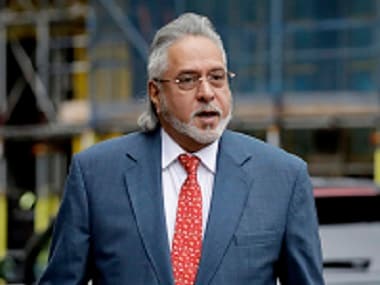
File photo of Vijay Mallya. PTI[/caption]“The court having signified its intention to refuse to certify a point of law of general public importance with a view to an appeal to the Supreme Court,” notes the pronouncement by Lord Justice Stephen Irwin and Justice Elisabeth Laing, the two-member bench at the Royal Courts of Justice in London presiding over the appeal.It sets the 28-day “required period’, as defined by Section 36 and Section 118 of the UK Extradition Act 2003, within which the extradition must be carried out.The UK Crown Prosecution Service (CPS) said Mallya’s appeal to certify a point of law was rejected on all three counts – of hearing oral submissions, grant a certificate on the questions as drafted, and grant permission to appeal to the Supreme Court. The government of India response to the appeal application had been submitted earlier this week.Earlier on Thursday, Mallya took to Twitter to reiterate his plea for the Indian government to take the money owed to the Indian PSU banks."Please take my money unconditionally and close," he said.The leave to appeal to the Supreme Court is on a point of law of general public importance, which according to experts is a very high threshold that is not often met.As a further step, in principle, Mallya can also apply to the European Court of Human Rights (ECHR) to prevent his extradition on the basis that he will not receive a fair trial and that he will be detained in conditions that breach Article 3 of the European Convention on Human Rights, to which the UK is a signatory.The extradition process would be held up if such an application is made to the ECHR and until it is decided.However, the threshold for an ECHR appeal is also extremely high, with very limited chance of success in Mallya’s case because he would also have to demonstrate that his arguments on those grounds before the UK courts have been previously rejected.Therefore, the dismissal of the High Court appeal last month and the rejection for a further leave to appeal this week marks a major turning point for the Central Bureau of Investigation (CBI) and Enforcement Directorate (ED) case against the businessman, who has been on bail in the UK since his arrest on an extradition warrant in April 2017.“We have held there is a prima facie case both of misrepresentation and of conspiracy, and thus there is also a prima facie case of money laundering,” Justices Irwin and Laing had ruled last month.Mallya, declared a fugitive by India, has been based in the UK since March 2016 and remains on bail on an extradition warrant executed three years ago by Scotland Yard on 18 April, 2017.The High Court verdict in April upheld the 2018 ruling by Chief Magistrate Emma Arbuthnot at the end of a year-long extradition trial in December 2018 that the “flashy” former Kingfisher Airlines boss had a “case to answer” in the Indian courts.She found there was “clear evidence of dispersal and misapplication of the loan funds” and accepted a prima facie case of fraud and a conspiracy to launder money against Mallya, which has now also been accepted by the High Court.The Chief Magistrate had also dismissed any bars to extradition on the grounds of the prison conditions under which the businessman would be held, as she accepted the Indian government’s assurances that he would receive all necessary medical care behind bars at Barrack 12 in Arthur Road Jail in Mumbai.India and the UK have an Extradition Treaty signed in 1992 and in force since November 1993. Two major extraditions have taken place under this Treaty so far – Samirbhai Vinubhai Patel, who was sent back to India in 2016 to face trial in connection with his involvement in the post-Godhra riots of 2002, and more recently alleged bookie Sanjeev Chawla, sent back in February this year to face match-fixing charges.

J&K cop on Amarnath Yatra duty shot dead in Anantnag terror attack; TRF claims responsibility
Jaishankar meets Canada's Anita Anand, discusses bilateral cooperation and shared interests
Delhi, Bengaluru, Hyderabad... Neet paper leak protest spreads nationwide even as govt reaches out to CJP, Opposition
Why is India seeing 95% cloud cover despite a Super El Niño?
Jaishankar, Rubio review trade, defence, AI cooperation at Manila meeting