


Explainer: Supreme Court orders settlement of Ayodhya dispute through mediation; expect report in 8 weeks
The Ram Janmabhoomi-Babri Masjid dispute in Ayodhya saw a new development on Friday after the Supreme Court appointed a mediation panel in an effort to resolve the decades-old conflict 'outside the court'.

According to reports, if a consensus is reached in the upcoming round of mediation in the Ayodhya issue, the Supreme Court might consider passing the mediator’s formula as a formal court decree. In such a scenario, the panel will submit a consensus report at the end of the prescribed eight weeks.Alternately, in the case the panel fails to reach consensus, the three-member team will submit a concluding report to the referral court, in this case the Supreme Court. The apex court is expected to continue hearings in the case until it reaches a verdict, CNN-News18 reported, with no specification of a deadline.[caption id="attachment_6222541" align="alignleft" width="380"]
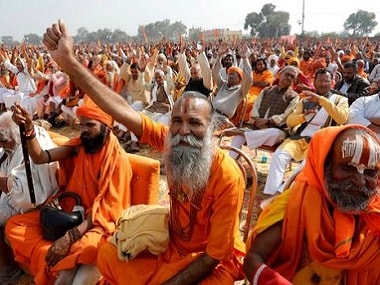
Representational image. Reuters[/caption]What is a mediation?Mediation refers to a method of resolving disputes without involving the court. It is a monitored, "voluntary and interactive" negotiation process during which a supposedly objective third-party guides the conflicting parties to reach a conclusion to the dispute amicably, using "specialised communications and negotiation techniques".The option of mediation can be used by courts under the Code of Civil Procedure which makes provisions for various scenarios in which mediation may be required. According to reports, the Supreme Court could have chosen to order mediation in the Ram Janmabhoomi-Babri Masjid issue under Section 89 of the code, which mandates the consent of all the parties.
However, because a faction of the Hindu Mahasabha was opposed to the mediation process, the Supreme Court relied on the mediation rules under a 2003 provision of the code, which allows the court to refer the case for mediation even though the parties don't agree with referrence to the process.The three-judge bench of the Allahabad High Court, too, had tried mediation, The Indian Express reported. "After arguments concluded on 3 August, 2010, the Bench had called all lawyers into the chamber and asked whether they wanted to reconcile. The process had collapsed apparently after the ‘Hindu’ side said it was not acceptable," the report said.An agreement reached by the mediation panel is enforceable as a judgment of the court, News18 reported. A "court-annexed mediation" refers to mediators and guidance provided to the parties from the court as part of the judicial system. The same lawyers who appeared in the case represent the parties in the process of mediation.How will mediation process work in Ayodhya case?
The mediation process is scheduled to begin a week from Friday, for which the panel of mediators have to ensure the participation of the parties and their lawyers. The panel members will introduce themselves and present their qualifications, after which the parties will be allowed to make their cases. The petitioners can lay out their conditions regarding the case themselves, after which the counsels will explain the legal arguments from the respective sides.With a view to create an atmosphere conducive to settling the dispute, the News18 report says that the "mediator also holds separate sessions", which "provides the parties with a forum to further vent their feelings and disclose confidential information they do not wish to share with the other parties."Case so farThe Supreme Court reserved its verdict on the question of mediation on Wednesday, however, on Friday the Constitution bench appointed a three-member mediation panel and gave it eight weeks to come to a conclusion on the issue. The panel is to be headed by former Supreme Court judge FM Khalifullah, and have spiritual guru Sri Sri Ravi Shankar and lawyer Sriram Panchu as the other two members.The bench, also comprising justices SA Bobde, DY Chandrachud, Ashok Bhushan and SA Nazeer, said the mediation proceedings will start within a week from Friday and they will be held in-camera. No media, neither print nor electronic, will report its proceedings. The bench also said that mediation proceedings will be held at Faizabad in Uttar Pradesh and directed the state government to make necessary arrangements for it.On Wednesday, the bench had reserved the order after hearing various contesting parties. Hindu bodies, except Nirmohi Akhara, had opposed the apex court's suggestion to refer the issue for mediation, while Muslim bodies had supported it. The bench had concluded the hearing by asking stakeholders to give the names of possible mediators.With inputs from agencies

China has dominated Myanmar’s rare earth mines — now India eyes deal to harness country’s critical minerals
CJP protest in Delhi: New videos of stone pelting, violence emerge as police, agitators trade charges
'From make in India to launch from India': Skyroot COO on why Vikram-1 could change India’s space sector
Choke terror funding, keep international shipping lanes safe: Jaishankar at Asean Regional Forum
PM Modi announces fast-track courts for paper leak cases; CJP responds ‘Dharmendra Pradhan must go’