


Earth Day 2019: A reading list to better understand the climate change crisis facing India
Occasions like Earth Day provide an opportunity to reflect on the current state of the environment, and what we can do to improve it. What is the environmental reality that faces India? From an impending water crisis to waste segregation and climate change’s effects — what are the issues we need to tackle head on? What hope do we have of, combating them?

Occasions like Earth Day provide an opportunity to reflect on the current state of the environment, and what we can do to improve it. What is the environmental reality that faces India? From an impending water crisis to waste segregation and climate change’s effects — what are the issues we need to tackle head on? What hope do we have of, combating them?Over the past year, Firstpost’s reportage on environmental issues has attempted to answer some of these questions. Want to get up to speed with the burning issues? Here’s a reading list from our archives, pegged to Earth Day 2019:INDIA’S WATER CRISISUndoubtedly, the water situation of India, which asks about a fifth of the world’s population to survive on less than 1/30th of the world’s water, is precarious.In the future, it’s going to get a lot worse. India’s population is growing, getting wealthier, and — oh yes — the climate happens to be changing. The water crisis will worsen, if we neglect the management of our water. This four-part series lays out the problem, case studies, policies — and possible solutions.In part I — India's water future threatened by the combined effect of climate change and rising demandPart II — Lessons from Madurai, a city that adopted tanks and suffered after abandoning themPart III — Tracing India’s history of water management and crucial, destructive shifts in policyPart IV — Why voters don't care about water management — and how that can change***[caption id="attachment_6488961" align="alignnone" width="825"]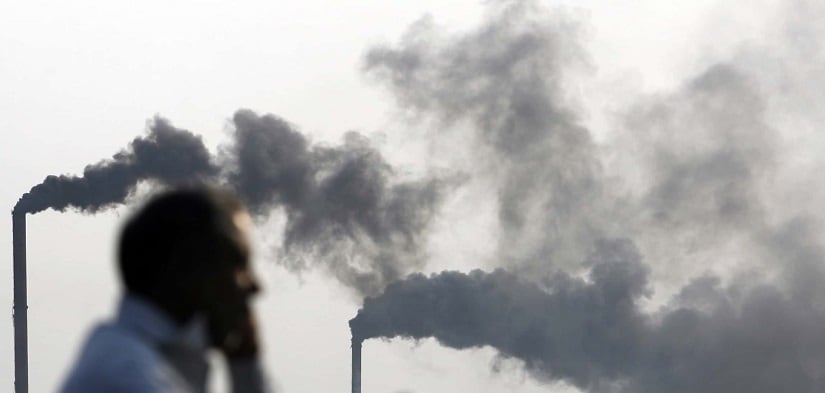 Occasions like Earth Day provide an opportunity to reflect on the current state of the environment, and what we can do to improve it. Image for representation only. REUTERS/FILE PHOTO[/caption]CLIMATE CHANGE AND INDIAClimate change is taking India down a path that does not bode well. India is especially vulnerable because it is relatively “poor”, quite hot, quite dry, and has a large group of people working in agriculture.First, let’s consider the past through five pieces of data, the present political context, and three important events in 2019 that will be central to climate change and India. Read the report here.Second, let’s look at what a World Bank study says about climate change consequences for South Asia, and more importantly — will India be able to act on it in time?Third, we’ll examine the phenomenon of heat waves in India: a scorching indication of where inaction on climate change crisis will lead.And lastly, a report on how climate change will worsen the power imbalances that hurt women.***WHAT INDIA NEEDS TO KNOW ABOUT WASTE MANAGEMENTEvery day, Indian cities generate about 1,50,000 tonnes of solid waste. This waste ends up in landfills, lines our streets, smothers our drains and chokes our water ways. This is a big number — that’s like 50,000 elephants marching into our landfills, streets and drains every single day. To provide perspective, this is twice the number of actual elephants India has! Waste is a big problem, and a serious one too.One might say solid waste plays a laughably small role in warming the planet. And that person would be right. Waste management, mostly as methane from landfills, accounts for about 3 percent of annual global greenhouse gas emissions.But managing our waste represents probably one of the single strongest adaptive actions against a warmer climate. And given the anaemic progress we are making in halting our warming emissions, we would do well to adapt.Let’s look at some of facets of this problem:Harnessing the ‘monster’ — Solving the waste problem requires us to treat it like a resourceWaste management could generate six lakh jobs in India; can Bengaluru show the way?With dengue on the rise, waste management is first step in winning war against the diseaseManagement and segregation is way forward, not ban on plastic***Want to read more of our detailed environmental reportage? Click here.

Air India to cut Delhi-Toronto flight time by 3 hours, resume non-stop services from August 1
J&K cop on Amarnath Yatra duty shot dead in Anantnag terror attack; TRF claims responsibility
Jaishankar meets Canada's Anita Anand, discusses bilateral cooperation and shared interests
Delhi, Bengaluru, Hyderabad... Neet paper leak protest spreads nationwide even as govt reaches out to CJP, Opposition
Why is India seeing 95% cloud cover despite a Super El Niño?