


Weekly Defence Dispatch: Atmanirbhar push, DRDO missile test, Pacific Command revival and more
As global fault lines shift and priorities evolve, India’s military modernisation is accelerating on multiple fronts. Firstpost tracks key developments in the defence sector across indigenous weapons production, long-range strike capabilities, and strategic partnerships

As global fault lines shift and priorities evolve, India’s military modernisation is accelerating on multiple fronts. Firstpost tracks key developments in the defence sector across indigenous weapons production, long-range strike capabilities, and strategic partnerships—from the army’s growing use of kamikaze drones and the Coast Guard’s first indigenous hovercraft patrol boat to renewed momentum in the BrahMos ecosystem and DRDO’s latest missile tests. This week, we also examine what the return of the US Pacific Command revival signals for the Indo-Pacific and why these developments matter.
Aatmanirbhar push: Defence production jumps 15.6% to hit record high in FY 2025-26
India's defence production has hit a record Rs 1.78 lakh crore in 2025-26, a 15.6 percent rise over the previous year and nearly a jump of 110% in 5 years.
As reported earlier by Firstpost, the jump is not just tied to a single deal but result of a decade of steady policy push. Indigenous defence production has nearly quadrupled from Rs 43,746 crore in FY2013-14 to Rs 1.78 lakh crore in FY2025-26, as per Defence Ministry data.
 More from India
Government-owned defence companies still make most of what India produces, but private firms are steadily catching up. Their share of total output has grown to nearly a quarter, slightly higher than last year. That growth has spilled over into exports too, with India selling a record amount of defence equipment abroad this year and more companies exporting than ever before, to over 80 countries.
Another key driver has been the growing maturity of India’s indigenous weapons programmes. India has also expanded domestic production across missiles, naval warships, armoured vehicles, ammunition, radars and electronic warfare systems. This has helped increase the overall value of indigenous output.
Why this matters: The real story here is sovereignty, not sales. A decade of investment in domestic production means India can arm and rearm on its own timeline, without waiting on an import queue or a supplier's political mood. This independence matters more now than in years, with global military spending hitting record in 2025, as states everywhere respond to a more dangerous world with bigger armament drives.
The Bottom Line: Exports are the harder test here than production value, since foreign buyers are choosing Indian systems on cost and performance, not government mandate, and Rs 38,424 crore in exports this year says something real about the competitiveness of India's defense ecosystem.
01 INDIA DEFENCE UPDATES
Navy set for rare triple commissioning in Kolkata, BrahMos frigate among them
Indian Navy is all set to commission INS Dunagiri, INS Agray and INS Sanshodhak together at the Garden Reach Shipbuilders and Engineers yard in Kolkata on 21st June. The ceremony will be presided over by Prime Minister Modi. It is only the second time in recent years that three major warships have entered service in a single ceremony. The previous instance was the joint commissioning of the destroyer in 2025.
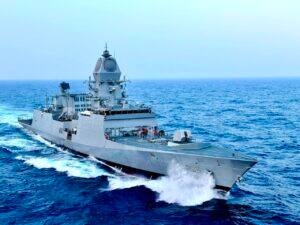
● INS Dunagiri carries the BrahMos missiles along with a combined diesel or gas propulsion system.
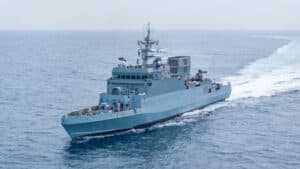
● INS Agray is built for shallow coastal waters and is fitted with lightweight torpedoes, indigenous rocket launchers and dedicated shallow-water sonar.
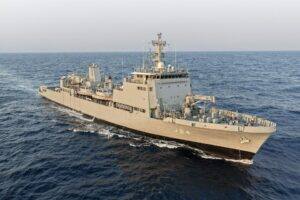
● INS Sanshodhak is a hydrographic survey ship that will be critical to improve maritime domain awareness. It is equipped with autonomous underwater vehicles for hydrographic mapping, and ability to take on search and rescue roles.
Why it matters: The latest additions strengthen three critical areas - offensive firepower, anti-submarine warfare and gathering underwater intelligence. By pairing a shallow-water hunter like Agray to guard coastal entry points with a heavy-hitter like Dunagiri to extend deep-sea strike ranges, India is tackling multi-front maritime challenges simultaneously.
It is also a Atmanirbhar Bharat milestone, showcasing India’s growing ability to design, build and equip complex warships domestically. India is aiming to be fully self-reliant in naval shipbuilding by 2047 with around 60 warships currently under various stages of planning and development across Indian shipyards. For Garden Reach Shipbuilders & Engineers Ltd, this commissioning of three diverse vessels is also a demonstration that it has matured from being a shipbuilder specialising in corvettes and other smaller naval platforms. This push towards self-reliance extends beyond shipbuilding. In another boost to indigenous naval capabilities, the Ministry of Defence recently signed a Rs 425-crore contract with an Indian firm to develop and supply gas turbine power plants for Navy warships, reducing dependence on foreign propulsion systems.
The Bottom Line: This rare triple commissioning underscores the speed at which India is trying to counter China's expanding naval footprint, and growing submarine patrols across the Indian Ocean region. It is a message that India is shifting focus from coastal defence to sustained regional maritime presence in the Indian Ocean.
Russia Eyes Brahmos as India Ramps Up Production At Home.
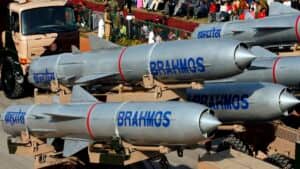
For three decades, BrahMos was held up as the ultimate symbol of Russia-India defence cooperation. But this week, three developments suggested the relationship may be entering a new phase. BrahMos Aerospace has revealed that Russia is keen to induct the BrahMos missile into its own armed forces, and that India will be manufacturing these systems soon for Russia. Despite being a joint venture, Russia has never actually inducted BrahMos into its armed forces in all these years. It had initially supplied the original P-800 Oniks technology base, but never saw a reason to actually buy BrahMos. Earlier plans to induct BrahMos into the Russian armed forces never really materialised. Russia's interest, however, peaked following India announcing likely export deals for BrahMos with countries like the Philippines. Meanwhile, two other milestones in the BrahMos story happened this week. The flagging off of the 100th indigenous BrahMos booster from Nagpur and the delivery of the first indigenous BrahMos warhead by a private sector firm, Solar Defence.
The big picture: For years, key BrahMos components such as boosters were imported from Russia. What has changed today is that BrahMos is no longer simply repackaged Oniks. Over 25 years, India has invested heavily in guidance, extended range, air-launch capability and next-generation versions. The missile has evolved into a distinct weapon system. Indian private industry has also steadily taken over some aspects of production. The 100th indigenous booster milestone marks how quickly that transition has occurred, with output reportedly scaling from one booster a month to around 60.
Why it matters: Taken together, the three developments tell a larger story. What began as a joint India-Russia missile programme mainly dependent on Russian components is steadily evolving into an Indian-led manufacturing ecosystem with growing indigenous content, private-sector participation and export ambitions.
To learn more about this weapon system, you can watch Firstpost's documentary on why the BrahMos remains highly lethal.
What to watch: Vietnam is nearing a BrahMos deal, and work continues on next-generation variants. India is no longer just operating BrahMos, it is becoming the global production hub for a frontline cruise missile that's tried and tested.
DRDO tests its new long-range land attack cruise missile
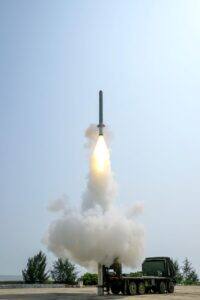
DRDO flight-tested its Long Range Land Attack Cruise Missile off the Odisha coast on June 15. This was not the missile's first outing. DRDO had run the LRLACM's maiden flight test in November 2024 from a mobile articulated launcher, and this trial builds on that baseline. The missile validates critical technologies tied to India's long-range precision strike capability. Every sub-system is built in-house by DRDO and Indian industry partners.
Why it matters: The LRLACM gives the military a long-range option to launch precise strikes from a distance. A cruise missile that is India built end to end, propulsion included, also cuts reliance on imported systems for a strike role the country has had to fill through other means so far. A successful second test after the 2024 maiden flight suggests the programme is moving past proof of concept toward something closer to induction.
02 PROCUREMENT AND INDUSTRY TRACKER
Army Inducts 106 jet-powered Kamikaze Drones
Defence manufacturer SMPP has completed delivery of 106 kamikaze drones that will be of immense help for the Army. The 100 drones plus 6 training UAVs have been procured under the Army’s emergency procurement programme. Low-cost drones and loitering munitions have emerged as critical force multipliers in modern conflicts, as seen in the Ukraine-Russia war. SMPP is just the latest among private Indian manufacturers who have been working on kamikaze drones. Indian Army recently received 480 loitering munitions made by a Nagpur-based Solar Industries.
SMPP says the Peacekeeper has a range of around 180 km, a top speed of up to 450 kmph and a 10-kg warhead. It is designed to hit command posts, radar stations and logistics nodes well behind enemy lines while resisting GPS-denial and electronic attack.
The induction also comes as SMPP has partnered with European defence major KNDS to manufacture advanced loitering munitions in India.
Why it matters: Traditional cruise missiles and deep-strike assets are incredibly expensive, and India’s procurement delays are notorious.This induction shows how the Army is bypassing these limitations to acquire some heavy-hitting munitions for rapid wartime mobilization. The story is not the 106 units delivered, but how fast they arrived.
Kalyani Strategic Systems Unveils New 155mm Mounted Gun Series at Eurosatory 2026
Kalyani Strategic Systems, Bharat Forge's defence arm, showed its new MArG artillery series at Eurosatory 2026 in Paris on 15th June. There are three variants on the same 4×4 truck base with each built for a different mix of mobility, range and firepower. All three guns can fire standard 155mm precision guided rounds. They are equipped with advanced fire control systems that help engage enemy artillery, strike targets at long distances and provide support to troops on the battlefield.
Why it matters: This is Bharat Forge’s lighter wheeled gun alongside its tracked K9 Vajra. Showing it in Paris is part of India's bigger push under Atmanirbhar Bharat to export weapons, not just build them at home.
Coast Guard Inducts First Indigenous Hovercraft Patrol Boat
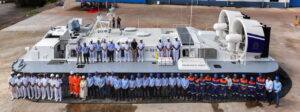
The Indian Coast Guard inducted the first of six indigenously built Air Cushion Vehicles, at Chowgule & Company's shipyard in Goa on June 18. Hovercraft solve a problem ordinary patrol boats can't. They can move across water, mudflats, sandbanks and even onto land itself. That makes them important for India's coastal stretches, especially for the Gulf of Kutch and the Sunderbans.
Why it matters: India has actually had British hovercraft since the 1980s. But it eventually ran into the classic import problem of tough maintenance. A UK built hull meant a UK dependent supply chain for every part that breaks. Localising production at Chowgule closed that loop.
Army clears MEPRO X6 sights for NEGEV guns, BEL to lead production
The Army has cleared the MEPRO X6 telescopic sight for use on NEGEV light machine guns, with Bharat Electronics set to lead indigenous production of the optic, expected to improve target acquisition and engagement at extended ranges. A better sight on an existing weapon looks like a minor line item next to a tank or missile deal, but for infantry units it is the difference between engaging a target at 300 metres or 600. Routing production through BEL keeps that capability inside India's own supply chain.
03 INTERNATIONAL DEVELOPMENTS
The return of US Pacific Command

The US Department of War has officially stripped the word "Indo" from its largest military command, reverting it back to its original name, the U.S. Pacific Command. As Firstpost reported earlier this week, this semantic shift signals a major strategic pivot under the Trump administration. The command was established in 1947 and carried the PACOM name for over 70 years before the 2018 rebrand. The 2018 rebranding had an India angle of increased connectivity between the Indian and Pacific Oceans. But this week's reversal swaps that rationale. The renaming indicates a transition away from a broad, interconnected oceanic strategy to a much sharper, narrower focus on immediate challenges in the Western Pacific, particularly regarding China, Taiwan, the Philippines, and Japan.
Why it matters: As Firstpost’s Sreemoy Talukdar writes, the move de-centers India from America's primary military theater and raises critical questions about the future utility of multilateral frameworks like the Quad alliance. The optics have been complicated by a separate row over USPACOM's website reportedly showing Pakistan-occupied Kashmir as part of Pakistan.
The renaming of the Pacific command lands close to Indo-US talks on the sidelines of the G7 summit. Delhi will be keenly watching Washington's Indo-Pacific posture closely, since any shift there bears on the Quad and on how much bandwidth the US has left for theatres like the Western Indian Ocean. Dropping "Indo" from the name moves no ships or troops, but it removes a label India had read as recognition of its place in US strategic thinking.
04 EXERCISES, DIPLOMACY, AND PARTNERSHIPS
Indian Army Heads to Mongolia for Multinational Exercise Khaan Quest 2026
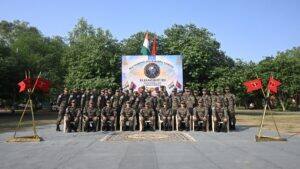
An Indian Army contingent of 40 personnel, mainly from the Jat Regiment will participate in the multilateral joint military exercise Khaan Quest in Mongolia. The exercise, from 20 June to 03 July 2026, had initially started as a bilateral event between USA and Mongolian Defence Forces in 2003, but has since become a Multilateral Peacekeeping Exercise. India's participation is as much
about peacekeeping interoperability, as India remains one of the UN's largest troop contributors, as it is about the bilateral relationship with Mongolia.
India, Thailand hold 10th Defence Dialogue in Bangkok
India and Thailand held the 10th edition of their bilateral Defence Dialogue in Bangkok on June 16. Interestingly, beyond the usual training and maritime cooperation talk, this time the the two sides discussed in detail a joint defence manufacturing and research plan. Atmanirbhar Bharat is in full swing, and Southeast Asia is where it's showing up as evidenced by BrahMos deals with Philippines, Vietnam, Indonesia, Malaysia and Thailand reportedly worth around Rs 12,500 crore combined. Thailand talking manufacturing, and not just purchase, is the next step in getting India's overall defence exports achieve new highs.
05 SERVICE UPDATE
Lt Gen Dhiraj Seth named next Army Chief, to take over on June 30
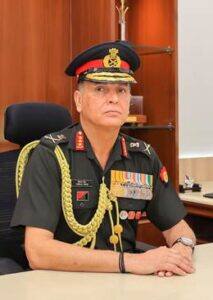
Centre has officially appointed Lieutenant General Dhiraj Seth as the next Chief of the Army Staff until August 31, 2028. He is currently serving as the Vice Chief and is scheduled to take the command on June 30, upon General Upendra Dwivedi’s retirement. Lt Gen Seth has a military career spanning nearly forty years. An alumnus of the National Defence Academy, Khadakwasla he was commissioned into the Armoured Corps in December 1986. Interestingly, he went on to command the Sudarshan Chakra Corps that his father Lt Gen Krishna Mohan Seth once commanded.
Why it matters: It has been nearly three decades since an officer from the Armoured Corps led the service. The last chief from this stream was General Shankar Roy Chowdhury. Lt Gen Seth’s appointment signals a focus on mechanised warfare. He is known as a champion of tech integration which will be critical for a force undergoing a massive modernisation push, shifting toward drone integration and electronic warfare compatibility alongside traditional heavy armor.
Bandi Jackets and Beret: Indian Army's New Uniform Code
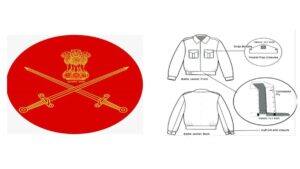
The Indian Army has rolled out the Army Uniforms-2026 manual with a big dress-code revision in nearly eight years. The headline change is a closed-neck Bandi jacket added to formal civil attire for officers. A new winter uniform, Dress 3B with an angola shirt, battle jacket and beret will also be introduced for all ranks.
Why It’s Interesting: It's the Army writing colonial residue out of its own rulebook. Swords are now optional for Reviewing Officers, pouch belts are dropped from two Mess Dress categories, and terms like "Royal" are gone. Paired with tighter grooming rules, a 12 cm cap on moustache length and a ban on tattoos, piercings and most jewellery to project a more indigenous identity.

J&K cop on Amarnath Yatra duty shot dead in Anantnag terror attack; TRF claims responsibility
Jaishankar meets Canada's Anita Anand, discusses bilateral cooperation and shared interests
Delhi, Bengaluru, Hyderabad... Neet paper leak protest spreads nationwide even as govt reaches out to CJP, Opposition
Why is India seeing 95% cloud cover despite a Super El Niño?
Jaishankar, Rubio review trade, defence, AI cooperation at Manila meeting