
Advertisement


Sections
Coronavirus Outbreak: From hunting bats to tearing into live chicken for pious reasons, Indians aren’t exactly new to animal pathogens
Even as India battles the Wuhan virus, it’s time to introspect on the path ahead: what happened there could happen here, too.

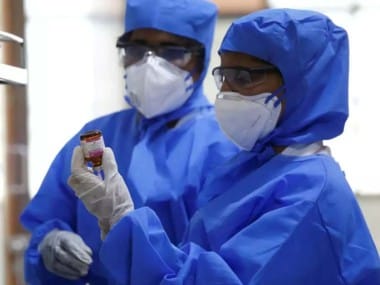 Representational image. PTI[/caption]But the Graveyard Festival at the 1,000-year-old Arulmigu Angalamman Temple in Tamil Nadu is just one of many places in India where significant risks of zoonosis are among us—unchecked. There’s zero evidence, the claims of pious scolds notwithstanding, that vegetarianism will save us from the Wuhan virus, but this is a good time to contemplate what we eat, and how we eat it.§Anthropologists and historians have long known this: there’s no accounting for taste. Faced with accounts of cannibalism among Australian aboriginals in the late nineteenth century—undoubtedly exaggerated by settlers to legitimise their genocide—some remarked on its more peculiar features.In November 1878, the appropriately named Cooktown Herald reported on “the increasing appetite of the Aborigines”. Local observers held this was due to “a belief, quietly encouraged by some Europeans, that the vegetarian Chinese made better eating than white men”.EG Heap’s magnificently wry scholarly account has a simpler reading of the delicate question of cannibal culinary choice. Inspector Urquhart of the Native Police, he records, found that “the Aborigines of the Palmer River area preferred the flesh of Chinese, hundreds of whom were killed when travelling to the goldfields in the 1870s, to that of Europeans”. “Too much salt, like it bacon”, aboriginal shepherds explained.The history of the White Man—or any other kind of man—is replete with cannibalism, too. From Saint Jerome’s 393 CE memoir, Adversus Jovinianum, we know that the West European Attocottai, among other distasteful habits, “eat of human flesh, and, even though they might find herds of swine and oxen and cattle, it is their custom to cut off the buttocks of the herdsmen and their wives, and their breasts, and to judge these alone was culinary delicacies”.Click here for Coronavirus Outbreak LIVE UpdatesLouise Noble’s superb work on cannibalism in early modern Europe tells us that human body parts played a key role in medicine: powdered skull with dark chocolate for apoplexy; bandages soaked in human fat for gout. A Franciscan apothecary even described how to make marmalade from human blood. Executions, Noble tells us, attracted many seeking fresh blood, reputed to enhance vitality.From the siege of Leningrad in 1941-1944—documented in agonising detail in local residents’ diaries—to Mao Zedong’s Great Leap Forward, to the North Korea famine of 2013, humans everywhere have turned to eat humans, to survive.But, bar the rare disease Kuru—which annihilated the Foro of Papua New Guinea, who ate their deceased relatives’ brains in a funerary ritual which survived until the 1960s—there’s isn’t a lot of evidence cannibalism poses a large-scale public health hazard, perhaps because there isn’t much data.That isn’t, sadly, true of our relationship, in India, with the world of animals—dead or alive. What we eat, and how we eat it, has consequences.§Bhaskar Ganapati Hegde died last week, on his way to the hospital from the small village of Malaguli, on the fringes of Karnataka’s Shimoga forest. His story, like those of the 55 others so far infected with Kyasanur Forest Disease has been drowned out by the nationwide Hunan coronavirus crisis. From medical literature, though, we know the disease can be lethal: high fever is followed by bleeding from the nose throat and gums; muscles stiffen; reflexes disappear; there is severe pain.
There is no cure, though decades have passed since Kyasanur Disease first appeared; vaccines exist but are not always effective. Every year, 400-500 people are estimated to fall ill, of whom between 2 percent and 3 percent will die.In 1955, monkeys began dying on the fringes of the Shimoga forest; soon, people were falling critically ill and dying. Working with the United States Army’s Medical Research Unit, Indian scientists soon discovered the disease was caused by a virus living in ticks. As Shimoga’s forests had become more degraded, with jungle making way for farms and factories, people had become increasingly exposed to wild animals—and the pathogens their bodies were reservoirs for.Though Karnataka’s health authorities have worked hard to contain the impacts of Kyasanur Forest Disease, it’s now seen in several of the state’s districts—and, with all viruses, there’s always the potential for the virus to mutate into more lethal variants. Indeed, variants of the disease have been observed in Saudi Arabia and Egypt.Local hot-spots for the propagation of zoonotic diseases are present across the country. Last year, National Centre for Biological Sciences scholar Pilot Dovih and his co-authors reported that residents of the tiny village of Mimi, in Nagaland, had been exposed to filoviruses—the family that causes Ebola and Marburg disease. The villagers were members of the Longpfurii Yimchungii sub-tribes, which harvests thousands of bats once a year to be used in indigenous medicine.The bat hunters become exposed to the bats’ blood, saliva and excrement during the hunt—holding out the prospect that viruses in their prey will end up inside their own bodies. In the 1970s, a mysterious illness broke out which claimed the lives of over 80 people—but there was no public health monitoring in place to record the event.Bat hunting goes on elsewhere in the North East, too, notably in Arunachal Pradesh—and there’s no great imagination needed to imagine the consequences. The Wuhan virus, after all, was transmitted from bats to humans.§Avian influenza, rabies, Japanese encephalitis, leptospirosis, Hantavirus, SARS, Nipah virus, cysticercosis, echinococcosis, schistosomiasis, plague and anthrax: For years now, epidemiologists have been trying to warn India of what could lie ahead, if human-animal contact isn’t better regulated or monitored. The conjunction of poverty and large animal populations made some countries hot-spots for risks, the International Livestock Research Institute pointed out in 2012—listing India, along with China, at the top of the list.In a 2015 paper, the scholars R Kumar, SP Singh and CV Savalia underlined the growing risks from India’s burgeoning bovine population, which is a reservoir for both tuberculosis and brucellosis. Even though tuberculosis already claims over 1,000 lives a day, and a fifth of all bovines are infected with brucellosis, there’s no nationwide inoculation programme, the scholars noted.Emerging demands from a protein-hungry population are adding to those risks. Factory-farmed chickens, for example, are dosed with large amounts of antibiotics—and are, thus, opening up new risks of the population from drug-resistant superbugs. In slaughterhouses across the country, sanitary conditions are disaster-grade: as they wade through an ooze of offal and blood, workers have almost no protection.Irrespective of whether it’s the pious Goddess-worshippers Tamil Nadu tearing into live chicken, the bat-hunters of Nagaland, forest residents in Karnataka, or cowherds in Uttar Pradesh: growing numbers of Indians are exposed to animal pathogens and the risks which follow.Even as India battles the Wuhan virus, it’s time to introspect on the path ahead: what happened there could happen here, too. Beijing was warned, following the 2003 Severe Acute Respiratory Syndrome epidemic, that its wet markets—where live chicken, fish, snakes, turtles, guinea pigs, rats, otters, badgers, and civets re slaughtered—could spark off a global disaster.The fact that it didn’t listen has earned Beijing condemnation—some of it from Indians. But India isn’t listening either: The country just isn’t investing enough in health infrastructure, acting to mitigate hazards and improve sanitary conditions. The cost of acting will, without doubt, be high; the cost of doing nothing, though, will be infinitely higher.
First Published:Mar 27, 2020, 17:48:21 IST
Advertisement
Advertisement

J&K cop on Amarnath Yatra duty shot dead in Anantnag terror attack; TRF claims responsibility
The Resistance Front (TRF), a shadow outfit of Lashkar-e-Taiba, claimed responsibility for the attack through a social media post
2 min read
Jaishankar meets Canada's Anita Anand, discusses bilateral cooperation and shared interests
External Affairs Minister S Jaishankar on Wednesday held talks on bilateral ties with his Canadian counterpart Anita Anand, focusing on cooperation and common goals.
1 min read
Delhi, Bengaluru, Hyderabad... Neet paper leak protest spreads nationwide even as govt reaches out to CJP, Opposition
Protests over the alleged NEET paper leak intensified across multiple cities, while the Centre signalled talks with the Opposition and the Cockroach Janta Party. The Delhi High Court also stepped in, seeking preservation of CCTV footage related to police action.
3 min read
Why is India seeing 95% cloud cover despite a Super El Niño?
India is witnessing nearly 95 per cent cloud cover despite a Super El Niño, a climate event usually linked to weaker monsoons. Regional weather systems, cyclonic circulations, the monsoon trough and moisture from two seas are temporarily overpowering one of the world's strongest climate phenomena
5 min read
Jaishankar, Rubio review trade, defence, AI cooperation at Manila meeting
Jaishankar and US Secretary of State Marco Rubio reviewed key pillars of the India-US Comprehensive Global Strategic Partnership, including trade, defence, energy, critical minerals and artificial intelligence, while also exchanging views on regional and global developments.
1 min read
Advertisement
Advertisement