


Conflict fanned by linguistic, religious and national identities belies their non-primordial, oft fluid nature
The NRC and the CAA, which imagine India in a certain way, have inflamed passions driven by religious, ethnic as well as linguistic identities. Why these identities should be so inflammatory is something a lot of us perhaps wonder about.

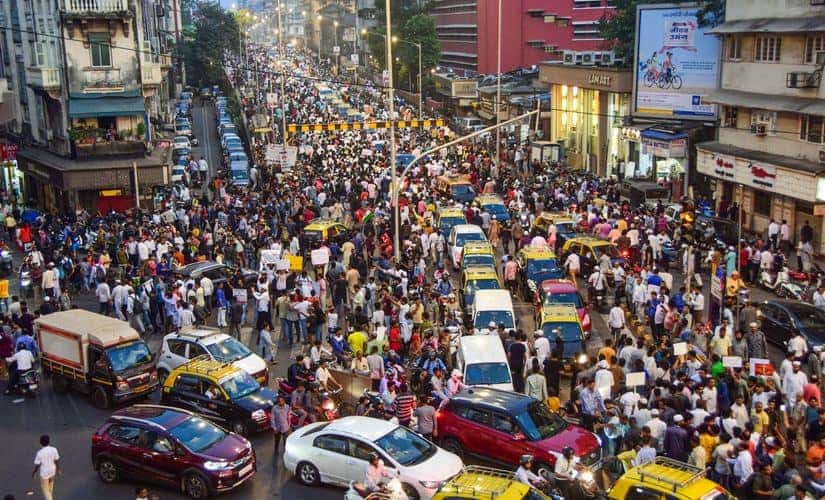
File image of ant-CAA protests in Mumbai on 19 December. The NRC and the CAA, which imagine India in a certain way, have inflamed passions driven by religious, ethnic as well as linguistic identities. PTI[/caption]The answer probably lies in a kind of tribalism that is deeply rooted in human societies and cultures. Human beings naturally tend to form groups. It is automatic. It happens in schools and colleges and offices, it happens even in casual interactions such as on long journeys, where travellers become friends. The groups we form inevitably have an “us” and a “them”. Whoever is not “us”, is “them”.While groups of travel-buddies are known to be temporary, groups such as school and college classmates do have a lasting character. However, a person’s identity as an Edmundian in Shillong or a Xavierite in Mumbai or a Stephanian in Delhi is not considered “primordial” in any way. That place is reserved for the identities decided for almost every human being by the accident of birth — the person’s language, religion and ethnicity.I happened to be born in a Bengali Hindu family and so I am Bengali Hindu. If I had been born in a white American Christian family, I would be white American Christian. Even nationality and class are largely determined by birth. This is true for any country — the bulk of its citizens are citizens by birth. We are Indians because we happened to be born in India. More often that not, we are rich or poor because our parents were rich or poor.So, our most important identities — language, religion, nationality and class — are identities that most of us did not choose.It is of course possible to improve one’s place in the class hierarchy. That is what all of economics, most of politics, and a lot of religions are actually about. When Hindus go to perform the “anjali” ritual during Durga Puja they also say “dhanang dehi”, meaning “grant us wealth” to the Goddess. It must be a rare person indeed who has never expressed the wish for “dhanang dehi” to whatever God or Goddess of whatever faith he or she may worship.Whether the Gods or the economists who think they are God’s prophets in the modern world, hear our prayers or not, nonetheless, we know that it is possible to get rich, and some people do — by fair means or foul — so we take it that class is not a primordial identity.We also know that some of our friends or relatives manage to emigrate to rich first-world countries such as America, Canada and the UK, and manage thus to improve their bank balances as well as their passports. Indeed, in many cases it seems that even their complexions brighten up merely by migrating Westwards. Many of them then become great Indian patriots after leaving the country safely behind, but in any case, their example tells us that it is indeed possible to change nationality too. An Indian can become a US citizen and a Pakistani can become an Indian citizen — Adnan Sami is an example.So, neither class nor nationality is really a primordial identity. That leaves religion, language and ethnicity. Is it possible to change religion? Of course, it is. That is what conversion is about. Whether it is morally better or worse to convert is a separate debate but we cannot consider religion to be primordial.Language and ethnicity are where things get interesting. Is it possible to change one’s linguistic identity? Can a Maratha become a Tamilian? Or a Marwari become Assamese? Certainly.We usually don’t think Marathas can become Tamilians but a man of Maratha origins named Shivaji Rao Gaekwad became famous as Rajinikanth. So, it is possible. Similarly, here in Assam, a man of Marwari origins named Jyoti Prasad Agarwala became Assamese. These are famous examples of famous people but actually the process of one identity morphing into another happens and has always happened, all the time, in ordinary lives of ordinary people, forever. It has been going on around the world probably since human culture was invented. Indeed, even the tribal and non-tribal identities are amorphous, and it was and still is possible for a tribal to become a non-tribal or vice versa. A lot of Khasi tribal clan lines, for instance, were created through a ritual called tang jied by which non-tribals marrying into the tribe were incorporated.The history of the world is one of changes and flows. Ideas, peoples, goods, animals, plants, trees…they’ve all been flowing around the world through time. Languages have flowed into and out of one another, morphing and changing, growing and branching. The idea that change and flow can be stopped is absurd. Only that which is dead ceases to change. So long as there is life on earth, there will be change and flow. However much foolish humans who live but a few years try to halt the processes of change, their puny efforts are bound to be defeated by the inexorable march of time.Samrat is an author, journalist and former newspaper editor. He tweets as @mrsamratx

J&K cop on Amarnath Yatra duty shot dead in Anantnag terror attack; TRF claims responsibility
Jaishankar meets Canada's Anita Anand, discusses bilateral cooperation and shared interests
Delhi, Bengaluru, Hyderabad... Neet paper leak protest spreads nationwide even as govt reaches out to CJP, Opposition
Why is India seeing 95% cloud cover despite a Super El Niño?
Jaishankar, Rubio review trade, defence, AI cooperation at Manila meeting