
Advertisement


Sections
Child trafficking in India: What the Deoria, Muzzafarpur and Yadagirigutta cases highlight about the problem
It is in encountering the individual stories of trauma that one begins to comprehend what survivors of trafficking go through.

This is the first in a three-part series on child trafficking in India.July-August 2018:![It is in encountering the individual stories of trauma that one begins to comprehend what survivors of trafficking go through. REUTERS]() It is in encountering the individual stories of trauma that one begins to comprehend what survivors of trafficking go through. REUTERS[/caption]Many activists also wonder if there is a need to introduce new laws — leading to confusion —when most of the problems mentioned in the Bill are already addressed by existing laws under the Indian Penal code. The Bill itself has many grey areas. For instance, in cases where government officials themselves are complicit in trafficking, would not such a Bill aggravate the problem by putting more power into their hands?There are no clear figures as to how many minors are trafficked in India. Due to the very nature of the crime, official figures — even when available — tell only part of the story. And while statistics may attest to the extent of the problem, it is in encountering the individual stories of trauma that one begins to comprehend what survivors of trafficking go through.Take a look at the Deoria, Muzzafarpur and Yadagirigutta cases, and you’ll see a pattern of similarities:The girls — mostly homeless, with no family to speak of, or runaways — were easy prey. They had no one to protect them.Concerns had been raised about the two shelter homes and the Yadagirigutta housing colony from where the girls were rescued, previously. However, the trafficking had continued. In the Deoria case, the NGO that ran the home had had its licence revoked in 2007 after a CBI investigation flagged irregularities in its functioning. However, the home continued to operate after obtaining a stay order from the Allahabad High Court.In Muzzafarpur, locals apparently heard the wails of the inmates who were being abused, but didn’t contact the authorities, fearing Brajesh Thakur. The TISS report named other Bihar homes as well where the inmates had been similarly brutalised. Excerpts from the report indicated that some of the minor girls had become pregnant as a result of the abuse, and given birth. Why the inspection teams that visited these shelters for years missed these signs is not clear.The crackdown in Yadagirigutta revealed several horrifying details: How the girls — 15 of them, between the ages of seven and 12 were ultimately rescued — were given hormone injections to make them mature faster. How an entire interstate network targeted these girls — lost, snatched or lured away — who were then pushed into the flesh trade by their ‘guardians’. Once again, people in the area seemed to know what was going on but kept mum — some out of fear, and others because they were complicit.A couple of years ago, a Bengaluru-based NGO traced some missing girls to Yadagirigutta and reunited them with their parents. Yet, the trade in little girls continued to thrive. A journalist covering the story was told by a local that Yadagirigutta drew many visitors — those who came to visit the Lord Narasimha temple on the nearby hilltop, and those who wished to ‘hire’ the girls.In many cases of trafficking, someone known to the victim is involved — it could be a relative, family friend, or a neighbour. Investigators in the Yadagirigutta case found that some of the girls had been sold by their parents.When one’s parents or immediate family turn into traffickers, children are left with little recourse.Next: Can a person be trafficked for his or her own good?
It is in encountering the individual stories of trauma that one begins to comprehend what survivors of trafficking go through. REUTERS[/caption]Many activists also wonder if there is a need to introduce new laws — leading to confusion —when most of the problems mentioned in the Bill are already addressed by existing laws under the Indian Penal code. The Bill itself has many grey areas. For instance, in cases where government officials themselves are complicit in trafficking, would not such a Bill aggravate the problem by putting more power into their hands?There are no clear figures as to how many minors are trafficked in India. Due to the very nature of the crime, official figures — even when available — tell only part of the story. And while statistics may attest to the extent of the problem, it is in encountering the individual stories of trauma that one begins to comprehend what survivors of trafficking go through.Take a look at the Deoria, Muzzafarpur and Yadagirigutta cases, and you’ll see a pattern of similarities:The girls — mostly homeless, with no family to speak of, or runaways — were easy prey. They had no one to protect them.Concerns had been raised about the two shelter homes and the Yadagirigutta housing colony from where the girls were rescued, previously. However, the trafficking had continued. In the Deoria case, the NGO that ran the home had had its licence revoked in 2007 after a CBI investigation flagged irregularities in its functioning. However, the home continued to operate after obtaining a stay order from the Allahabad High Court.In Muzzafarpur, locals apparently heard the wails of the inmates who were being abused, but didn’t contact the authorities, fearing Brajesh Thakur. The TISS report named other Bihar homes as well where the inmates had been similarly brutalised. Excerpts from the report indicated that some of the minor girls had become pregnant as a result of the abuse, and given birth. Why the inspection teams that visited these shelters for years missed these signs is not clear.The crackdown in Yadagirigutta revealed several horrifying details: How the girls — 15 of them, between the ages of seven and 12 were ultimately rescued — were given hormone injections to make them mature faster. How an entire interstate network targeted these girls — lost, snatched or lured away — who were then pushed into the flesh trade by their ‘guardians’. Once again, people in the area seemed to know what was going on but kept mum — some out of fear, and others because they were complicit.A couple of years ago, a Bengaluru-based NGO traced some missing girls to Yadagirigutta and reunited them with their parents. Yet, the trade in little girls continued to thrive. A journalist covering the story was told by a local that Yadagirigutta drew many visitors — those who came to visit the Lord Narasimha temple on the nearby hilltop, and those who wished to ‘hire’ the girls.In many cases of trafficking, someone known to the victim is involved — it could be a relative, family friend, or a neighbour. Investigators in the Yadagirigutta case found that some of the girls had been sold by their parents.When one’s parents or immediate family turn into traffickers, children are left with little recourse.Next: Can a person be trafficked for his or her own good?
- A 12-year-old girl runs away from a shelter home in Deoria, Uttar Pradesh. She tells the police of the other girls at the home being taken away in cars in the night and returning the next morning in tears. Her testimony helps uncover a years-long sex trafficking racket being run from the shelter home.
- A Tata Institute of Social Sciences (TISS) audit of shelter homes in Bihar brings to light the sexual abuse of the inmates of a Muzzafarpur institute. The girls at the home have been subjected to brutal physical and sexual violence. The main accused in the case — Brajesh Thakur, who ran the shelter — is believed to have powerful local connections that helped him elude arrest for years.
- In Telangana, a child sex racket is discovered in the temple town of Yadagirigutta, when an anonymous caller tips off a child helpline about a bruised 10-year-old girl wailing on the doorstep of a house. The police find out that the child’s guardian had ‘bought’ her from an agent, and a crackdown on other houses in the same colony leads the cops to more cases of underage girls — some as young as five — being trafficked for sex work.
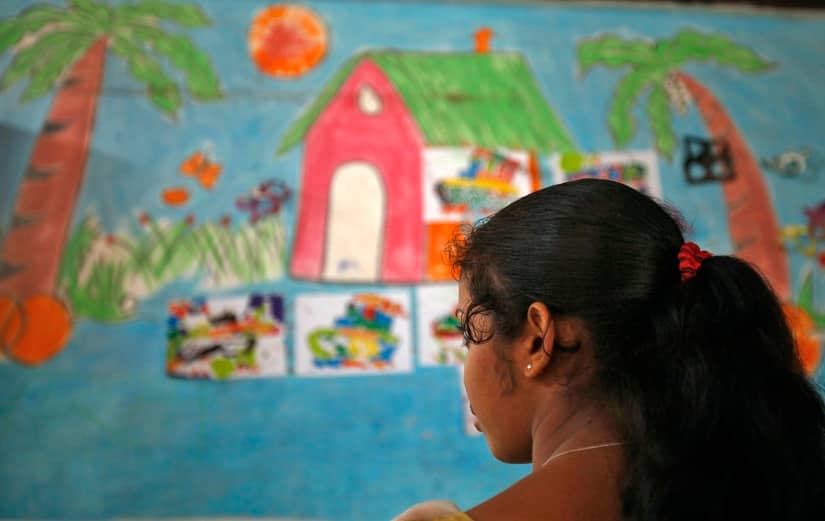 It is in encountering the individual stories of trauma that one begins to comprehend what survivors of trafficking go through. REUTERS[/caption]Many activists also wonder if there is a need to introduce new laws — leading to confusion —when most of the problems mentioned in the Bill are already addressed by existing laws under the Indian Penal code. The Bill itself has many grey areas. For instance, in cases where government officials themselves are complicit in trafficking, would not such a Bill aggravate the problem by putting more power into their hands?There are no clear figures as to how many minors are trafficked in India. Due to the very nature of the crime, official figures — even when available — tell only part of the story. And while statistics may attest to the extent of the problem, it is in encountering the individual stories of trauma that one begins to comprehend what survivors of trafficking go through.Take a look at the Deoria, Muzzafarpur and Yadagirigutta cases, and you’ll see a pattern of similarities:The girls — mostly homeless, with no family to speak of, or runaways — were easy prey. They had no one to protect them.Concerns had been raised about the two shelter homes and the Yadagirigutta housing colony from where the girls were rescued, previously. However, the trafficking had continued. In the Deoria case, the NGO that ran the home had had its licence revoked in 2007 after a CBI investigation flagged irregularities in its functioning. However, the home continued to operate after obtaining a stay order from the Allahabad High Court.In Muzzafarpur, locals apparently heard the wails of the inmates who were being abused, but didn’t contact the authorities, fearing Brajesh Thakur. The TISS report named other Bihar homes as well where the inmates had been similarly brutalised. Excerpts from the report indicated that some of the minor girls had become pregnant as a result of the abuse, and given birth. Why the inspection teams that visited these shelters for years missed these signs is not clear.The crackdown in Yadagirigutta revealed several horrifying details: How the girls — 15 of them, between the ages of seven and 12 were ultimately rescued — were given hormone injections to make them mature faster. How an entire interstate network targeted these girls — lost, snatched or lured away — who were then pushed into the flesh trade by their ‘guardians’. Once again, people in the area seemed to know what was going on but kept mum — some out of fear, and others because they were complicit.A couple of years ago, a Bengaluru-based NGO traced some missing girls to Yadagirigutta and reunited them with their parents. Yet, the trade in little girls continued to thrive. A journalist covering the story was told by a local that Yadagirigutta drew many visitors — those who came to visit the Lord Narasimha temple on the nearby hilltop, and those who wished to ‘hire’ the girls.In many cases of trafficking, someone known to the victim is involved — it could be a relative, family friend, or a neighbour. Investigators in the Yadagirigutta case found that some of the girls had been sold by their parents.When one’s parents or immediate family turn into traffickers, children are left with little recourse.Next: Can a person be trafficked for his or her own good?
First Published:Aug 31, 2018, 17:11:06 IST
Advertisement
Advertisement

J&K cop on Amarnath Yatra duty shot dead in Anantnag terror attack; TRF claims responsibility
The Resistance Front (TRF), a shadow outfit of Lashkar-e-Taiba, claimed responsibility for the attack through a social media post
2 min read
Jaishankar meets Canada's Anita Anand, discusses bilateral cooperation and shared interests
External Affairs Minister S Jaishankar on Wednesday held talks on bilateral ties with his Canadian counterpart Anita Anand, focusing on cooperation and common goals.
1 min read
Delhi, Bengaluru, Hyderabad... Neet paper leak protest spreads nationwide even as govt reaches out to CJP, Opposition
Protests over the alleged NEET paper leak intensified across multiple cities, while the Centre signalled talks with the Opposition and the Cockroach Janta Party. The Delhi High Court also stepped in, seeking preservation of CCTV footage related to police action.
3 min read
Why is India seeing 95% cloud cover despite a Super El Niño?
India is witnessing nearly 95 per cent cloud cover despite a Super El Niño, a climate event usually linked to weaker monsoons. Regional weather systems, cyclonic circulations, the monsoon trough and moisture from two seas are temporarily overpowering one of the world's strongest climate phenomena
5 min read
Jaishankar, Rubio review trade, defence, AI cooperation at Manila meeting
Jaishankar and US Secretary of State Marco Rubio reviewed key pillars of the India-US Comprehensive Global Strategic Partnership, including trade, defence, energy, critical minerals and artificial intelligence, while also exchanging views on regional and global developments.
1 min read
Advertisement
Advertisement