
Advertisement


Sections
10 facts about BR Ambedkar: How the Father of Indian Constitution and Bharat Ratna always sought to emancipate Dalits
Also known as a social reformer, BR Ambedkar inspired the Dalit Buddhist Movement and campaigned against social discrimination.

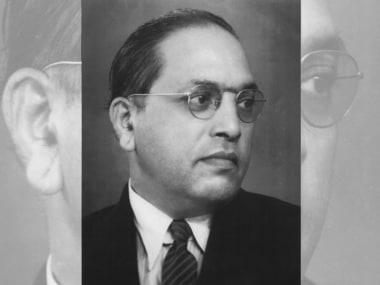 (File) BR Ambedkar[/caption]Also known as a social reformer, Ambedkar inspired the Dalit Buddhist Movement and campaigned against social discrimination. He took many initiatives for the upliftment of Dalits.Born on 14 April, 1891, Ambedkar is called the father of the Indian Constitution since he was the chairman of the Constitution Drafting Committee. The legendary leader breathed his last on 6 December, 1956.Here are 10 facts about BR Ambedkar:
- His original surname was Ambavadekar, derived from his village’s name Ambavade. It is believed that his teacher Mahadev Ambedkar gave him his own surname as he was his favourite student.
- A very highly educated person, Ambedkar was the first Indian to pursue a doctorate degree in economics from abroad. Apart from this, he was the first double PhD holder in Economics in South Asia.
- In his book, The Problem of the Rupee – Its Origin and Its Solution, Ambedkar has mentioned that Hilton Young Commission conceptualised Reserve Bank of India based on the guidelines presented by him.
- As Dalits were treated as untouchables by the upper caste at that time, Ambedkar launched Mahad Satyagrah in 1927 for the emancipation of Dalits. He spearheaded a group of Dalits to drink water from Chavdar lake in Mahad. At the time, Dalits were prohibited by upper caste people to take water from public water sources.
- He pushed hard for Hindu Code Bill in the Parliament. The Bill was meant to give equal rights to women in matters of marriage and inheritance. When the Bill could not get passed, he put in his papers as the law minister.
- In the run-up to the 1952 general election, Ambedkar formed the Scheduled Caste Federation party. Despite being a tall leader, he lost the election from Bombay North Central constituency to Narayan Sadoba Kajrolkar of the Congress.
- Credited with bringing some big labour reforms, Ambedkar brought changes in the working hours -- from 12 to 8 hours in the 7th session of Indian Labour Conference in 1942.
- He is credited for initiating various development projects like the Bhakra Nangal Dam project, the Damodar Valley project, the Son River Valley project and Hirakud dam project.
- Columbia University uses Ambedkar’s Waiting for a Visa, a book that draws from his experiences with untouchability, as a textbook.
- In Thoughts on Linguistic States, he mentions that he suggested division of Bihar and Madhya Pradesh.
First Published:Mar 31, 2020, 12:10:00 IST
Advertisement
Advertisement

J&K cop on Amarnath Yatra duty shot dead in Anantnag terror attack; TRF claims responsibility
The Resistance Front (TRF), a shadow outfit of Lashkar-e-Taiba, claimed responsibility for the attack through a social media post
2 min read
Jaishankar meets Canada's Anita Anand, discusses bilateral cooperation and shared interests
External Affairs Minister S Jaishankar on Wednesday held talks on bilateral ties with his Canadian counterpart Anita Anand, focusing on cooperation and common goals.
1 min read
Delhi, Bengaluru, Hyderabad... Neet paper leak protest spreads nationwide even as govt reaches out to CJP, Opposition
Protests over the alleged NEET paper leak intensified across multiple cities, while the Centre signalled talks with the Opposition and the Cockroach Janta Party. The Delhi High Court also stepped in, seeking preservation of CCTV footage related to police action.
3 min read
Why is India seeing 95% cloud cover despite a Super El Niño?
India is witnessing nearly 95 per cent cloud cover despite a Super El Niño, a climate event usually linked to weaker monsoons. Regional weather systems, cyclonic circulations, the monsoon trough and moisture from two seas are temporarily overpowering one of the world's strongest climate phenomena
5 min read
Jaishankar, Rubio review trade, defence, AI cooperation at Manila meeting
Jaishankar and US Secretary of State Marco Rubio reviewed key pillars of the India-US Comprehensive Global Strategic Partnership, including trade, defence, energy, critical minerals and artificial intelligence, while also exchanging views on regional and global developments.
1 min read
Advertisement
Advertisement