
Advertisement


Sections
What nutrient and calorie intake is needed as per age bracket
One must note that nutrient requirements do not remain the same all through life

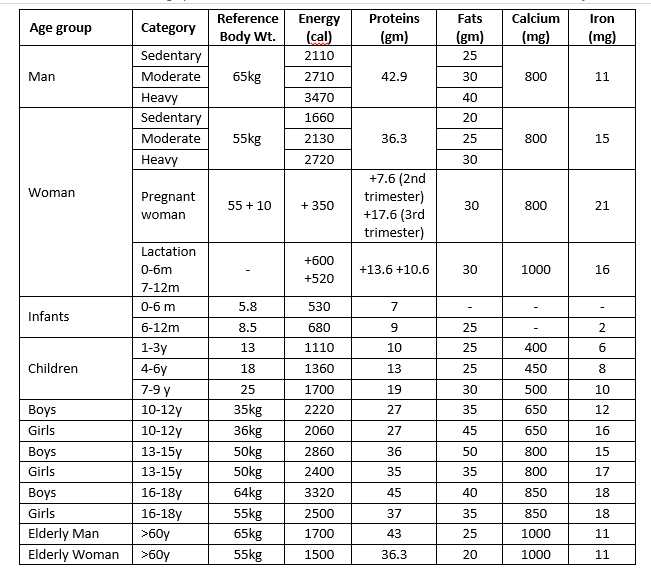
Nutrition is a basic human need and a prerequisite to a healthy life. For optimal growth, development, maintenance of body functions and to remain fit and active, a proper diet is essential from the very early stages of life. Nutrients obtained through food have a dynamic effect on both physical and mental health. Hence, our diet must provide all essential nutrients in the required amounts. These nutrients must be obtained through a mindful choice and combination of a variety of foods from different food groups.So, the question arises how do we know our daily nutrient requirements?One must note that nutrient requirements do not remain the same all through life. They vary with age, gender, physiological status, and physical activity.Let’s check out why nutrient requirements differ and what the special requirements at each phase in life are.Infants: Usually double their length and triple their weight between birth and one year of age. Hence, they require breastmilk and energy-rich foods (fats, sugar) for achieving growth milestones. Breast milk is the most natural and perfect food for infants. It is associated with the better cognitive development of children and provides long-term health benefits.Young children: They grow rapidly and hence they require 2-3 times more nutrients per kg body weight than adults. Energy-rich, bodybuilding, and protective foods are required for the development and fight against infections. Ideally, they should accumulate stores of nutrients to prepare for the rapid growth spurt experienced during adolescence.Adolescents: Adolescents require body building and protective foods for a growth spurt, maturation and bone development. Their needs are higher than adults. The extra energy required for growth and physical activity should come from nutrient-dense foods and not just empty calories. Keep a check on foods high in fats, salt, and sugars. Include more fruits, legumes, nuts, whole grains, and milk in their diets.Adults: They need nutrients for the maintenance of constant body weight, for ensuring proper body functions, productivity, and the prevention of diseases. Men have higher requirements than women because of differences in body composition.Pregnant and lactating mothers: They need additional nutrients to meet the demand for fetal growth and maternal tissue expansion in pregnancy and milk secretion during lactation. These extra intakes of nutrients are essential for the normal growth of infants in utero and during early post-natal life.Elderly: As their physical activity reduces, their carbohydrates and fats need to be restricted. However, for restricting muscle loss, delaying degeneration and staying disease-free, protein and micronutrients are required.For each age group, gender, and physical activity, the ICMR-NIN (National Institute of Nutrition) has recommended the average nutrient requirements (macronutrients and micronutrients) as EARs (estimated average requirements) and RDAs (recommended dietary allowances).The common nutritional problems among Indians are low birth weight, protein energy malnutrition in children, chronic energy deficiency in adults, micronutrient malnutrition in adolescents and diet-related non-communicable diseases (high blood pressure, diabetes, heart diseases, cancer). The major cause of these problems is dietary intakes higher than the body requirements can lead to either undernutrition (deficiency diseases) or overnutrition (overweight, obesity) respectively. The major cause of the above problems are excess macronutrient intake (saturated fat, sugar) and insufficient intake of the fiber and micronutrients obtained from vegetables, fruits, whole grains, and legumes.![]()
Hence, for complete poshan (nutrition) one needs to consume the right portions from each food group. A balanced diet i.e. the one which has cereal/grains, pulses/legumes/egg/fish, vegetables/fruits, nuts, milk/milk products and healthy fats in optimal amounts is the KEY to overcome the triple burden of malnutrition.The author is nutrition consultant, Arogya World. Views are personal.Read all the Latest News, Trending News, Cricket News, Bollywood News,India News and Entertainment News here. Follow us on Facebook, Twitter and Instagram.
First Published:Sep 16, 2022, 13:06:31 IST
Advertisement
Advertisement

Stroke is rising among young adults. Doctor explains why it's happening and what you must do
Stroke is increasingly affecting adults in their 30s, 40s and 50s. Experts say unhealthy lifestyles, undiagnosed high blood pressure and delayed treatment are driving the rise in younger stroke cases
3 min read
Stroke in young adults, silent symptoms and late diagnosis: India's growing brain health challenge
Neurologists warn that stroke is increasingly affecting people in their 30s and 40s, while many brain disorders progress silently before symptoms appear. They say early diagnosis, timely referrals and healthier lifestyles are key to reducing India's growing neurological disease burden.
5 min read
Brain tumours aren't always fatal, but delayed diagnosis can be: Experts explain the key warning signs
Brain tumours are frequently mistaken for common headaches, stress or age-related cognitive changes. Doctors say recognising warning signs early and adopting a brain-healthy lifestyle can improve outcomes and reduce the risk of long-term neurological complications.
2 min read
Spices, health and the Indian plate: Why chilli can be good for you—but moderation is still key
From boosting metabolism to supporting heart health, chillies offer several surprising health benefits. But experts say the amount you eat matters, and too much spice can do more harm than good.
4 min read
Organ donation: 5 myths you need to stop believing, according to a transplant specialist
Organ donation has the power to transform and save lives, but this can happen only when myths are replaced with facts. Building awareness, having open conversations and understanding the process can help families make informed decisions.
2 min read
Advertisement
Advertisement