


What is BA.3.2, the new Covid variant spreading across US? Is it a cause of concern?
BA.3.2, an emerging Covid variant, has reportedly been detected in half of the United States and 22 other countries. The variant has as many as 75 mutations, far more than other strains. Dubbed 'Cicada', the strain could evade protection from current vaccines, researchers say. It was first detected in a respiratory sample in South Africa in November 2024

BA.3.2, a highly mutated new Covid variant, is raising concerns among public health officials. According to the Centres for Disease Control and Prevention’s (CDC) Morbidity and Mortality Weekly report, it has been detected in half of the United States and in 22 other nations.
BA.3.2 was first detected in November 2024 in a respiratory sample in South Africa; however, it began spreading further in 2025. Researchers have nicknamed it “Cicada,” like an insect. The variant, before coming to life, is likely to have spent a long period “underground” in dormancy.
With as many as 70 to 75 mutations, which is way more compared to other strains, this variant is highly contagious.
 More from Health
We take a look.
What is the BA.3.2 Covid variant?
It's a heavily mutated Omicron subvariant of SARS-CoV-2. It comes from an older version of the BA.3 lineage, which had not circulated among people since early 2022. BA.3.2 is a long-branch descendant. It is not among the dominant Covid variants in the US, as per a CDC tracker.
The study author wrote, "BA.3.2 represents a new lineage of SARS-CoV-2, genetically distinct from the JN.1 lineages (including LP.8.1 and XFG) that have circulated in the United States since January 2024."
Where has BA.3.2 been detected in the US?
In the US, so far, scientists have detected it in nasal swabs taken from four travellers and clinical samples from five patients. It’s also been detected in three airplane wastewater samples and 132 wastewater samples taken from over 20 states, the Independent reported, citing a CDS report.
BA.3.2 has gained a notable international presence, accounting for 30 per cent of samples collected in Denmark, Germany and the Netherlands between November 2025 and January 2026, according to a CDC report.
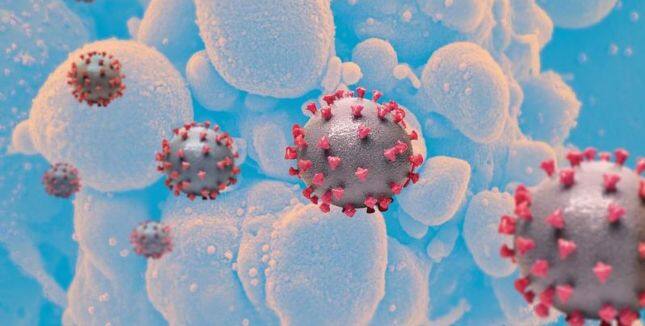
Though the BA.3.2 level in the US is currently low, health experts have urged Americans to take appropriate precautions.
Andrew Pekosz, PhD, a virologist with the division of infectious diseases at Johns Hopkins Bloomberg School of Public Health in Baltimore, said, "I think that BA.3.2 has not shown so far that it is an immediate threat."
"But it is circulating and continuing to evolve, so that increases the likelihood that it could change and become a more efficient virus at spreading and causing disease," Everyday Health quoted him as saying.
What are its symptoms? Can vaccination protect?
Health experts note that "severe sore throat" can be a common symptom along with other typical Covid symptoms, including: Congestion or runny nose, constant cough, fever or chills, new loss of taste or smell, fatigue, muscle or body aches, headache, nausea or vomiting, diarrhoea, shortness of breath or difficulty in breathing.
Now, among the most asked questions are: Will vaccination protect against this variant? Some researchers believe that vaccines likely do not work as well against BA.3.2.
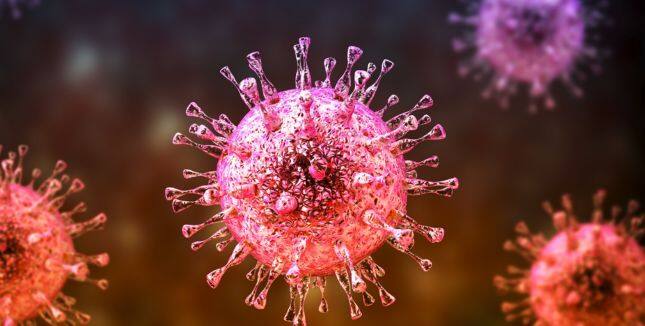
Despite being heavily mutated, the variant is not considered a descendant of the JN.1 lineage that current Covid vaccines target.
Robert H. Hopkins, Jr, MD, medical director of the National Foundation for Infectious Diseases, asserts, "The number of mutations makes it less likely that the current vaccines will be as highly effective against the variant. But we need more data to better answer this question."
There is no evidence that BA.3.2 is proving to be more harmful than other variants currently in circulation, Dr Hopkins thinks.
Which are the affected US states?
BA.3.2 has been found in these US states: California, Connecticut, Florida, Hawaii, Idaho, Illinois, Maine, Maryland, Massachusetts, Missouri, New Hampshire, New Jersey, Nevada, New York, Pennsylvania, Rhode Island, South Carolina, Texas, Utah, Vermont, Virginia, Wyoming, Louisiana, Michigan and Ohio.
In June 2025, the strain was detected in a traveller arriving from the Netherlands. However, the repercussions of this evasive variant largely remain to be seen.
Meanwhile, Covid deaths have declined since last year, along with positive test results and emergency room visits for infections. However, thousands of people are still dying. In the United States, there have been over 3,600 Covid deaths so far this year, CDC data shows, reported Everyday Health.
What do health experts say?
Angela Rasmussen, a virologist at the University of Saskatchewan, told NPR last year: "Every time the virus replicates, it's basically buying a couple of evolutionary lottery tickets. Most of those are losers. But sometimes it hits a winner."
Adding, "So the key that people should think about, if they want to slow that process, is: Don't give the virus more opportunities to replicate. Don't let it buy any new lottery tickets."
When asked about whether BA.3.2 could drive a summer surge, Dr Hopkins noted, "It is possible we will see Cicada drive a summer Covid surge and become the dominant strain in the United States, but that is by no means certain."
With inputs from agencies

Stroke in young adults, silent symptoms and late diagnosis: India's growing brain health challenge
Brain tumours aren't always fatal, but delayed diagnosis can be: Experts explain the key warning signs
Spices, health and the Indian plate: Why chilli can be good for you—but moderation is still key
Organ donation: 5 myths you need to stop believing, according to a transplant specialist
Fish over meat: Why a pescatarian diet may help people with obesity live longer