


Indian-origin surgeon performs record-distance cardiac telesurgery from Guyana on patient in India
Conducted between Guyana and India, using an India-developed robotic system, the procedure is being described as the longest-distance robotic cardiac telesurgery performed to date.

In what is being described as the longest-distance cardiac telesurgery ever performed, an Indian-origin cardiac surgeon operating from Guyana remotely conducted a robot-assisted heart procedure on a patient in India. The surgeon and patient were separated by nearly 20,000 kilometres, with the operation carried out using an India-developed surgical robotic system.
The procedure linked Georgetown Public Hospital Corporation (GPHC) in Guyana with IRCAD India in Indore, where the patient-side robotic system was stationed. Dr Sudhir Srivastava, a robotic cardiac surgeon and founder of SS Innovations, carried out the operation remotely from Guyana using the India-developed SSI Mantra robotic surgical platform.
The procedure involved a Left Internal Mammary Artery (LIMA) takedown, a key step in coronary bypass surgery and was completed in approximately four hours and 50 minutes. The surgery was conducted over a fibre-optic network spanning nearly 20,000 kilometres, with a reported communication delay of around 290-300 milliseconds.
 More from Health
The achievement comes amid growing global interest in telesurgery, a field that seeks to allow specialist surgeons to operate on patients located thousands of kilometres away. Experts say the technology could help bridge gaps in access to advanced surgical care, particularly in regions facing shortages of highly specialised medical professionals.
“The successful completion of this intercontinental cardiac telesurgery marks a significant milestone for telesurgery and moves us closer to expanding access to specialised surgical expertise globally,” said Dr Sudhir Srivastava, Chairman and CEO of SS Innovations International.
"With each new remote procedure, we continue to push the boundaries of telesurgery and move closer to democratizing access to world-class surgical expertise globally," he said.
Guyana President Mohamed Irfaan Ali described the procedure as a landmark achievement for healthcare innovation, saying it demonstrated how technology could overcome geographical barriers and expand access to specialised medical expertise. He said the initiative could help strengthen Guyana’s healthcare capabilities and support the development of a skilled workforce in robotic surgery.
The latest procedure more than doubles the distance covered during a previous robotic cardiac telesurgery conducted between Strasbourg, France and Indore (India) which spanned around 10,000 kilometres.
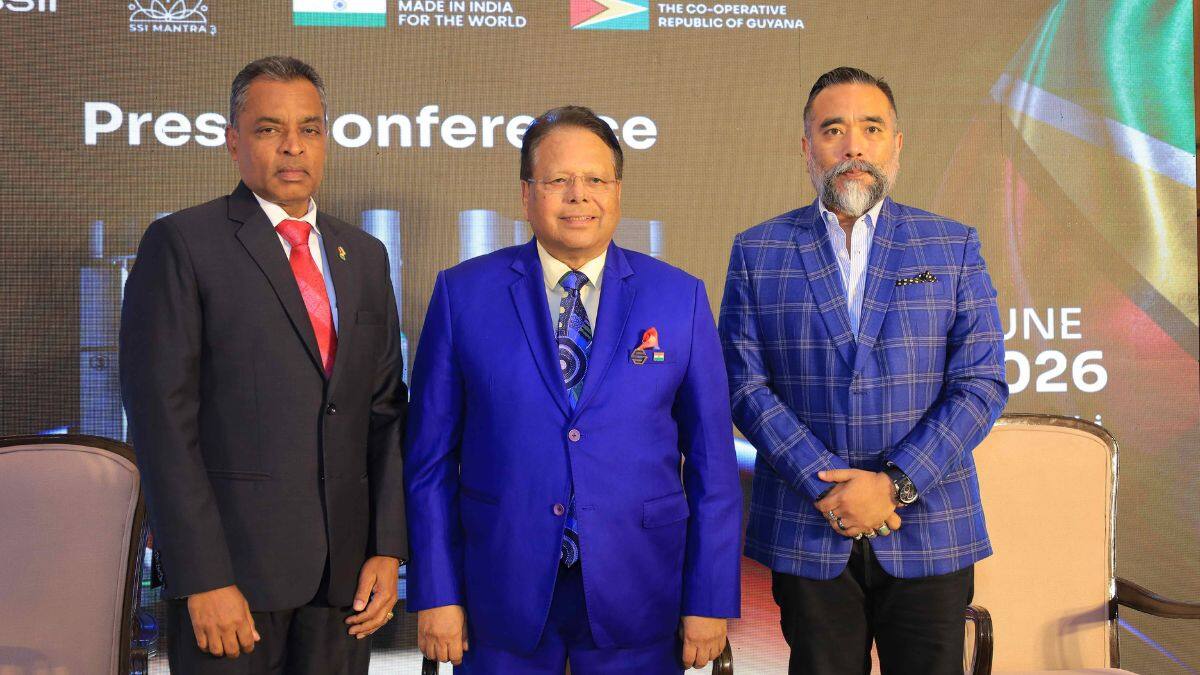
The operation was supported by surgical teams in India including cardiac surgeons and technical staff who monitored the robotic system and patient throughout the procedure. The robotic arms in Indore replicated the surgeon's movements in real time, guided by high-definition 3D visualisation and remote-control technology.
H. E. Seeraj Dharamkumar, High Commissioner of the Co-operative, Republic of Guyana to India said, “The successful completion of the world’s longest-distance robotic cardiac telesurgery between Guyana and India is a remarkable milestone in the advancement of global healthcare. As Guyana continues to strengthen its healthcare infrastructure and embrace innovative medical solutions, collaborations such as this play a vital role in enhancing patient care and building future-ready healthcare capabilities."
Industry experts say the successful completion of such long-distance procedures could accelerate the adoption of robotic surgery networks, although challenges related to regulation, cybersecurity, connectivity and patient safety remain critical considerations before widespread implementation.

Stroke in young adults, silent symptoms and late diagnosis: India's growing brain health challenge
Brain tumours aren't always fatal, but delayed diagnosis can be: Experts explain the key warning signs
Spices, health and the Indian plate: Why chilli can be good for you—but moderation is still key
Organ donation: 5 myths you need to stop believing, according to a transplant specialist
Fish over meat: Why a pescatarian diet may help people with obesity live longer