


Hantavirus map: From Germany to US and Singapore, the countries linked to hantavirus
The current Hantavirus outbreak on board the Dutch cruise ship, MV Hondius, has pushed health officials across the world into a scramble. As of now, five cases, including three deaths, have been confirmed, while another three are suspected to carry the infection, but there are fears of it spreading

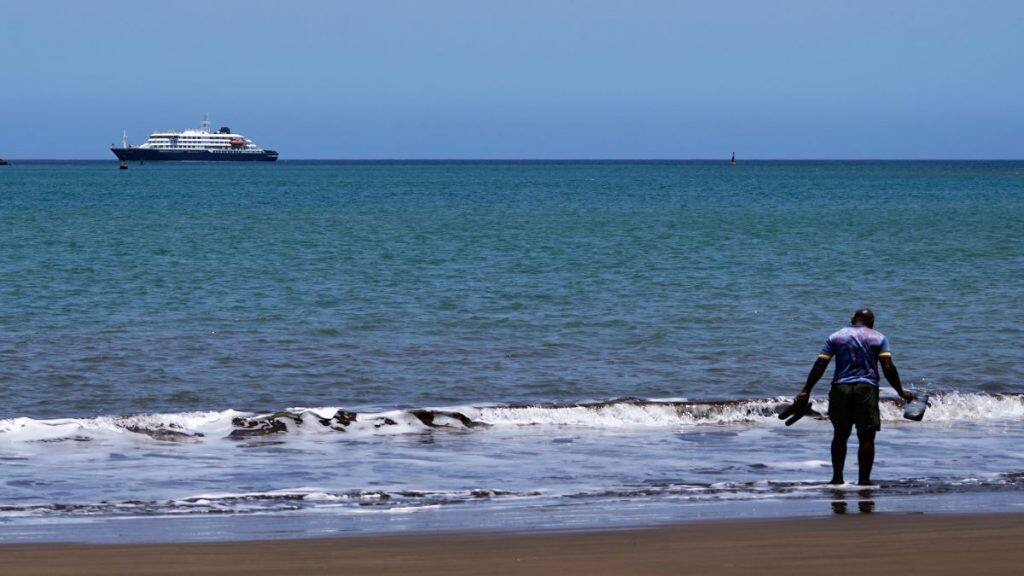
There’s an uncomfortable sense of déjà vu. The phrase “zoonotic virus” has been cropping up a lot, alongside “human-to-human contact”, “track and trace”, and “self-isolation”. But instead of coronavirus, it’s hantavirus. And the focus is on the Dutch cruise ship, the MV Hondius, after five of its passengers were confirmed to be infected and three others were believed to be also carrying the virus.
Now, global health authorities are scrambling to contain the hantavirus after at least 30 passengers disembarked from the cruise at the remote South Atlantic island of Saint Helena in late April, and several critical cases were air-evacuated to Europe this week.
Health experts stress the risk to the general public is low, with Maria van Kerkhove, director of epidemic and pandemic preparedness at the WHO, noting, “This is not coronavirus. I want to be unequivocal here; this is not SARS-CoV-2 and not the start of a Covid pandemic.”
 More from Health
Even WHO chief Tedros Adhanom Ghebreyesus has insisted that while more cases may emerge, the broader public health threat from the outbreak remains low.
WHO confirms 5 cases of hantavirus, 3 others suspected
As panic began to spread about the hantavirus, the WHO on Thursday (May 7) stated that a total of five confirmed cases had been detected among passengers aboard the MV Hondius cruise, while three more were suspected.
“So far, eight cases have been reported, including three deaths. Five of the eight cases have been confirmed as hantavirus, and the other three are suspected,” said WHO chief Tedros Adhanom Ghebreyesus in the conference on Thursday.
“The species of hantavirus involved in this case is the Andes virus, which is found in Latin America,” he told a press conference in Geneva. This strain is the only hantavirus strain that transmits from person to person and is believed to be more fatal.
He stressed that “none of the remaining passengers or crew on the ship are currently symptomatic”. However, given that the incubation period of the Andes virus can be up to six weeks, he warned that “it’s possible that more cases may be reported”.
A scramble unlike any other across the world
The worry for health officials is that some passengers had disembarked and dispersed across multiple countries before the outbreak was fully understood. The operator of the MV Hondius, Oceanwide Expeditions, is now working to “establish details of all passengers and crew who embarked and disembarked on various stops of m/v Hondius since March 20,” amid concern for the global spread of the virus.
In fact, around 30 of the passengers disembarked from the cruise, which is now heading to Spain’s Tenerife, travelling to 12 different countries, ranging from Argentina, to the Netherlands to the United States and even Singapore.
Argentina: The South American country is the focus of the hantavirus outbreak as the ship began its voyage from here on April 1. The source of the outbreak hasn’t been confirmed, but the Argentine government is looking into whether infections began in the country. The government’s leading hypothesis is that a Dutch couple contracted the illness during a bird-watching outing in Ushuaia, Argentina. Argentina’s health ministry will now carry out rodent trapping and analysis in Ushuaia as investigations continue.
Germany: One of the three passengers on board the MV Hondius who died of hantavirus was a German woman. Meanwhile, another asymptomatic individual was evacuated on Wednesday. The Duesseldorf University Clinic, treating the German evacuee, said she was not a confirmed case but rather a contact and was undergoing tests.

The Netherlands: The MV Hondius is a Dutch-flagged ship operated by Oceanwide Expeditions. Two Dutch nationals, husband and wife, are among the three reported deaths from the Hondius. The woman, who died in South Africa, tested positive for hantavirus.
Another Dutch woman has also been admitted to a hospital in Amsterdam after showing symptoms of hantavirus. However, she wasn’t on the cruise. According to Dutch broadcaster RTL, she was a stewardess at KLM airlines and had been in contact with the woman who died from the hantavirus infection in Johannesburg.
US: Seventeen of the MV Hondius passengers are from the United States. The New York Times reported that authorities in at least three states — Arizona, Georgia, and California — are monitoring previous passengers of the ship, and none have shown symptoms.
UK: Of the 19 British passengers on board the MV Hondius, one is confirmed to have contracted the infection and is currently receiving treatment. Additionally, another British national suspected of an infection, a crew member, is among those evacuated from the ship on May 6. Two others have been self-isolating after leaving the cruise ship when it made a stop at St. Helena.
Switzerland: The Swiss Federal Office of Public Health announced on May 6 that a man who was on the MV Hondius was infected with the hantavirus and was being treated at the University Hospital Zurich. The patient, who returned to Switzerland after travelling on the cruise ship, tested positive for the Andes strain. His wife, who accompanied him on the trip, has not yet shown any symptoms but is self-isolating as a precaution.
Denmark: Danish authorities have informed that they have instructed a citizen to self-isolate after disembarking the vessel. The person is believed to be at low risk, having had no close contact with those who later fell ill.
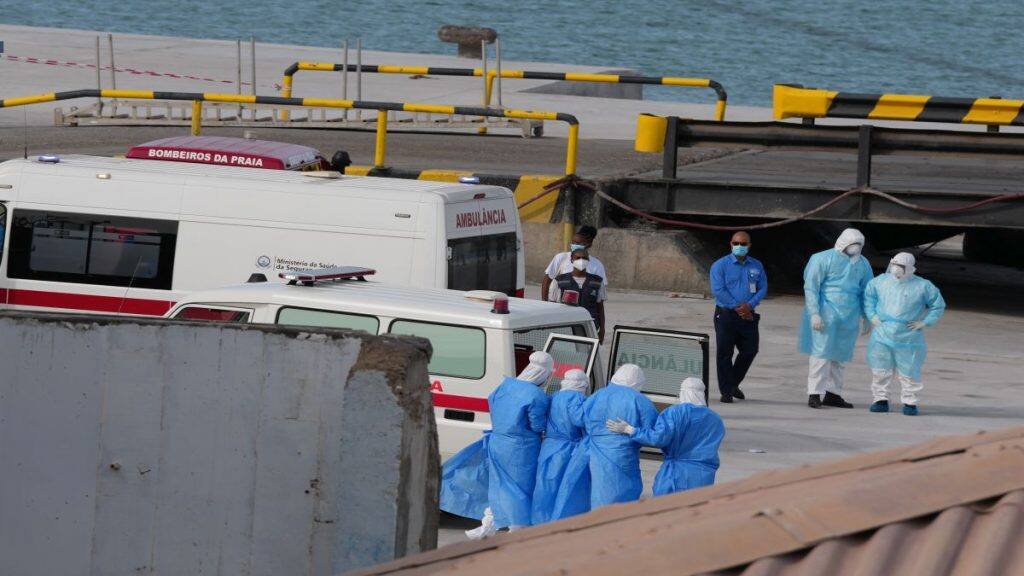
South Africa: A Dutch woman who died in South Africa had flown in from St Helena after departing the ship. According to the WHO, she deteriorated during a flight to Johannesburg, with South African media reporting she collapsed at the OR Tambo International airport. Her infection with hantavirus was confirmed, and South African health officials afterwards identified 62 people she came into contact with, the government announced.
Spain: The MV Hondius is expected to dock at Spain’s Tenerife, even though Spain rejected the request earlier. Now, once the ship docks, if they are still healthy, all non-Spanish citizens will be repatriated to their countries, while 14 Spanish passengers will be quarantined in a military hospital in Madrid.
Singapore: Far away from the MV Hondius, Singapore’s health ministry announced that it had isolated two of its citizens. “Their test results are pending,” it said in an update. “One has a runny nose but is otherwise well, and the other is asymptomatic. The risk to the general public in Singapore is currently low.”
The country was notified earlier this week that two residents, aged 67 and 65, departed Ushuaia on the ship.

The Philippines: The MV Hondius has 38 Filipinos as crew, but a spokesperson and undersecretary for the Philippines’ health department said that none are presently ill and that they are in close coordination with the concerned authorities.
Canada: Three people in Canada are self-isolating, including two people in Ontario and one in Quebec, government authorities said Thursday. One of those people was not on the cruise but was on the same flight home as two Canadians who were aboard the vessel.
France: Eight French nationals who were not on the cruise have been identified as close contacts of a confirmed case, according to the French health ministry. These individuals were on an international flight on April 25, 2026, between St Helena and Johannesburg, on which the confirmed case also travelled. One of the individuals is displaying “mild symptoms,” the ministry said, with diagnostic tests being carried out and isolation measures put in place.
Officials initiate contact tracing
While hantavirus infections don’t jump from person to person, as the Andes strain has been identified in those infected, health officials are now conducting contact tracing — identifying and following people who may have come in contact with passengers who got sick or died.

This isn’t easy, as many passengers have disembarked from the ship and travelled to different corners of the world, coming in contact with others along the way.
As Martin Cetron, a former senior CDC official who oversaw global migration and quarantine efforts for more than two decades, told the Washington Post, “That’s the big lift.” Investigators must simultaneously define cases, determine how the virus is spreading, and trace contacts, sometimes across multiple countries, to understand the outbreak’s scope.
Apart from tracking people, scientists are also trying to understand the germ. The Andes virus, a member of the hantavirus family found in South America, may be one of the rare hantaviruses that can spread between people. They are also analysing the virus’s genetics to see whether it has changed in a way to make it more transmissible.
But despite all of this, the WHO has urged people not to panic. WHO’s emergency alert and response director Abdi Rahman Mahamud noted: “We believe this will be a limited outbreak if the public health measures are implemented and solidarity shown across all countries.”
Meanwhile, a doctor treating a hantavirus-infected individual in the Netherlands also stated that the virus was nothing like Covid. Karin Ellen Veldkamp, head of infectious diseases at Leiden University Medical Centre, told AFP, “No, it is not like that. It is not easily transmissible from person to person.
“We know (person-to-person transmission) is possible and we suspect that has happened on the boat... but it is not like Covid, (transmission) is much more difficult,” she added.
With inputs from agencies
Tags

Stroke in young adults, silent symptoms and late diagnosis: India's growing brain health challenge
Brain tumours aren't always fatal, but delayed diagnosis can be: Experts explain the key warning signs
Spices, health and the Indian plate: Why chilli can be good for you—but moderation is still key
Organ donation: 5 myths you need to stop believing, according to a transplant specialist
Fish over meat: Why a pescatarian diet may help people with obesity live longer