
Advertisement


Sections
Gender check: How Parkinson's disease affects men and women differently
Parkinson's is one of those health conditions that progresses at different rates in men and women and can have slightly different symptoms based on gender.

We know that men are at higher risk of getting Parkinson’s disease but female patients are more likely to be depressed by it. Now, a study shows that men and women have can have slightly different symptoms of Parkinson's, too.For example, whereas women are more likely to get tremors in the early stages of the disease and they tend to experience more severe pain, male patients tend to have more problems with their posture - they are more likely to bend forward when they stand or walk.[caption id="attachment_7432871" align="alignleft" width="380"]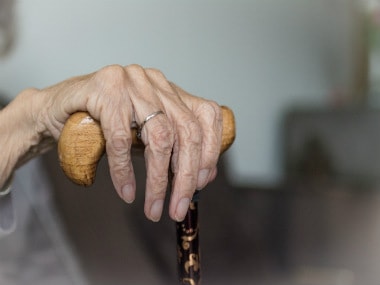 Representational image.
Image by Sabine van Erp from Pixabay[/caption]Medical researchers now concede that men and women may sometimes have different symptoms even when they have the same disease. As a result, more studies are focusing on getting an equal number of male and female participants - it turns out, women can also react differently to some drugs.Parkinson's, a neurodegenerative disease, is one of those health conditions that progresses at different rates in men and women and can have slightly different symptoms based on gender. Read on to know how Parkinson's affects people across gender lines.
What is Parkinson’s Disease
Parkinson’s is named after Dr James Parkinson, a London doctor who first described the disease as a “shaking palsy” in 1817. It is a chronic, neurodegenerative disease - the illness affects the nerve cells in the brain that control movement. Parkinson’s progressive. Its symptoms appear gradually, and they slowly get worse.According to one estimate, 1-2 out of every 1,000 people are living with Parkinson’s disease worldwide. India has a relatively low incidence of the disease (70 per 100,000, according to one estimate), except in the Parsi community of Mumbai (around 328 cases per 1,000).What causes it
Though it was first described over 200 years ago, scientists are still trying to figure out what causes Parkinson’s.On 4 September 2019, researchers at the Lawson Health Research Institute, London, said that they might have cracked it. Dr Justin Hicks, Lawson Imaging Scientist, explained: “There’s a protein in the brain called alpha-synuclein that scientists believe is a culprit in causing Parkinson’s disease. The protein forms in ‘clumps’ called Lewy bodies that kill brain cells and potentially lead to disease.”The scientists have yet to test this theory on the human brain.Another possible explanation, according to scientists at the National Institute of Neurological Disorders and Strokes, US, is mutation (change) in the genes or exposure to certain drugs like MPTP or metal manganese.Scientists are also looking into mutation in the mitochondria as a potential cause of Parkinson’s. Every cell in the body has mitochondria - the powerhouse where the cells break down food for energy.Symptoms of Parkinson’s disease
As per the National Institutes of Health (NIH), US, the four most common symptoms of this disease are:- Tremor
- Rigidity
- Bradykinesia, or slower movements
- Postural instability
Men versus women
Both men and women tend to be between 63 and 70 years of age when they get the disease. Family history of the disease affects male and female patients equally. But this is where the similarities end.Here’s how they are different:- Globally, more cases of Parkinson’s are reported in men than in women.
- About 35% of women and 24% of men with Parkinson’s suffer from depression.
- Parkinson’s affects women’s daily life (measured in Activities of Daily Living or ADL) more than men’s.
- Women have worse UPDRS (Unified Parkinsons Disease Rating Scale) than men. UPDRS is a scale to assess the basic functions and body movements like speech, salivation, turning to one side, etc.
- Women typically present higher on the Hoehn and Yahr scale - which is used to measure the progression of the disease. Meaning, the disease develops faster in women.
- More women complain of dyskinesia (impaired voluntary movements) than men.
- Non-motor symptoms such as fatigue, depression, restless legs, constipation, pain, loss of taste or smell, weight change and excessive sweating are more common and more severe in women.
Treatment of Parkinson's
At present, there is no cure for Parkinson’s. Medicines are prescribed to ease motor symptoms. As per the NIH, medications fall into one of three categories:- Drugs that increase the level of dopamine in the brain: dopamine helps to regulate movement, attention, learning, and emotional responses as it works as a chemical messenger to the brain.
- Drugs affecting other neurotransmitters in the body like anticholinergics which helps in relieving some symptoms of the body.
- Drugs like antidepressants which help in controlling non-motor symptoms (hallucinations, delusions, depression etc.)
- The antioxidants in green tea and tangerines.
- Vitamin C and E.
- Caffeine.
- Ginseng, a Chinese herbal remedy.
First Published:Oct 01, 2019, 14:06:33 IST
Advertisement
Advertisement

Stroke in young adults, silent symptoms and late diagnosis: India's growing brain health challenge
Neurologists warn that stroke is increasingly affecting people in their 30s and 40s, while many brain disorders progress silently before symptoms appear. They say early diagnosis, timely referrals and healthier lifestyles are key to reducing India's growing neurological disease burden.
5 min read
Brain tumours aren't always fatal, but delayed diagnosis can be: Experts explain the key warning signs
Brain tumours are frequently mistaken for common headaches, stress or age-related cognitive changes. Doctors say recognising warning signs early and adopting a brain-healthy lifestyle can improve outcomes and reduce the risk of long-term neurological complications.
2 min read
Spices, health and the Indian plate: Why chilli can be good for you—but moderation is still key
From boosting metabolism to supporting heart health, chillies offer several surprising health benefits. But experts say the amount you eat matters, and too much spice can do more harm than good.
4 min read
Organ donation: 5 myths you need to stop believing, according to a transplant specialist
Organ donation has the power to transform and save lives, but this can happen only when myths are replaced with facts. Building awareness, having open conversations and understanding the process can help families make informed decisions.
2 min read
Fish over meat: Why a pescatarian diet may help people with obesity live longer
A large UK study tracking over 150,000 adults with clinical obesity found pescatarians outlived regular meat-eaters, while vegetarians and vegans saw no similar benefit, but experts say the findings don't translate simply to Indian diets.
4 min read
Advertisement
Advertisement