


Word of the Week: Work from Home, the Covid-era measure that PM Modi is batting for
Almost six years ago, India went into a national lockdown, prompting companies to pivot to work from home. Now, as the West Asia war drags on with no end in sight, PM Narendra Modi has urged Indians to revive this practice as a fuel-saving measure

A little over six years ago, Prime Minister Narendra Modi appeared on our television screens, making one of his most significant addresses — a nationwide lockdown to prevent the spread of coronavirus.
What was meant to be a 21-day lockdown stretched into a 68-day period during which offices shut down. It sent the Indian workforce into a tizzy, prompting a hasty overnight pivot to a work model that few companies had planned for.
The following year and since then, the country as well as the world welcomed hybrid working — wherein employees split their time between home and office.
Now, in 2026, it seems India may be reverting to this Covid-era measure after Prime Minister Narendra Modi appealed to Indians to work from home wherever possible as a way to conserve fuel as the West Asia crisis continues to drag on, affecting oil and gas supplies the world over.
 More from Explainers
As calls for ‘work from home’ grow louder, we have picked it as our ‘Word of the Week’.
The Covid-19 pandemic and
the rise of work from home
When Covid-19 struck, government across the world implemented lockdowns, prompting companies to introduce work from home mandates. As The Atlantic mentioned in a report, “The coronavirus outbreak triggered an anxious trial run for remote work at a grand scale.”
In India, the Covid-lockdown sent firms into a tizzy, scrambling to equip hundreds of thousands of employees with laptops and VPN access. For smaller firms and startups, employees were urged to use personal computers and their home internet. Several industries were able to digitise their operations and survived after initial hiccups.
Soon, the boundary between work and our personal lives became blurred. Working at the kitchen table became common and, for parents, juggling virtual school while trying to hit work deadlines became a daily challenge.
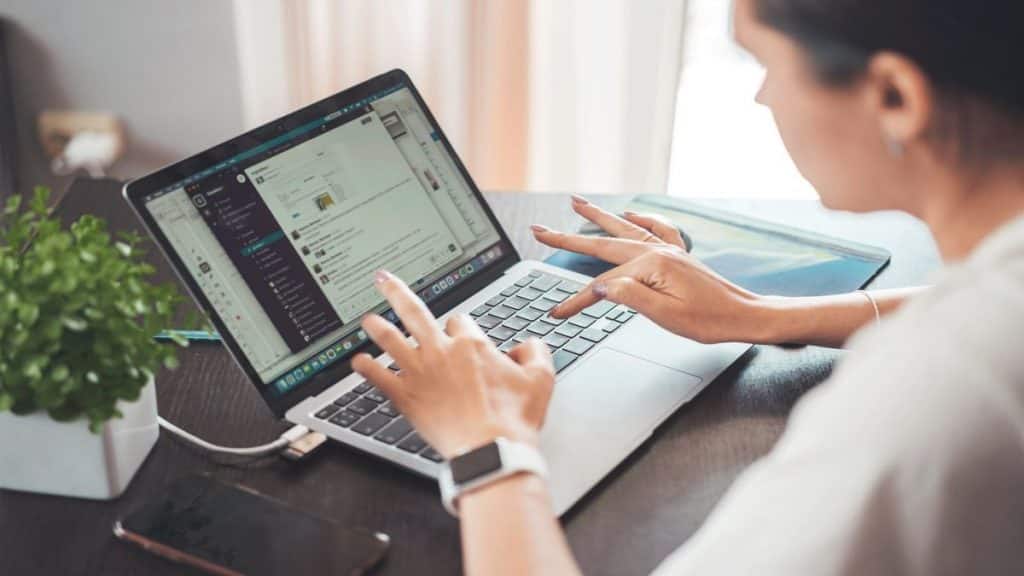
As the coronavirus waves ebbed, many assumed that work from home would give way to a return to office mandate. However, that wasn’t to be. In fact, by 2021, hybrid working became the norm wherein companies allowed their employees to spread their work hours between the office and home.
However, for many bosses, work from home or flexible working was a bane. They criticised the policy, stating productivity dipped and a sense of team was eroding. This resulted in the work from home vs work from office debate that continues until now.
Modi’s work from home appeal
Last Sunday (May 10), Prime Minister Narendra Modi raised eyebrows as he asked Indians to make arrangements to work from home and take more virtual meetings. If citizens must leave home, they should take public transportation, such as the bus or metro, or carpool if a private vehicle is necessary, said PM Modi.
Speaking in Telangana’s Secunderabad, the PM said: “During the Corona period, we developed many systems of work from home, online meetings and video conferences, and we even became accustomed to them. Today, the demands of the times are such that if we restart these systems, it will be in the national interest.”
He urged citizens and institutions to once again prioritise remote work and digital interactions to help reduce fuel consumption and ease pressure on the economy.
“We must prioritise work from home, online conferences and virtual meetings again. We must also place a strong emphasis on saving foreign exchange, as petrol and diesel have become so expensive globally,” Modi said.
Modi framed the appeal as part of a broader national effort to minimise the impact of global economic disruptions and rising import costs caused by the Iran war and the ongoing blockage of the Strait of Hormuz.
Soon, work from home became a buzzword. Many praised the PM for his appeal, noting that it would help the country to tide over this crisis. On social media, work from home became a trending topic, with many netizens creating reels and memes.
Following Modi’s appeal, companies across the country began to examine a return to work-from-home policies. Nasscom, which is the country’s IT advocacy group, noted that IT companies are already enabling remote and hybrid work “where operationally appropriate” to reduce energy usage and commuting.
“In light of the ongoing Middle East tensions, companies have adopted prudent energy management measures across campuses, including optimising non-essential consumption, rationalising select facility services, and enabling remote or hybrid work where operationally appropriate to reduce overall energy usage and commuting,” Nasscom said.
PM's WFH request not an austerity measure
For many, PM Modi’s work from home appeal along with deferring foreign holidays and gold purchases signalled a quiet push towards “austerity”. However, the Centre underlined that the message was about responsible consumption, and not economic tightening.
There is a fine line between “appeal” and “austerity”. According to government sources, austerity measures are usually linked to the slashing of expenditure, reduction in subsidies, freezing of welfare schemes and tightening public spending. Meanwhile, PM Modi’s appeals were voluntary, and not a set of formal economic directives.
“PM Modi’s appeal is not about spending less. It is about spending more wisely,” government sources said.
While companies are under no obligation to act on PM Modi’s request on work from home — it’s only an appeal and not mandatory — it has reignited a debate that corporate India thought it had put to rest.

Why has Bangladesh’s choice of India spokespersons raised eyebrows?
Who is Sandeep Lamba, the Delhi cop removed from protest site duty after slapping female protester?
Explorers discover wreckage of plane 72 years later. Will this help in finding MH370?
Cruise missiles, drones and more... The deadly arsenal of the Houthis
Why India may not witness a medal rush at 2026 Commonwealth Games