


Will diesel get more expensive after the EU ban and West's price cap on Russia's supplies?
Europe's ban on Russian diesel took effect from Sunday following its embargo on coal and most oil. The move is meant to further slash reliance on Russian energy and payments into the Kremlin's war chest as the anniversary of the invasion of Ukraine nears

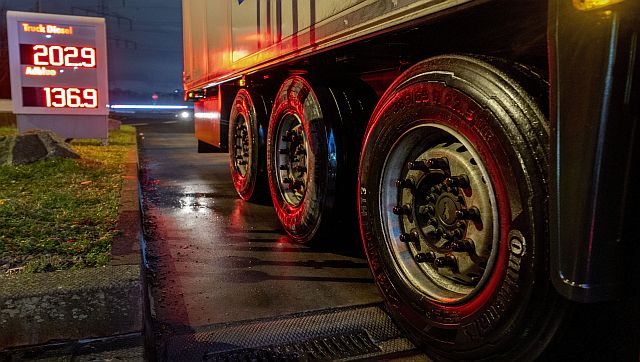
US suppliers have stepped up shipments to record levels, from 34,000 barrels a day at the start of 2022 to 237,000 barrels per day so far in January, according to S&P Global. AP[/caption]"When Russian exports are constrained, for whatever reason, that would of course cause some trouble in this whole reshuffle process," said Hedi Grati, head of fuels and refining research for Europe at S&P Global Commodity Insights. "Europe would be competing with other big importers, and that would cause upward pressure on pricing."What does the price cap accomplish?The hope is to reproduce the effect of the West's $60-a-barrel price cap on Russian crude oil. Russia has said it won't sell oil to countries observing the limit, but the cap and falling demand from a slowing global economy has meant customers in China, India and elsewhere can buy Russian oil at steep discounts, cutting into the Kremlin's revenue.The goal is the same with the diesel cap: "It is likely that Russia will have a harder time finding new buyers of its diesel than it did for crude oil and will be forced to accept discounts when doing so," said Simone Tagliapietra, an energy policy expert at the Bruegel think tank in Brussels.Once they're in place, the caps could be tightened to increase pressure on Russia.What happens if diesel gets more expensive?Fuel prices have been a major factor behind painful inflation in Europe that has robbed consumers of purchasing power and slowed the economy.Rast Reisen, the bus and travel company near Freiburg im Breisgau in southwestern Germany, has seen diesel fuel rise from 12-15 per cent of costs to 20-25 per cent.Because 15 of its 25 buses are part of the regional public transport network, the company can't automatically raise fares, and government increases so far are "a droplet on a hot stone," said Sedelmeier, managing director for public transport.Rast Reisen had to add a $11 to $16 diesel surcharge to trips to popular destinations like northern Germany's island of Sylt or Croatia's coast because prices spiked after catalogues were printed. Next year, prices for trips will simply be higher.Diesel prices at the pump have swung from $6.43 a gallon to $8.29 a gallon in the course of a year."That is a gigantic increase," said Christopher Schuldes, the third generation of his family to run German trucking company Schuldes Spedition.The company has 27 diesel trucks and 50 employees in the small town of Alsbach-Haehnlein between Frankfurt and Heidelberg in southwest Germany. It already has cut fuel costs by equipping trucks with efficient engines, ensuring trucks leave fully loaded and training employees in fuel-efficient driving."We did all that a long time ago, long before Russia invaded Ukraine," Schuldes said. "There's no more room for optimisation."To ease the extra diesel costs, the company tried negotiating higher prices with customers who have long-term contracts. Some agreed, some didn't. Even if a contract allows prices to rise with diesel costs, there's a two-month lag.Regarding the embargo, "I am of two minds about it," Schuldes said. "I have to see that the company is in good shape, and that our purchasing is as economical as possible. On the other hand — on the personal level — I say Russia must not be supported."Read all the Latest News, Trending News, Cricket News, Bollywood News,India News and Entertainment News here. Follow us on Facebook, Twitter and Instagram.

Military drones & police check-ups: How Sri Lanka is fighting against worst dengue outbreak in a decade
How Facebook job ad lured 2 Karnataka men into Myanmar cyber scam camp
Why is India seeing 95% cloud cover despite a Super El Niño?
What is CJP’s fourth demand to the government as protests in Delhi intensify?
The new geography of war: Why the Houthis can no longer be ignored