


Why Meta’s Threads app is Twitter's biggest threat yet
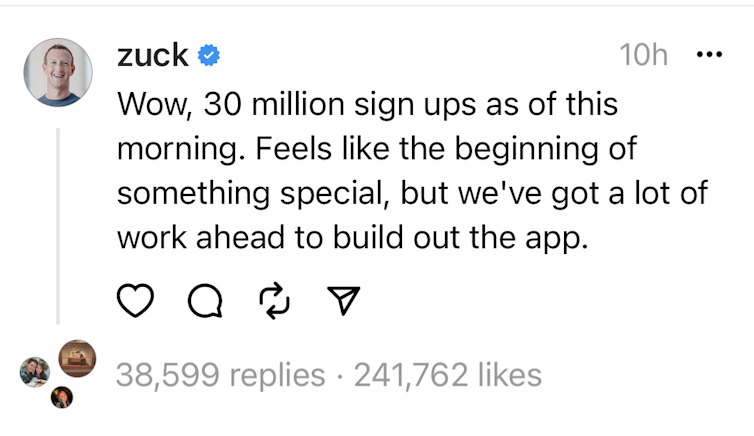
In less than 24 hours, Threads attracted some 30 million users. And with Meta already having more than two billion Instagram users who can directly link their accounts to it, Threads’ user base will grow fast

In less than 24 hours, Threads attracted some 30 million users.And with Meta already having more than two billion Instagram users who can directly link their accounts to it, Threads’ user base will grow fast.
We’ve been here before
 Elon Musk's stewardship of Twitter has come in for much flak[/caption]Musk also labelled trusted news organisations such as the BBC as “state-owned” media, until public backlash forced him to retreat. More recently, he started limiting how many tweets users can view and announced that TweetDeck (a management tool for scheduling tweets) would be limited to paid accounts.Twitter users have tried several alternatives, including Spoutible and Post. Bluesky, which came from Twitter co-founder Jack Dorsey, is gaining ground – but its growth has been limited due to its invitation-only registration process.
Nothing had quite captured the imagination of Twitter followers … until now.

Community is the key to success
The ability to retain community in an app that provides a similar experience to Twitter is what makes Threads the biggest threat yet.My research shows that people crave authority, authenticity and community the most when they engage with online information. In our new book, my co-authors Donald O. Case, Rebekah Willson and I explain how users search for information from sources they know and trust.Twitter fans want an alternative platform with similar functionality, but most importantly they want to quickly find “their people”. They don’t want to have to rebuild their communities. This is likely why so many have stayed on Twitter, even as Musk has done so well to run it into the ground.
Challenges ahead
This may be in conflict with Threads’ privacy policy.Meta has also announced plans to eventually move Threads towards a decentralised infrastructure. In the app’s “How Threads Works” details, it says “future versions of Threads will work with the fediverse”, enabling “people to follow and interact with each other on different platforms, including Mastodon”.This means people will be able to view and interact with Threads content from non-Meta accounts, without needing to sign up to Threads. Using the ActivityPub standard (which enables decentralised interoperability between platforms), Threads could then function the same way as WordPress, Mastodon and email servers – wherein users of one server can interact with others.When and how Threads achieves this plan for decentralised engagement – and how this might impact users’ experience – is unclear.
Did Meta steal ‘trade secrets’?
As for Musk, he’s not going down without a fight. Just hours after Threads’ release, Twitter’s lawyer Alex Spiro released a letter accusing Meta of “systematic” and “unlawful misappropriation” of trade secrets.The letter alleges former Twitter employees hired by Meta were “deliberately assigned” to “develop, in a matter of months, Meta’s copycat ‘Threads’ app”.Meta has disputed these claims, according to reports, but the rivalry between the two companies seems far from over.This article is republished from The Conversation under a Creative Commons license. Read the original article.
 More from Explainers
Military drones & police check-ups: How Sri Lanka is fighting against worst dengue outbreak in a decade
How Facebook job ad lured 2 Karnataka men into Myanmar cyber scam camp
Why is India seeing 95% cloud cover despite a Super El Niño?
What is CJP’s fourth demand to the government as protests in Delhi intensify?
The new geography of war: Why the Houthis can no longer be ignored