


Why is fighting flaring in eastern Congo?
Violent clashes have escalated between Democratic Republic of Congo (DRC)'s army and Rwandan-backed M23 Tutsi-led rebels in eastern Congo. Here’s what’s going on there

A new humanitarian crisis is brewing in the eastern Congo.
Violent clashes between the Democratic Republic of the Congo (DRC) army and Rwandan-backed M23 Tutsi-led rebels in eastern Congo have killed scores and displaced hundreds of thousands of people.
The fighting, in a war that has lasted decades, has increased the risk of an all-out conflict between Congo and Rwanda that could suck in neighbours and regional forces including South Africa, Burundi, Uganda, Tanzania and Malawi.
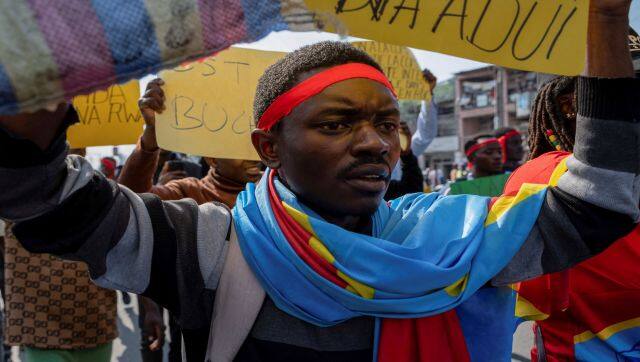
In the capital Kinshasa, and the North Kivu provincial capital Goma, Congolese have taken to the streets to protest against deteriorating security in the east and have accused the international community of not doing enough to hold Rwanda to account for its support for the rebels.
The renowned armed rebel group M23 is in the midst of a new advance that threatens to cut off a major city and leave millions of people struggling for food and medical help.
 More from Explainers
For years, eastern Congo has been plagued by conflict, with M23 one of over 100 armed groups vying for control of the mineral-rich region near Rwanda's border. Some have been accused of committing mass killings.
Here’s what to know about the crisis in eastern Congo.
What is the M23?
The M23, which refers to the 23 March date of a 2009 accord that ended a previous Tutsi-led revolt in eastern Congo, is the latest in a series of groups of ethnic Tutsi-led insurgents to rise up against Congolese forces.
The group has accused the government of Congo of not living up to the peace deal to fully integrate Congolese Tutsis into the army and administration. It also vows to defend Tutsi interests, particularly against ethnic Hutu militias like the Democratic Forces for the Liberation of Rwanda (FDLR), founded by Hutus who fled Rwanda after participating in the 1994 genocide of more than 800,000 Tutsis and moderate Hutus.
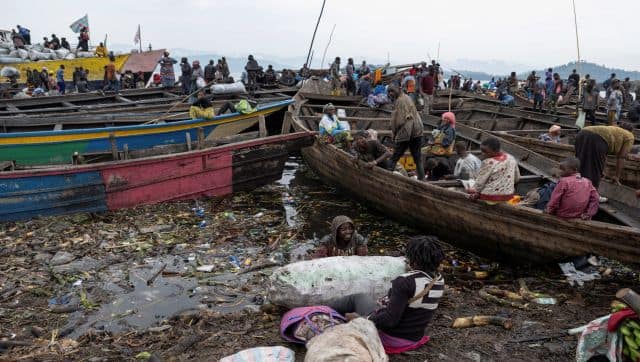
The rebels have been closing in on Goma in the past few weeks and are now stationed in the hills outside Sake, 25 km from Goma, having blocked off the main roads to the north and west of the city. Capturing Goma would be their biggest military gain in more than a decade.
What set off the latest revolt?
In 2012 and 2013, M23 seized large parts of eastern Congo and entered Goma, a strategic economic hub, before they were chased out by Congolese and UN forces into Uganda and Rwanda.
In March 2022, the group launched a series of attacks and seized large areas of eastern Congo, saying the move was a defensive response to attacks by the FDLR, which it said was collaborating with the Congolese army. The Congolese army has denied working with the FDLR.
How and why is Rwanda involved?
The government of Congo, UN officials and Western powers including the United States and Belgium have accused Rwanda of providing support for M23, including arms and soldiers, despite Rwanda's repeated denials.
Rwanda and Uganda have a long history of military intervention inside Congo. The two countries invaded in 1996 and 1998, claiming they were defending themselves against local militia groups.
The US has urged Rwanda to withdraw its military personnel from Congo and remove surface-to-air missile systems.
Rwanda has blamed the escalation on Congo's decision to end the mandate of regional peacekeepers. It added that its actions were taken due to threats to Rwanda's national security, including statements by Congolese officials threatening to invade Rwanda.
What role did the regional forces play?
Fighting has continued despite numerous ceasefires brokered by regional leaders and the United States in 2022 and 2023. Frustrated by the ineffectiveness of regional troops, particularly from Kenya, deployed to enforce the withdrawal of the rebels, Congo decided to end the mandate of the regional force, leading to it pulling out in December.
In May, the 16-member Southern African Development Community (SADC) approved a military mission for eastern Congo to help the country address instability and tackle armed groups.
Unlike the East African forces, the SADC troops, who include forces from South Africa, Malawi and Tanzania, have an offensive mandate to support Congo's army fight rebel groups.
South Africa has said it will contribute 2,900 troops. It reported that two of its soldiers were killed and three were wounded by a mortar bomb in eastern Congo.
With inputs from Reuters
Tags

Why has Bangladesh’s choice of India spokespersons raised eyebrows?
Who is Sandeep Lamba, the Delhi cop removed from protest site duty after slapping female protester?
Explorers discover wreckage of plane 72 years later. Will this help in finding MH370?
Cruise missiles, drones and more... The deadly arsenal of the Houthis
Why India may not witness a medal rush at 2026 Commonwealth Games