
Advertisement


Sections
Why identifying Taliban's war on women as gender apartheid will help
Criminalising gender apartheid would provide the international community with a powerful legal framework to effectively respond to Taliban abuses

The second anniversary of the Taliban takeover of Afghanistan is here. Since then, Afghan women have been denied the most basic human rights in what can only be described as gender apartheid.Only by labelling it as such and making clear the situation in Afghanistan is a crime against humanity can the international community legally fight the systematic discrimination against the country’s women and girls.Erasing women from the public sphere is central to Taliban ideology. Women’s rights institutions in Afghanistan, notably the Ministry of Women’s Affairs, have been dismantled while the dreaded Ministry for the Propagation of Virtue and the Prevention of Vice has been resurrected.The Afghan Independent Human Rights Commission has been dissolved and the country’s 2004 constitution repealed, while legislation guaranteeing gender equality has been invalidated.Today, Afghan women are denied a post-secondary education, they cannot leave the house without a male chaperone, they cannot work, except in health care and some private businesses and they are barred from parks, gyms and beauty salons.Women targetedOf the approximately 80 edicts issued by the Taliban, 54 specifically target women, severely restricting their rights and violating Afghanistan’s international obligations and its previous constitutional and domestic laws.The Taliban appear undeterred, continuing where they left off 20 years ago when they first held power. The results of their ambitions are nearly apocalyptic.Afghanistan is facing one of the world’s worst humanitarian crises. About 19 million people are suffering from acute food insecurity, while more than 90 per cent of Afghans are experiencing some form of food insecurity, with female-headed households and children most impacted.[caption id="attachment_12997282" align="alignnone" width="640"]![]() Erasing women from the public sphere is central to Taliban ideology. AP[/caption]Gender-based violence has increased exponentially with corresponding impunity for the perpetrators and lack of support for the victims, while ethnic, religious and sexual minorities are suffering intense persecution.This grim reality underscores the urgent need to address how civil, political, socioeconomic and gender-based harms are interconnected.International crimeKarima Bennoune, an Algerian-American international law scholar, has advocated recognising gender apartheid as a crime under international law. Such recognition would stem from states’ international legal commitments to gender equality and the United Nations’ Sustainable Development Goal 5 aimed at achieving global gender equality by 2030.Criminalising gender apartheid would provide the international community with a powerful legal framework to effectively respond to Taliban abuses. While the UN has already labelled the situation in Afghanistan gender apartheid, the term is not currently recognised under the Rome Statute of the International Criminal Court as being among the worst international crimes.[caption id="attachment_12997292" align="alignnone" width="640"]
Erasing women from the public sphere is central to Taliban ideology. AP[/caption]Gender-based violence has increased exponentially with corresponding impunity for the perpetrators and lack of support for the victims, while ethnic, religious and sexual minorities are suffering intense persecution.This grim reality underscores the urgent need to address how civil, political, socioeconomic and gender-based harms are interconnected.International crimeKarima Bennoune, an Algerian-American international law scholar, has advocated recognising gender apartheid as a crime under international law. Such recognition would stem from states’ international legal commitments to gender equality and the United Nations’ Sustainable Development Goal 5 aimed at achieving global gender equality by 2030.Criminalising gender apartheid would provide the international community with a powerful legal framework to effectively respond to Taliban abuses. While the UN has already labelled the situation in Afghanistan gender apartheid, the term is not currently recognised under the Rome Statute of the International Criminal Court as being among the worst international crimes.[caption id="attachment_12997292" align="alignnone" width="640"]![]() The Taliban appear undeterred, continuing where they left off 20 years ago when they first held power. The results of their ambitions are nearly apocalyptic. AP[/caption]Presenting his report at the UN Human Rights Council, Richard Bennett — the UN Special Rapporteur on the Situation of Human Rights in Afghanistan — stated:“A grave, systematic and institutionalised discrimination against women and girls is at the heart of Taliban ideology and rule, which also gives rise to concerns that they may be responsible for gender apartheid.”Criminalising gender apartheid globally would allow the international community to fulfil its obligation to respond effectively and try to eradicate it permanently. It would provide the necessary legal tools to ensure that international commitments to women’s rights in all aspects of life are upheld.Shaharzad Akbar, head of the Rawadari human rights group and former chair of the Afghanistan Independent Human Rights Commission, has urged the Human Rights Council to acknowledge the situation in Afghanistan as gender apartheid.She’s noted that the “Taliban have turned Afghanistan to a mass graveyard of Afghan women and girls’ ambitions, dreams and potential.”South African supportA number of Afghan women’s rights defenders have also called for the inclusion of gender apartheid in the UN’s Draft Convention on Crimes Against Humanity.Most remarkably, Bronwen Levy, South Africa’s representative at the Security Council, has urged the international community to “take action against what (Bennett’s) report describes as gender apartheid, much like it did in support of South Africa’s struggle against racial apartheid.”Elsewhere, the chair of the European Parliament’s Committee on Women’s Rights and Gender Equality, as well as the head of its Delegation for Relations with Afghanistan, have described the “unacceptable” situation in Afghanistan as one of gender apartheid.Whenever and wherever apartheid systems emerge, it represents a failure of the international community. The situation in Afghanistan must compel it to respond effectively to the persecution of women.Recognising Taliban rule as gender apartheid is not only critical for Afghans, it is equally critical for the credibility of the entire UN system. As Afghan human rights activist Zubaida Akbar told the Security Council:
The Taliban appear undeterred, continuing where they left off 20 years ago when they first held power. The results of their ambitions are nearly apocalyptic. AP[/caption]Presenting his report at the UN Human Rights Council, Richard Bennett — the UN Special Rapporteur on the Situation of Human Rights in Afghanistan — stated:“A grave, systematic and institutionalised discrimination against women and girls is at the heart of Taliban ideology and rule, which also gives rise to concerns that they may be responsible for gender apartheid.”Criminalising gender apartheid globally would allow the international community to fulfil its obligation to respond effectively and try to eradicate it permanently. It would provide the necessary legal tools to ensure that international commitments to women’s rights in all aspects of life are upheld.Shaharzad Akbar, head of the Rawadari human rights group and former chair of the Afghanistan Independent Human Rights Commission, has urged the Human Rights Council to acknowledge the situation in Afghanistan as gender apartheid.She’s noted that the “Taliban have turned Afghanistan to a mass graveyard of Afghan women and girls’ ambitions, dreams and potential.”South African supportA number of Afghan women’s rights defenders have also called for the inclusion of gender apartheid in the UN’s Draft Convention on Crimes Against Humanity.Most remarkably, Bronwen Levy, South Africa’s representative at the Security Council, has urged the international community to “take action against what (Bennett’s) report describes as gender apartheid, much like it did in support of South Africa’s struggle against racial apartheid.”Elsewhere, the chair of the European Parliament’s Committee on Women’s Rights and Gender Equality, as well as the head of its Delegation for Relations with Afghanistan, have described the “unacceptable” situation in Afghanistan as one of gender apartheid.Whenever and wherever apartheid systems emerge, it represents a failure of the international community. The situation in Afghanistan must compel it to respond effectively to the persecution of women.Recognising Taliban rule as gender apartheid is not only critical for Afghans, it is equally critical for the credibility of the entire UN system. As Afghan human rights activist Zubaida Akbar told the Security Council:![The Conversation]() This article is republished from The Conversation under a Creative Commons license. Read the original article.
This article is republished from The Conversation under a Creative Commons license. Read the original article.
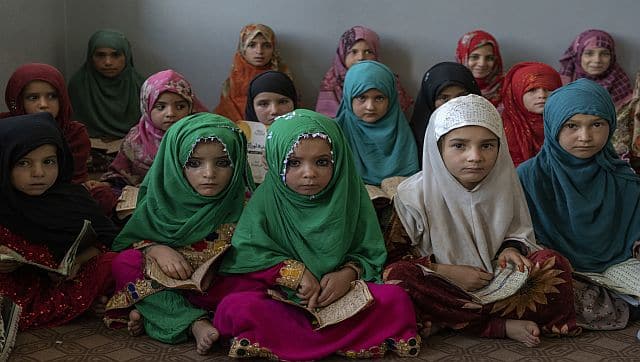 Erasing women from the public sphere is central to Taliban ideology. AP[/caption]Gender-based violence has increased exponentially with corresponding impunity for the perpetrators and lack of support for the victims, while ethnic, religious and sexual minorities are suffering intense persecution.This grim reality underscores the urgent need to address how civil, political, socioeconomic and gender-based harms are interconnected.International crimeKarima Bennoune, an Algerian-American international law scholar, has advocated recognising gender apartheid as a crime under international law. Such recognition would stem from states’ international legal commitments to gender equality and the United Nations’ Sustainable Development Goal 5 aimed at achieving global gender equality by 2030.Criminalising gender apartheid would provide the international community with a powerful legal framework to effectively respond to Taliban abuses. While the UN has already labelled the situation in Afghanistan gender apartheid, the term is not currently recognised under the Rome Statute of the International Criminal Court as being among the worst international crimes.[caption id="attachment_12997292" align="alignnone" width="640"]
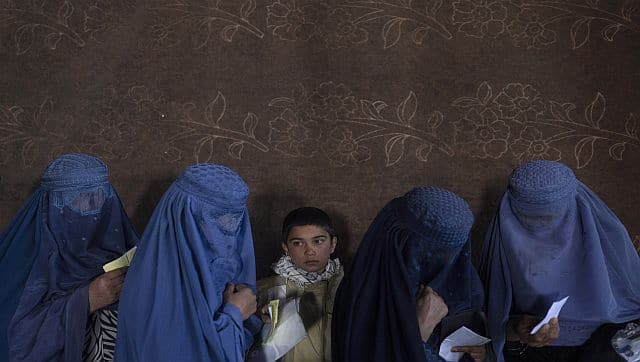 The Taliban appear undeterred, continuing where they left off 20 years ago when they first held power. The results of their ambitions are nearly apocalyptic. AP[/caption]Presenting his report at the UN Human Rights Council, Richard Bennett — the UN Special Rapporteur on the Situation of Human Rights in Afghanistan — stated:“A grave, systematic and institutionalised discrimination against women and girls is at the heart of Taliban ideology and rule, which also gives rise to concerns that they may be responsible for gender apartheid.”Criminalising gender apartheid globally would allow the international community to fulfil its obligation to respond effectively and try to eradicate it permanently. It would provide the necessary legal tools to ensure that international commitments to women’s rights in all aspects of life are upheld.Shaharzad Akbar, head of the Rawadari human rights group and former chair of the Afghanistan Independent Human Rights Commission, has urged the Human Rights Council to acknowledge the situation in Afghanistan as gender apartheid.She’s noted that the “Taliban have turned Afghanistan to a mass graveyard of Afghan women and girls’ ambitions, dreams and potential.”South African supportA number of Afghan women’s rights defenders have also called for the inclusion of gender apartheid in the UN’s Draft Convention on Crimes Against Humanity.Most remarkably, Bronwen Levy, South Africa’s representative at the Security Council, has urged the international community to “take action against what (Bennett’s) report describes as gender apartheid, much like it did in support of South Africa’s struggle against racial apartheid.”Elsewhere, the chair of the European Parliament’s Committee on Women’s Rights and Gender Equality, as well as the head of its Delegation for Relations with Afghanistan, have described the “unacceptable” situation in Afghanistan as one of gender apartheid.Whenever and wherever apartheid systems emerge, it represents a failure of the international community. The situation in Afghanistan must compel it to respond effectively to the persecution of women.Recognising Taliban rule as gender apartheid is not only critical for Afghans, it is equally critical for the credibility of the entire UN system. As Afghan human rights activist Zubaida Akbar told the Security Council:
“If you do not defend women’s rights here, you have no credibility to do so anywhere else.”The Taliban’s brutal two years in power in Afghanistan have taught us that ordinary human rights initiatives, while important, are insufficient for addressing gender apartheid. The world needs resolute collective international action to end the war on women. Not in two months. Not in two years. But now.
 This article is republished from The Conversation under a Creative Commons license. Read the original article.
First Published:Aug 16, 2023, 07:37:35 IST
Advertisement
Advertisement

Delhi Police asks personnel to wear uniform: What the law says on cops in plainclothes during protests
The Delhi Police has instructed all its personnel to wear uniforms when they report for duty at Jantar Mantar for crowd control. This comes after outrage grew over videos of men in civilian clothes or without name tags hitting protesters in the Capital. Is it legal for the police to ditch uniforms during protests?
4 min read
Military drones & police check-ups: How Sri Lanka is fighting against worst dengue outbreak in a decade
Sri Lanka is fighting its most severe dengue outbreak in nearly a decade, with infections rising sharply across the nation. Military drones have been deployed to tackle the outbreak, which has claimed 56 lives. Health officials said the outbreak is being driven primarily by the DENV-2 variant of the virus
3 min read
How Facebook job ad lured 2 Karnataka men into Myanmar cyber scam camp
The Karnataka Cyber Command has rescued two youths from a scam compound in Myanmar operated by Chinese fraudsters. The duo from Karnataka were lured on the pretext of data-entry jobs. They were asked to work for 16 hours a day and were expected to sleep for six hours daily
4 min read
Why is India seeing 95% cloud cover despite a Super El Niño?
India is witnessing nearly 95 per cent cloud cover despite a Super El Niño, a climate event usually linked to weaker monsoons. Regional weather systems, cyclonic circulations, the monsoon trough and moisture from two seas are temporarily overpowering one of the world's strongest climate phenomena
5 min read
What is CJP’s fourth demand to the government as protests in Delhi intensify?
The protest by the Cockroach Janta Party at Delhi’s Jantar Mantar refuses to die down. The group have made a fourth demand to the Centre, asking that no FIRs are filed against the agitators and that no legal action be taken. The government has expressed willingness to speak to the protesters, but refused to accede on the resignation of Education Minister Dharmandra Pradhan
5 min read
Advertisement
Advertisement