


Why have Chinese stocks lost $6 trillion in three years?
The past three years have witnessed $6 trillion worth of investors' wealth being wiped away in China and Hong Kong. Experts say that Beijing has not supported the economy through stimulus and a lack of reforms has shaken confidence

This after China's stock market tumbled 13 per cent in 2023.The CSI300 Index, which tracks the performance of the performance of the top 300 stocks traded on the Shanghai Stock Exchange and the Shenzhen Stock Exchange, lost 14 per cent in 2023, 22 per cent plunge in 2022 and a 5.2 per cent in 2021.“Investors have been through a tough year in 2023, as weakening consumer spending and the downturn in the property market both exceed estimates,” Dai Ming, a fund manager at Huichen Asset Management in Shanghai, told SCMP. “The geopolitical tensions coupled with monetary policy tightening in the US have added fuel to the sell-offs.”In contrast, Japan's Nikkei Average and the US benchmark S&P 500 are up 24 per cent each.Why is this happening?Confidence in the world's second-biggest economy has evaporated and foreign money has fled, while data showed sputtering growth and deepening real estate malaise.The selling seemed to subside on Tuesday as Chinese Premier Li Qiang chaired a cabinet meeting and Bloomberg News reported authorities were considering a package of measures to stabilise the market.But investors remain unimpressed.Global money managers – who have been sellers of Chinese stocks as the post-pandemic recovery has sputtered – say it will take a long time or a lot of stimulus to repair a sector once accounting for a quarter of the economy, and change their minds.
Foreigners have already sold a net $1.7 billion of Chinese shares this year.This week's selloff was a culmination of months of frustration over the direction of the economy, particularly the often-opaque regulatory changes that thwarted China's post-pandemic recovery last year.“It’s largely an issue of confidence,” He Jun, senior analyst with Beijing-based public policy consultancy Anbound, told SCMP. “There are lots of economic issues in China. But governments tend to react only aftershocks have been generated.”Experts say the government hasn’t followed through on investors’ expectations.[caption id="attachment_13650542" align="alignnone" width="640"]
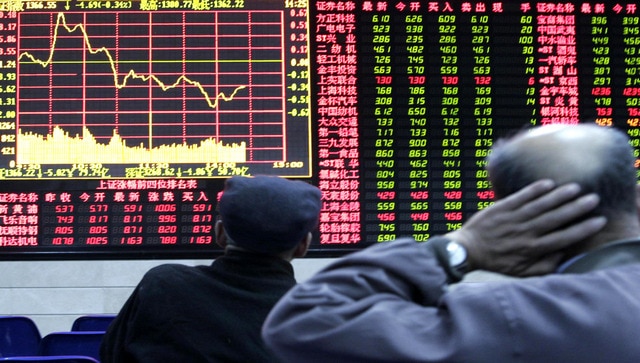
Chinese investors look at a stock market board in Shanghai. Reuters[/caption]“In response to the weakness, investors expected new stimulus to support the shaky economy,” said Harry Murphy Cruise, an economist with Moody’s Analytics. “That [stimulus] hasn’t come, and investors are now pulling funds to put into safer bets.”Others are simply following the crowd."There is a degree of capitulation," added Derrick Irwin, an emerging markets portfolio manager at Allspring Global Investments."Until there is a bigger crisis, the Chinese government may just continue to kind of throw cups of water on the fire, instead of something big that they probably need to do."
Others are not convinced government high-handedness is the right move.Marko Papic, chief strategist at the Clocktower Group, said a heavy-handed regulation of the finance sector is not what China needs now.“After a crisis, you need banks to have animal spirits and to feel like they should lend, so if you crack down on them, it's going to slow down the recovery.”An eagerly anticipated policy rate cut this month didn't come through, either, which Papic said showed "we're really far from any sort of a bazooka ... they're not even willing to fire a water pistol."Mainland investors remain unenthused by the Bloomberg News report that policymakers may mobilise around out ($278.98 billion for a stocks stabilisation fund."It's like crying wolf," said Simon Yu, vice general manager at Panyao Asset Management. "Talks about the rescue fund have been swirling for a long time, but haven't yet materialised."Local analysts have been calling for setting up a rescue fund since last year.This isn’t without precedence.A "National Team" was set up during the 2015 stock market crash, comprising a group of investors that included state fund Central Huijin, China Securities Finance Corp and investment vehicles under China's forex regulator. Their buying lifted the stock market, but just briefly.Yu said market confidence could return if the government made it clear that it would buy stocks worth several hundred billion yuan every year."If there's nothing concrete, only vague rhetoric, investors' expectations will remain pessimistic."Singapore-based Daniel Tan, a portfolio manager at Grasshopper Asset Management, said the proposed amount for the fund is small "compared to the size of the problem" but could signal a change in authorities' strategy."We will adopt a wait-and-see approach for now. There is plenty of upside if and when the market starts to rally, we are not motivated to pick the bottom."China vows to safeguard capital marketsOn Tuesday, CSRC Chairman Yi Huiman vowed to safeguard stable operation of the capital markets with full force. China's State Council, or cabinet, also pledged more forceful and effective measures to support market confidence.The sources said regulators did not spell out specific curbs in their informal guidance, but hinted that shorting activities using stock index futures would be curbed.China's securities regulators have asked some hedge fund managers to restrict short selling in its stock index futures market, two sources said, as authorities seek to stabilise sinking stocks.A hedge fund manager said he received calls from China's financial futures exchange, cautioning against reckless short selling, especially "naked" short selling that is not conducted for hedging purposes.
Another hedge fund source said the exchange had informally asked his firm recently not to short sell for speculative purposes."Shorting is profitable in a falling market," the source said. "But if you get calls from the exchange, you get the message that you should no longer short sell to make a profit."The sources spoke on condition of anonymity.Some investors were nudged to unwind their heavy short positions as soon as possible, the sources added.The window guidance - unwritten instructions from regulators - came amid signs of a spike in shorting interest.With inputs from agencies

Military drones & police check-ups: How Sri Lanka is fighting against worst dengue outbreak in a decade
How Facebook job ad lured 2 Karnataka men into Myanmar cyber scam camp
Why is India seeing 95% cloud cover despite a Super El Niño?
What is CJP’s fourth demand to the government as protests in Delhi intensify?
The new geography of war: Why the Houthis can no longer be ignored