
Advertisement


Sections
Why are sustained heatwaves dangerous to human health? How can we stay safe?
Sustained heatwaves, which experts say are becoming more common due to human-driven climate change, can put human bodies under extreme pressure, sometimes leading to dehydration, heatstroke and death

Record-breaking heatwaves across the Northern Hemisphere have again sparked concerns about the danger such blistering temperatures pose to people's health, particularly children and the elderly.Such sustained heatwaves — which experts say are becoming more common due to human-driven climate change — can put human bodies under extreme pressure, sometimes leading to dehydration, heatstroke and death.Research recently found that more than 61,000 people died due to the heat in Europe last summer — and 2023 is shaping up to be even hotter.The immediate effectAs temperatures rise, the body fights to maintain its normal temperature around 37 degrees Celsius.The heart ups the tempo, sending sweat to cool down the surface of the skin, the body's front line against the heat.The skin's blood vessels also dilate, releasing heat.The impact on healthBut if the heat overwhelms these temperature regulators, it can cause symptoms such as fatigue, headaches, fever and disturbed sleep.![]() Mathilde from France shelters from the sun with an umbrella near the Colosseum during a heatwave across Italy, in Rome. Reuters[/caption]The World Meteorological Organization has warned that repeatedly high overnight minimum temperatures are particularly dangerous to human health, because the body never gets a chance to recover.Such high overnight minimums — which parts of the United States, Europe and China have been suffering through this week —— can lead to heart attacks and death, according to the WMO."Whilst most of the attention focuses on daytime maximum temperatures, it is the overnight temperatures which have the biggest health risks, especially for vulnerable populations," the UN agency said.The added threat of humidityHumidity during heatwaves can also overwhelm the body.Sweating helps cool bodies by evaporating off the skin — but if it is too humid, the sweat cannot evaporate.The combination of heat and humidity is measured by what is known as a "wet bulb" temperature.Researchers have warned that a wet-bulb temperature of 35 degrees Celsius can kill a healthy young adult within six hours.This threshold of human survivability has only been reached a couple of times -- but experts warn the number of instances will increase as the globe warms.[caption id="attachment_12877792" align="alignnone" width="640"]
Mathilde from France shelters from the sun with an umbrella near the Colosseum during a heatwave across Italy, in Rome. Reuters[/caption]The World Meteorological Organization has warned that repeatedly high overnight minimum temperatures are particularly dangerous to human health, because the body never gets a chance to recover.Such high overnight minimums — which parts of the United States, Europe and China have been suffering through this week —— can lead to heart attacks and death, according to the WMO."Whilst most of the attention focuses on daytime maximum temperatures, it is the overnight temperatures which have the biggest health risks, especially for vulnerable populations," the UN agency said.The added threat of humidityHumidity during heatwaves can also overwhelm the body.Sweating helps cool bodies by evaporating off the skin — but if it is too humid, the sweat cannot evaporate.The combination of heat and humidity is measured by what is known as a "wet bulb" temperature.Researchers have warned that a wet-bulb temperature of 35 degrees Celsius can kill a healthy young adult within six hours.This threshold of human survivability has only been reached a couple of times -- but experts warn the number of instances will increase as the globe warms.[caption id="attachment_12877792" align="alignnone" width="640"]![europe heatwave]() The heatwave gripping southern Europe was dubbed 'Cerberus'. Reuters[/caption]The most vulnerableMost vulnerable during heatwaves are the elderly, people who already have health problems, and children -- particularly those under five years old.As people get older, they have fewer sweat glands, making the elderly less able to control their temperature.
The heatwave gripping southern Europe was dubbed 'Cerberus'. Reuters[/caption]The most vulnerableMost vulnerable during heatwaves are the elderly, people who already have health problems, and children -- particularly those under five years old.As people get older, they have fewer sweat glands, making the elderly less able to control their temperature.![]() Temperatures are beginning to rise at the start of the second heatwave registered in Spain this summer. AP[/caption]Those who play sports are doubly at risk because exercise also raises the body's temperature.
Temperatures are beginning to rise at the start of the second heatwave registered in Spain this summer. AP[/caption]Those who play sports are doubly at risk because exercise also raises the body's temperature.
Another early sign is dehydration, which occurs when the body loses more fluids than it takes in.Heatstroke, which strikes when the body cannot stop its temperature rising past 40C, is considered to be the most serious heat-related illness.[caption id="attachment_12862552" align="alignnone" width="640"]
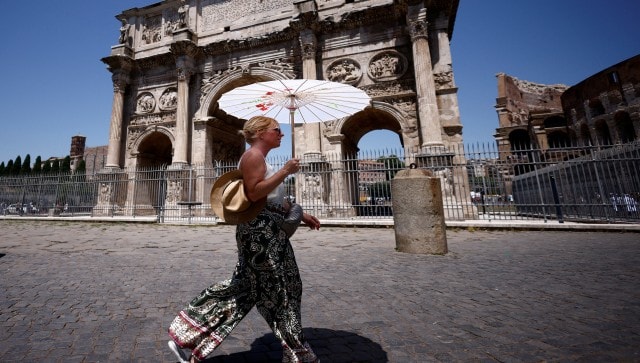 Mathilde from France shelters from the sun with an umbrella near the Colosseum during a heatwave across Italy, in Rome. Reuters[/caption]The World Meteorological Organization has warned that repeatedly high overnight minimum temperatures are particularly dangerous to human health, because the body never gets a chance to recover.Such high overnight minimums — which parts of the United States, Europe and China have been suffering through this week —— can lead to heart attacks and death, according to the WMO."Whilst most of the attention focuses on daytime maximum temperatures, it is the overnight temperatures which have the biggest health risks, especially for vulnerable populations," the UN agency said.The added threat of humidityHumidity during heatwaves can also overwhelm the body.Sweating helps cool bodies by evaporating off the skin — but if it is too humid, the sweat cannot evaporate.The combination of heat and humidity is measured by what is known as a "wet bulb" temperature.Researchers have warned that a wet-bulb temperature of 35 degrees Celsius can kill a healthy young adult within six hours.This threshold of human survivability has only been reached a couple of times -- but experts warn the number of instances will increase as the globe warms.[caption id="attachment_12877792" align="alignnone" width="640"]
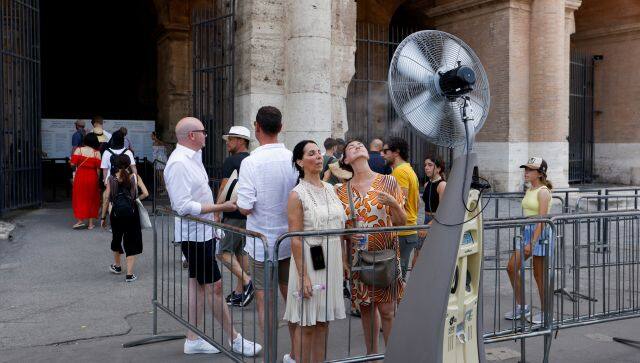 The heatwave gripping southern Europe was dubbed 'Cerberus'. Reuters[/caption]The most vulnerableMost vulnerable during heatwaves are the elderly, people who already have health problems, and children -- particularly those under five years old.As people get older, they have fewer sweat glands, making the elderly less able to control their temperature.
During heatwaves, these sweat glands work day and night.After a few days, the sweat glands get exhausted and produce less sweat, increasing the body's core temperature.Most of the estimated 61,672 people who died due to the heat in Europe last summer were over the age of 80, according to research.Other factorsWhere people live and what they do can also put them more at risk during heatwaves.Living in a city, particularly in densely populated areas or poorly insulated homes, can further expose people to the blistering heat.People who work outside, such as construction workers, are also at an increased risk.[caption id="attachment_12862512" align="alignnone" width="640"]
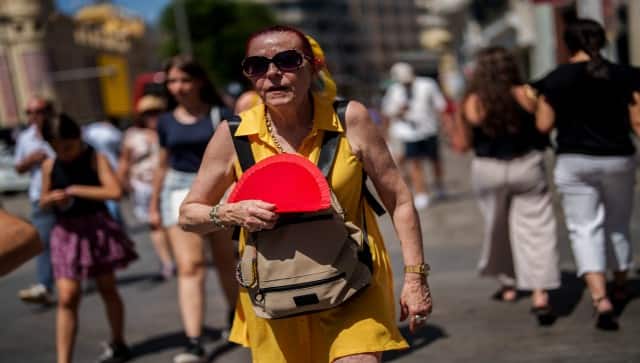 Temperatures are beginning to rise at the start of the second heatwave registered in Spain this summer. AP[/caption]Those who play sports are doubly at risk because exercise also raises the body's temperature.
The homeless are particularly exposed, having few ways to escape the heat.Some drugs can also add to health problems during heatwaves, such as diuretics which reduce the amount of water in the body.What to doDuring heatwaves people should drink plenty of water and try to stay as cool as possible.Health authorities recommend people avoid going outside during the hottest part of the day — and if possible spend a couple of hours in a cool place, such as an air-conditioned cinema, library or museum.They also advise people avoid physical exertion or drinking alcohol.
First Published:Jul 19, 2023, 21:52:23 IST
Advertisement
Advertisement

Why has Bangladesh’s choice of India spokespersons raised eyebrows?
Bangladesh’s appointment of journalists Md Saidur Rahman and Umme Marufa to media roles in New Delhi and Kolkata has triggered controversy over their past anti-India social media posts, many of which were later deleted, prompting diplomatic scrutiny as India and Bangladesh seek to improve bilateral ties
6 min read
Who is Sandeep Lamba, the Delhi cop removed from protest site duty after slapping female protester?
Sandeep Lamba, an Additional Deputy Commissioner of Police (DCP) (North East District), was seen slapping a female CJP protester in a video on July 20. Lamba has now been removed from the protest site and sent back to his original station. In 2021, Lamba was awarded the Union Home Minister’s medal for excellent investigation
4 min read
Explorers discover wreckage of plane 72 years later. Will this help in finding MH370?
On April 11, 1952, a Pan Am Flight 526A, crashed into the Atlantic Ocean, killing 52 of the 69 people on board. After decades of effort, explorers have found the wreck of the plane at the bottom of the seabed near Puerto Rico. The discovery offers new hope to families who lost loved ones in the Malaysia Airlines Flight 370 crash in 2014
5 min read
Cruise missiles, drones and more... The deadly arsenal of the Houthis
The Houthis have evolved into one of the world's most formidable non-state military forces, deploying anti-ship ballistic missiles, cruise missiles, drones and explosive boats to threaten Red Sea shipping. Their latest attacks on Saudi oil tankers have raised concerns over shipping through the Bab el-Mandeb Strait amid the Strait of Hormuz crisis
10 min read
Why India may not witness a medal rush at 2026 Commonwealth Games
A 125-strong Indian contingent is in Glasgow for the 2026 Commonwealth Games, starting today (July 23), chasing international glory. However, with a roster of sports such as badminton and wrestling being cut from the event, the country’s medal chances have been drastically reduced
4 min read
Advertisement
Advertisement