
Advertisement


Sections
What's the Iron Beam that Israel may deploy in war against Hamas?
As the ongoing conflict entered its 11th day on Tuesday, Israel is reportedly planning to use its cutting-edge Iron Beam system for the first time on the battlefield. It is a 100 kW class directed-energy weapon that emits strong laser beams and has the ability to destroy fast-moving projectiles

As the ongoing conflict entered its 11th day on Tuesday, Israel is reportedly planning to use its cutting-edge laser weapon system for the first time on the battlefield.This is done to improve its air defence capabilities against diverse threats.The new technology closely resembles the weapons in science fiction films like Star Wars. Iron Beam systems have the ability to fire intense laser beams that can destroy fast-moving projectiles.It was previously planned to enter service in 2025. The Israeli Ministry of Defence may, however, think about deploying it earlier if conflict intensifies.According to The Telegraph which cited local media as stating that Israeli military are quickening the deployment of Iron Beam and testing it.About Iron Beam Laser SystemThe Iron Beam, also known as Magen or "Light Shielf," is a 100 kW class High Energy Laser Weapon System (HELWS), according to News18.It is made to destroy a wide variety of threats, including unmanned aerial vehicles (UAVs), Rocket Artillery, Mortars, and RAM from a few hundred yards to several kilometres away. It is anticipated that it would launch first in its class as an operational system.Israel has not yet seen it in action after it was unveiled in 2014 at the Singapore Airshow.It is a directed-energy weapon that emits strong laser beams, and it was built by Rafael Advanced Defence Systems. It will soon be included in Israel's integrated missile defence system, along with Iron Dome, David's Sling, Arrow 2, and Arrow 3.[caption id="attachment_13258662" align="alignnone" width="640"]![]() Rockets are fired toward Israel from the Gaza Strip, as seen from southern Israel. AP[/caption]According to Interesting Engineering, as of 2016, Iron Beam was primarily financed by the Israeli Ministry of Defence (MoD), with Rafael working to extend the system's range and collaborating with other businesses to advance the prototype.A joint initiative to create a laser defence system based on the Iron Beam concept was launched by Rafael and Lockheed Martin in December 2022. The objective is to create a system consisting of a pair of solid-state lasers that, when coupled, could increase power up to 300 kilowatt and utilise multiple beams to burn many targets at once. A report from 2016 claimed that laser power levels were in the "tens of kilowatts."While it is unclear how it will take to use the system, Dr Yehoshua Kalisky of the Institute for National Security Studies indicated that the technology could be "operational very soon."“The laser works. The only problem that I see is to integrate it into all the early warning systems. It’s not a standalone system. It must be coupled with all the air defence,” The Telegraph quoted him as saying.FeaturesA fibre laser is used by the Iron Beam to destroy airborne threats, providing a practical and affordable solution.According to Business Today, this system has the ability to be used both independently and as part of a larger air defence system.Compared to conventional missile interceptors, the Iron Beam has a lower cost per shot, an infinite firing range, lower operational costs, and no chance of interceptor debris falling on protected zones.A 2020 study claims that the system displayed an amazing effective range of up to seven kilometres and was capable of quickly neutralising missiles, UAVs, and mortar rounds within seconds of target engagement. Additionally, there are plans to raise energy levels, which may do so by 2023 and reach 100 KW or higher.Better than Iron DomeWith an intercept range of 2.5 to 43 miles, Iron Dome is a short-range anti-rocket, anti-mortar, and anti-artillery system. It is built by Israel Aerospace Industries and Rafael Advanced Defence Systems.Iron Beam is a less expensive and more adaptable option to the Iron Dome missile protection system.[caption id="attachment_13258692" align="alignnone" width="640"]
Rockets are fired toward Israel from the Gaza Strip, as seen from southern Israel. AP[/caption]According to Interesting Engineering, as of 2016, Iron Beam was primarily financed by the Israeli Ministry of Defence (MoD), with Rafael working to extend the system's range and collaborating with other businesses to advance the prototype.A joint initiative to create a laser defence system based on the Iron Beam concept was launched by Rafael and Lockheed Martin in December 2022. The objective is to create a system consisting of a pair of solid-state lasers that, when coupled, could increase power up to 300 kilowatt and utilise multiple beams to burn many targets at once. A report from 2016 claimed that laser power levels were in the "tens of kilowatts."While it is unclear how it will take to use the system, Dr Yehoshua Kalisky of the Institute for National Security Studies indicated that the technology could be "operational very soon."“The laser works. The only problem that I see is to integrate it into all the early warning systems. It’s not a standalone system. It must be coupled with all the air defence,” The Telegraph quoted him as saying.FeaturesA fibre laser is used by the Iron Beam to destroy airborne threats, providing a practical and affordable solution.According to Business Today, this system has the ability to be used both independently and as part of a larger air defence system.Compared to conventional missile interceptors, the Iron Beam has a lower cost per shot, an infinite firing range, lower operational costs, and no chance of interceptor debris falling on protected zones.A 2020 study claims that the system displayed an amazing effective range of up to seven kilometres and was capable of quickly neutralising missiles, UAVs, and mortar rounds within seconds of target engagement. Additionally, there are plans to raise energy levels, which may do so by 2023 and reach 100 KW or higher.Better than Iron DomeWith an intercept range of 2.5 to 43 miles, Iron Dome is a short-range anti-rocket, anti-mortar, and anti-artillery system. It is built by Israel Aerospace Industries and Rafael Advanced Defence Systems.Iron Beam is a less expensive and more adaptable option to the Iron Dome missile protection system.[caption id="attachment_13258692" align="alignnone" width="640"]![]() An Israeli armoured personnel carrier (APC) moves on a road towards the Gaza Strip border in southern Israel. AP[/caption]According to a missile defence specialist at the Israeli Ministry of Defence, one might transmit a laser beam for a few dollars instead of the Iron Dome interceptors, which can cost up to $60,000 each, according to India Today.Additionally, the Iron Beam is lighter and smaller than the Iron Dome, making it simpler to move around and conceal oneself.ConsIn rainy conditions, the Iron Beam cannot function properly. Even under ideal circumstances, the laser loses 30 to 40 per cent of its potential energy to atmospheric moisture prior to striking the target.Contrary to Iron Dome, the location of the Iron Beam is significantly more crucial because it needs a clear line of sight to reach its target.The Iron Beam also fires at a significantly slower rate; it takes about five seconds for it to send forth enough energy to annihilate its target.The Iron Beam's battlefield use is currently only a matter of conjecture.Israel-Hamas warIn the deadliest escalation of the conflict in decades, Hamas launched a wave of attacks on Israel on Saturday.According to The Associated Press, Israel maintained punishing airstrikes across Gaza as a ground invasion loomed, while Hamas militants kept up a barrage of rocket attacks, and tensions mounted near the Israel-Lebanon border.At least 2,778 people have been killed and 9,700 wounded in Gaza, according to the Health Ministry there.More than 1,400 Israelis have been killed, the vast majority civilians massacred in Hamas assault.The combination of airstrikes, dwindling supplies and Israel’s mass evacuation order for the north of the Gaza Strip has thrown the tiny territory’s 2.3 million people into upheaval and caused increasing desperation. More than one million Palestinians have fled their homes, and 60 per cent are now in the approximately 14-kilometre-long (eight mile) area south of the evacuation zone, according to the United Nations.In Gaza, hospitals were on the verge of losing electricity, threatening the lives of thousands of patients, and hundreds of thousands of Palestinians displaced from their homes searched for bread. With taps dry, many have resorted to drinking dirty or sewage-filled water, risking the spread of disease.The Israeli military says it is trying to clear civilians for their safety ahead of a major campaign against Hamas in Gaza’s north, where it says the militants have extensive networks of tunnels and rocket launchers. Much of Hamas’ military infrastructure is in residential areas.With inputs from agencies
An Israeli armoured personnel carrier (APC) moves on a road towards the Gaza Strip border in southern Israel. AP[/caption]According to a missile defence specialist at the Israeli Ministry of Defence, one might transmit a laser beam for a few dollars instead of the Iron Dome interceptors, which can cost up to $60,000 each, according to India Today.Additionally, the Iron Beam is lighter and smaller than the Iron Dome, making it simpler to move around and conceal oneself.ConsIn rainy conditions, the Iron Beam cannot function properly. Even under ideal circumstances, the laser loses 30 to 40 per cent of its potential energy to atmospheric moisture prior to striking the target.Contrary to Iron Dome, the location of the Iron Beam is significantly more crucial because it needs a clear line of sight to reach its target.The Iron Beam also fires at a significantly slower rate; it takes about five seconds for it to send forth enough energy to annihilate its target.The Iron Beam's battlefield use is currently only a matter of conjecture.Israel-Hamas warIn the deadliest escalation of the conflict in decades, Hamas launched a wave of attacks on Israel on Saturday.According to The Associated Press, Israel maintained punishing airstrikes across Gaza as a ground invasion loomed, while Hamas militants kept up a barrage of rocket attacks, and tensions mounted near the Israel-Lebanon border.At least 2,778 people have been killed and 9,700 wounded in Gaza, according to the Health Ministry there.More than 1,400 Israelis have been killed, the vast majority civilians massacred in Hamas assault.The combination of airstrikes, dwindling supplies and Israel’s mass evacuation order for the north of the Gaza Strip has thrown the tiny territory’s 2.3 million people into upheaval and caused increasing desperation. More than one million Palestinians have fled their homes, and 60 per cent are now in the approximately 14-kilometre-long (eight mile) area south of the evacuation zone, according to the United Nations.In Gaza, hospitals were on the verge of losing electricity, threatening the lives of thousands of patients, and hundreds of thousands of Palestinians displaced from their homes searched for bread. With taps dry, many have resorted to drinking dirty or sewage-filled water, risking the spread of disease.The Israeli military says it is trying to clear civilians for their safety ahead of a major campaign against Hamas in Gaza’s north, where it says the militants have extensive networks of tunnels and rocket launchers. Much of Hamas’ military infrastructure is in residential areas.With inputs from agencies
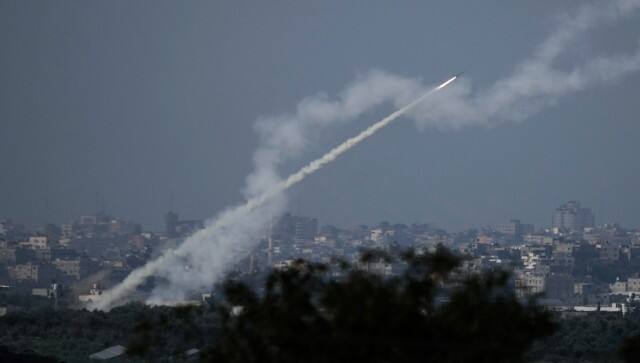 Rockets are fired toward Israel from the Gaza Strip, as seen from southern Israel. AP[/caption]According to Interesting Engineering, as of 2016, Iron Beam was primarily financed by the Israeli Ministry of Defence (MoD), with Rafael working to extend the system's range and collaborating with other businesses to advance the prototype.A joint initiative to create a laser defence system based on the Iron Beam concept was launched by Rafael and Lockheed Martin in December 2022. The objective is to create a system consisting of a pair of solid-state lasers that, when coupled, could increase power up to 300 kilowatt and utilise multiple beams to burn many targets at once. A report from 2016 claimed that laser power levels were in the "tens of kilowatts."While it is unclear how it will take to use the system, Dr Yehoshua Kalisky of the Institute for National Security Studies indicated that the technology could be "operational very soon."“The laser works. The only problem that I see is to integrate it into all the early warning systems. It’s not a standalone system. It must be coupled with all the air defence,” The Telegraph quoted him as saying.FeaturesA fibre laser is used by the Iron Beam to destroy airborne threats, providing a practical and affordable solution.According to Business Today, this system has the ability to be used both independently and as part of a larger air defence system.Compared to conventional missile interceptors, the Iron Beam has a lower cost per shot, an infinite firing range, lower operational costs, and no chance of interceptor debris falling on protected zones.A 2020 study claims that the system displayed an amazing effective range of up to seven kilometres and was capable of quickly neutralising missiles, UAVs, and mortar rounds within seconds of target engagement. Additionally, there are plans to raise energy levels, which may do so by 2023 and reach 100 KW or higher.Better than Iron DomeWith an intercept range of 2.5 to 43 miles, Iron Dome is a short-range anti-rocket, anti-mortar, and anti-artillery system. It is built by Israel Aerospace Industries and Rafael Advanced Defence Systems.Iron Beam is a less expensive and more adaptable option to the Iron Dome missile protection system.[caption id="attachment_13258692" align="alignnone" width="640"]
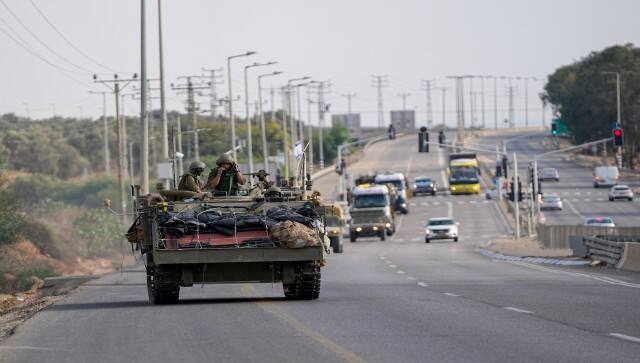 An Israeli armoured personnel carrier (APC) moves on a road towards the Gaza Strip border in southern Israel. AP[/caption]According to a missile defence specialist at the Israeli Ministry of Defence, one might transmit a laser beam for a few dollars instead of the Iron Dome interceptors, which can cost up to $60,000 each, according to India Today.Additionally, the Iron Beam is lighter and smaller than the Iron Dome, making it simpler to move around and conceal oneself.ConsIn rainy conditions, the Iron Beam cannot function properly. Even under ideal circumstances, the laser loses 30 to 40 per cent of its potential energy to atmospheric moisture prior to striking the target.Contrary to Iron Dome, the location of the Iron Beam is significantly more crucial because it needs a clear line of sight to reach its target.The Iron Beam also fires at a significantly slower rate; it takes about five seconds for it to send forth enough energy to annihilate its target.The Iron Beam's battlefield use is currently only a matter of conjecture.Israel-Hamas warIn the deadliest escalation of the conflict in decades, Hamas launched a wave of attacks on Israel on Saturday.According to The Associated Press, Israel maintained punishing airstrikes across Gaza as a ground invasion loomed, while Hamas militants kept up a barrage of rocket attacks, and tensions mounted near the Israel-Lebanon border.At least 2,778 people have been killed and 9,700 wounded in Gaza, according to the Health Ministry there.More than 1,400 Israelis have been killed, the vast majority civilians massacred in Hamas assault.The combination of airstrikes, dwindling supplies and Israel’s mass evacuation order for the north of the Gaza Strip has thrown the tiny territory’s 2.3 million people into upheaval and caused increasing desperation. More than one million Palestinians have fled their homes, and 60 per cent are now in the approximately 14-kilometre-long (eight mile) area south of the evacuation zone, according to the United Nations.In Gaza, hospitals were on the verge of losing electricity, threatening the lives of thousands of patients, and hundreds of thousands of Palestinians displaced from their homes searched for bread. With taps dry, many have resorted to drinking dirty or sewage-filled water, risking the spread of disease.The Israeli military says it is trying to clear civilians for their safety ahead of a major campaign against Hamas in Gaza’s north, where it says the militants have extensive networks of tunnels and rocket launchers. Much of Hamas’ military infrastructure is in residential areas.With inputs from agencies
First Published:Oct 17, 2023, 11:56:26 IST
Advertisement
Advertisement

Delhi Police asks personnel to wear uniform: What the law says on cops in plainclothes during protests
The Delhi Police has instructed all its personnel to wear uniforms when they report for duty at Jantar Mantar for crowd control. This comes after outrage grew over videos of men in civilian clothes or without name tags hitting protesters in the Capital. Is it legal for the police to ditch uniforms during protests?
4 min read
Military drones & police check-ups: How Sri Lanka is fighting against worst dengue outbreak in a decade
Sri Lanka is fighting its most severe dengue outbreak in nearly a decade, with infections rising sharply across the nation. Military drones have been deployed to tackle the outbreak, which has claimed 56 lives. Health officials said the outbreak is being driven primarily by the DENV-2 variant of the virus
3 min read
How Facebook job ad lured 2 Karnataka men into Myanmar cyber scam camp
The Karnataka Cyber Command has rescued two youths from a scam compound in Myanmar operated by Chinese fraudsters. The duo from Karnataka were lured on the pretext of data-entry jobs. They were asked to work for 16 hours a day and were expected to sleep for six hours daily
4 min read
Why is India seeing 95% cloud cover despite a Super El Niño?
India is witnessing nearly 95 per cent cloud cover despite a Super El Niño, a climate event usually linked to weaker monsoons. Regional weather systems, cyclonic circulations, the monsoon trough and moisture from two seas are temporarily overpowering one of the world's strongest climate phenomena
5 min read
What is CJP’s fourth demand to the government as protests in Delhi intensify?
The protest by the Cockroach Janta Party at Delhi’s Jantar Mantar refuses to die down. The group have made a fourth demand to the Centre, asking that no FIRs are filed against the agitators and that no legal action be taken. The government has expressed willingness to speak to the protesters, but refused to accede on the resignation of Education Minister Dharmandra Pradhan
5 min read
Advertisement
Advertisement