
Advertisement


Sections
What pronouns should be used to refer to God, and why do they matter?
Referring to God solely as male has negative social consequences and limits one's theological imagination. Using multiple pronouns, emphasises that God is a mystery that transcends all human categories

The Church of England is considering what language and pronouns should be used to refer to God.The church’s General Synod has, however, clarified that it will not abolish or substantially revise any of the currently authorised liturgies. Nonetheless, this news made headlines and brought up questions of how religions refer to God. Is God male? What pronouns should be used to refer to God?As a Catholic feminist theologian who runs a women’s centre at a Catholic university, I understand the impact of the pronouns Christians use for God.Historically, Christian tradition has recognised many pronouns for God, including “he/him,” “she/her” and “they/them.” This is partly because God does not have a gender.Despite the diverse images used for God in Scripture and Christian tradition, male language and images predominate in contemporary Christian worship.Many images for GodWhen we speak about God, we do so knowing that what we say is incomplete. All images for God reveal something about God. No image of God is literal or reveals everything about God.For example, while Christians can refer to God as a king, they must also remember that God is not literally a king. Calling God a king expresses that God is powerful. However, it is not expressing factual accuracy about God’s gender or implying that God is human.[caption id="attachment_12227022" align="alignnone" width="640"]![]() Historically, Christian tradition has recognised many pronouns for God, including “he/him,” “she/her” and “they/them.” This is partly because God does not have a gender. Image used for representational purpose/Pixabay[/caption]Referring to God with many titles, descriptions and images invites many of us to recognise the mystery of God. God is like all of these things but also more than all of these things.Thomas Aquinas, an influential 13th-Century Catholic theologian, asserted that individuals can talk about God in ways that are true but always inadequate.Aquinas explained that our language about God affirms something about God, yet God is always beyond that which we can express. We express truths about God in human terms and constructs, but since God is mystery, God is always beyond these categories.Scripture is filled with multiple images of God. In some of these images, God is depicted as a father or male. Jesus teaching his disciples to pray the Our Father prayer is perhaps the most well-known example of a male title for God.
Historically, Christian tradition has recognised many pronouns for God, including “he/him,” “she/her” and “they/them.” This is partly because God does not have a gender. Image used for representational purpose/Pixabay[/caption]Referring to God with many titles, descriptions and images invites many of us to recognise the mystery of God. God is like all of these things but also more than all of these things.Thomas Aquinas, an influential 13th-Century Catholic theologian, asserted that individuals can talk about God in ways that are true but always inadequate.Aquinas explained that our language about God affirms something about God, yet God is always beyond that which we can express. We express truths about God in human terms and constructs, but since God is mystery, God is always beyond these categories.Scripture is filled with multiple images of God. In some of these images, God is depicted as a father or male. Jesus teaching his disciples to pray the Our Father prayer is perhaps the most well-known example of a male title for God.![]() Despite the various images of God found in Scripture and Christian tradition, male language and images predominate in modern Christian worship. Image used for representational purpose/Pixabay[/caption]Feminist theologian Mary Daly famously stated, “If God is male, then the male is God.” In other words, referring to God only as the male gender has a significant social impact that can exalt one gender at the expense of others.Referring to God only as male can also limit one’s theological imagination: Using many pronouns for God emphasises that God is mystery, beyond all human categories.The Church of England is not only responding to modern questions about gender, but also continuing a long tradition within Christianity of referring to God as male, female and beyond gender constructs.
Despite the various images of God found in Scripture and Christian tradition, male language and images predominate in modern Christian worship. Image used for representational purpose/Pixabay[/caption]Feminist theologian Mary Daly famously stated, “If God is male, then the male is God.” In other words, referring to God only as the male gender has a significant social impact that can exalt one gender at the expense of others.Referring to God only as male can also limit one’s theological imagination: Using many pronouns for God emphasises that God is mystery, beyond all human categories.The Church of England is not only responding to modern questions about gender, but also continuing a long tradition within Christianity of referring to God as male, female and beyond gender constructs.![The Conversation]() This article is republished from The Conversation under a Creative Commons license. Read the original article.Read all the Latest News, Trending News, Cricket News, Bollywood News,India News and Entertainment News here. Follow us on Facebook, Twitter and Instagram.
This article is republished from The Conversation under a Creative Commons license. Read the original article.Read all the Latest News, Trending News, Cricket News, Bollywood News,India News and Entertainment News here. Follow us on Facebook, Twitter and Instagram.
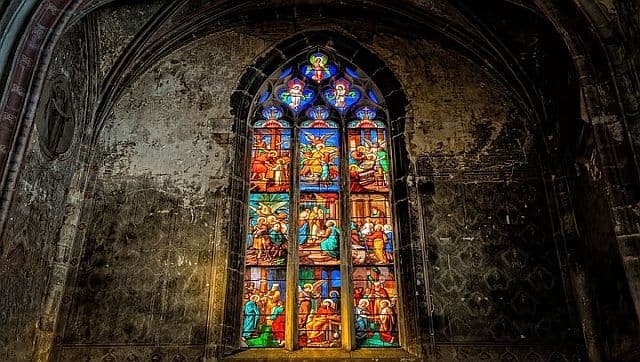 Historically, Christian tradition has recognised many pronouns for God, including “he/him,” “she/her” and “they/them.” This is partly because God does not have a gender. Image used for representational purpose/Pixabay[/caption]Referring to God with many titles, descriptions and images invites many of us to recognise the mystery of God. God is like all of these things but also more than all of these things.Thomas Aquinas, an influential 13th-Century Catholic theologian, asserted that individuals can talk about God in ways that are true but always inadequate.Aquinas explained that our language about God affirms something about God, yet God is always beyond that which we can express. We express truths about God in human terms and constructs, but since God is mystery, God is always beyond these categories.Scripture is filled with multiple images of God. In some of these images, God is depicted as a father or male. Jesus teaching his disciples to pray the Our Father prayer is perhaps the most well-known example of a male title for God.
In other parts of Scripture, God is female.The prophet Isaiah compares God to a nursing mother in the Book of Isaiah. A mother hen gathering her chicks is an analogy for God in the Gospel of Matthew.The Book of Wisdom, a book in the Catholic Bible, depicts wisdom personified as a woman. Wisdom 10:18-19 states: “She took them across the Red Sea and brought them through deep waters. Their enemies she overwhelmed.” This account presents God as female, leading Moses and the Israelites out of Egypt and into the Promised Land.Depicting God as female in Scripture speaks to God’s tenderness as well as strength and power. For example, the prophet Hosea compares God with a bear robbed of her cubs, promising to “attack and rip open” those who break the covenant.Elsewhere in Scripture, God has no gender. God appears to Moses in the burning bush in Exodus 3, defying all gender categories. The Book of 1 Kings presents a gentle image of a gender-neutral God.God asked the prophet Elijah to go to a mountain. While there, Elijah experienced a strong wind, an earthquake and fire, but God was not present in those.Instead, God was present in a gentle whisper. The creation stories of Genesis refer to God in the plural. These examples emphasise that God has no gender and is beyond any human categories.The social impact of male pronounsPronouns, like “He/Him” in the Christian tradition, can limit one’s understanding of God. It can also make many individuals think that God is male.It is not wrong to refer to God with male pronouns, but it can have negative social and theological consequences to refer to God with only male pronouns.[caption id="attachment_12227042" align="alignnone" width="640"]
 Despite the various images of God found in Scripture and Christian tradition, male language and images predominate in modern Christian worship. Image used for representational purpose/Pixabay[/caption]Feminist theologian Mary Daly famously stated, “If God is male, then the male is God.” In other words, referring to God only as the male gender has a significant social impact that can exalt one gender at the expense of others.Referring to God only as male can also limit one’s theological imagination: Using many pronouns for God emphasises that God is mystery, beyond all human categories.The Church of England is not only responding to modern questions about gender, but also continuing a long tradition within Christianity of referring to God as male, female and beyond gender constructs.
 This article is republished from The Conversation under a Creative Commons license. Read the original article.Read all the Latest News, Trending News, Cricket News, Bollywood News,India News and Entertainment News here. Follow us on Facebook, Twitter and Instagram.
First Published:Mar 01, 2023, 17:06:16 IST
Advertisement
Advertisement

Delhi Police asks personnel to wear uniform: What the law says on cops in plainclothes during protests
The Delhi Police has instructed all its personnel to wear uniforms when they report for duty at Jantar Mantar for crowd control. This comes after outrage grew over videos of men in civilian clothes or without name tags hitting protesters in the Capital. Is it legal for the police to ditch uniforms during protests?
4 min read
Military drones & police check-ups: How Sri Lanka is fighting against worst dengue outbreak in a decade
Sri Lanka is fighting its most severe dengue outbreak in nearly a decade, with infections rising sharply across the nation. Military drones have been deployed to tackle the outbreak, which has claimed 56 lives. Health officials said the outbreak is being driven primarily by the DENV-2 variant of the virus
3 min read
How Facebook job ad lured 2 Karnataka men into Myanmar cyber scam camp
The Karnataka Cyber Command has rescued two youths from a scam compound in Myanmar operated by Chinese fraudsters. The duo from Karnataka were lured on the pretext of data-entry jobs. They were asked to work for 16 hours a day and were expected to sleep for six hours daily
4 min read
Why is India seeing 95% cloud cover despite a Super El Niño?
India is witnessing nearly 95 per cent cloud cover despite a Super El Niño, a climate event usually linked to weaker monsoons. Regional weather systems, cyclonic circulations, the monsoon trough and moisture from two seas are temporarily overpowering one of the world's strongest climate phenomena
5 min read
What is CJP’s fourth demand to the government as protests in Delhi intensify?
The protest by the Cockroach Janta Party at Delhi’s Jantar Mantar refuses to die down. The group have made a fourth demand to the Centre, asking that no FIRs are filed against the agitators and that no legal action be taken. The government has expressed willingness to speak to the protesters, but refused to accede on the resignation of Education Minister Dharmandra Pradhan
5 min read
Advertisement
Advertisement