


What is ‘mouse fever’, the illness causing Russian soldiers to bleed from their eyes?
An intelligence report by Ukraine has revealed that Russian troops fighting on the frontlines in Kupyansk are being ‘mowed down’ by ‘mouse fever’. According to Kyiv, this disease is caused by rodents in the trenches and its symptoms include fever, nausea and, in extreme cases, bleeding from the eyes

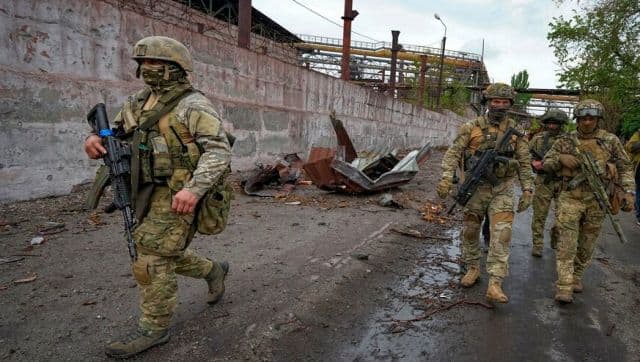
It’s Day 666 of the Russia-Ukraine war, which continues to extract a heavy death toll and large-scale destruction. And it’s now emerging that front-line combat and death by a drone strike or artillery fire aren’t the only dangers Russian soldiers are facing.
Russian military soldiers now have to contend with a new threat – the outbreak of ‘mouse fever’ on the Kupyansk Front. And making matters worse, according to Ukraine’s Defence Intelligence, is that the Kremlin is turning a blind eye to the soldiers’ complaints.
What is mouse fever?
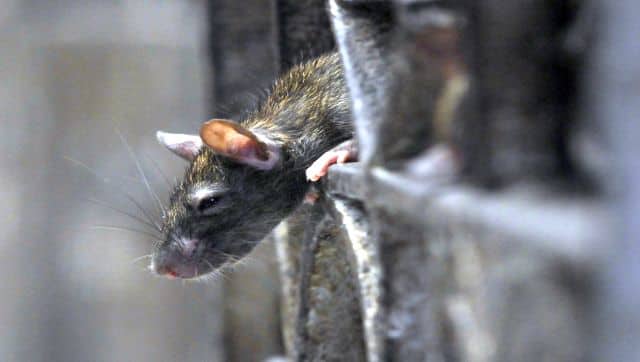
Ukraine’s Main Intelligence Directorate (HUR) has recently reported on the outbreak of ‘mouse fever’ among Russian units in Kupyansk, a city in the country’s east. There is no additional information provided on what they mean by ‘mouse fever’ but some experts note that it is a streptococcal infection transmitted through direct contact with rodents or inhaling their faeces.
 More from Explainers
What Ukraine is calling ‘mouse fever’ can also be described as rat-bite fever and according to the US’ Centers for Disease Control and Prevention (CDC) is a group of illnesses spread when people are exposed to urine, saliva, or droppings from rodents.
Some have said that the symptoms being described as those of ‘mouse fever’ resemble leptospirosis, which is also spread through contact with rodents. However, it is not immediately clear if this is precisely the same disease Ukraine referenced.
What are the symptoms of ‘mouse fever’?
The Ukrainian intelligence has said that the common symptoms of ‘mouse fever’ are headaches, body temperature rising to 40 degrees, rashes and redness, decreased blood pressure, haemorrhages in the eyes, nausea and vomiting several times a day.
The CDC has also said that sudden intense headaches, back pain, fever and chills are also common symptoms associated with ‘mouse fever’.
Medical experts add that symptoms usually begin three to 10 days after contact with the bacteria, but can be delayed as long as three weeks.
How has ‘mouse fever’ affected Russian soldiers?
In its latest report, Ukraine’s Main Intelligence Directorate said that ‘mouse fever’ was “mowing down Russia’s frontline troops” with symptoms ranging from “vomiting and bleeding eyes”.
“In the Kupyansk direction of the front, the occupiers are mowed down en masse by ‘mouse fever’,” the update posted to the Telegram messaging app said, adding, “As a result, mouse fever significantly reduced the fighting ability of Russian rats.”
The intelligence report added that because the disease affects the kidneys, a person infected with mouse fever experiences intense pain in the lower back and has severe difficulty urinating.
Moreover, Kyiv’s report added that the soldiers’ complaints were being ignored by the Russian high command. "Complaints about fever from personnel of the Russian army, who are involved in the war against Ukraine, were ignored by the command, regarding them as another manifestation of evasion from participating in combat operations.”
The complaints of rodents aren’t new. Earlier, Ukrainian soldiers also raised concerns about rats and mice inside the trenches, and it seems that their Russian enemies are presumably suffering from the same problems.
Incidentally, the outbreak of ‘mouse fever’ comes after a cholera outbreak in June when Russian troops in the Kherson region and Crimea got sick because of a blast at the Kakhovka hydroelectric power plant.
Where is the Russia-Ukraine war going?
The answer, it seems, nowhere. Russia and Ukraine are both unwilling to relent in the war, which first began in February 2022 Just recently, Ukraine’s president Volodymyr Zelenskyy said that there was no end in sight to Russia’s invasion of Ukraine and fatigue builds among Kyiv’s allies.
Also read: Israel-Hamas war: Could Russia benefit from conflict?
And the losses are mounting on both sides. Russia’s Vladimir Putin, who was quoted as saying ‘we will not give up what is our, is believed to have lost at least 340,000 troops since the beginning of the war in Ukraine. His forces have also lost tens of thousands of tanks, armoured vehicles, rocket systems, aircraft, ships, submarines and drones alongside these troops.
In this war that seems to never end, it seems that Russian and Ukrainian soldiers are enduring the worst conditions. Last month, secretly recorded phone calls of Russian soldiers to their loved ones offered gory details of survival in the war trenches.
One of them was recorded saying that he lived off rainwater, scooped a dying man’s guts back into his body, ambushed a Ukrainian dugout with knives. “I already feel more pity shooting a bird than a person. I’m telling you honestly, if there’s even a slight chance, get exempted from service,” he said, as per an Associated Press report.
It will be interesting to see how this war progresses in the New Year. While Ukraine’s Zelenskyy will continue to urge Western nations to loosen their purse strings and provide aid to the war-torn country, Vladimir Putin will keep up his war efforts as he prepares to contest the polls in March 2024 and secure a fifth term, joining the list of world leaders with the longest tenures.
With inputs from agencies

Military drones & police check-ups: How Sri Lanka is fighting against worst dengue outbreak in a decade
How Facebook job ad lured 2 Karnataka men into Myanmar cyber scam camp
Why is India seeing 95% cloud cover despite a Super El Niño?
What is CJP’s fourth demand to the government as protests in Delhi intensify?
The new geography of war: Why the Houthis can no longer be ignored