
Advertisement


Sections
What is Israel's 'new phase' of war against Hamas?
Israel’s defence minister Yoav Gallant and IDF spokesperson Daniel Hagari have signalled that the IDF is moving to a ‘new, less intensive phase’ in the war against Hamas and that it would need to change tactics to avoid civilian deaths. Does this mean Jerusalem will go easy on Gaza?

Is Israel in a ‘new phase of war’ against Hamas?On Sunday, defence minister Yoav Gallant said the Israel Defense Forces (IDF) is moving on from the “intense manoeuvring phase of the war.”Meanwhile, IDF spokesperson Daniel Hagari said a new, less intensive phase in the war had already begun.The development comes amid reports of intense bombing overnight in Khan Yunis and Rafah, the biggest cities in the south of the besieged Palestinian territory which are crowded with internally displaced people.Meanwhile, the US’ top diplomat Antony Blinken is back in Israel on a regional tour aimed at stopping the war from escalating across West Asia.But what did they say exactly? And what is the ‘new phase of the war?’Let’s take a closer look:What do we know?Gallant, speaking to the Wall Street Journal on Sunday, said, the IDF will now carry out “different types of special operations.”The next phase in the war "will last for a longer time," he added without providing any further details.“We need to take into consideration the huge number of civilians,” Gallant added.He said military tactics “take some time” to adjust.![]() Palestinians inspect the damage of a destroyed house following Israeli airstrikes on Khan Younis, Southern Gaza Strip, on Sunday. AP[/caption]He said this comes in the backdrop of its attention shifting to the southern part of the densely populated Palestinian enclave.Their statements come as the IDF said its forces had killed 40 militants over the past 24 hours in "expanded ground operations including air strikes" in Khan Yunis, and that troops had seized AK-47 assault rifles, rocket launchers and other weapons.The New York Times quoted Hagari as saying Israel had already begun to reduce its troop presence in Gaza and this would continue.Hagari said intensity of operations in northern Gaza has come down as the IDF turns to one-off raids rather than large-scale manoeuvres.Hagari said he expects Gaza to get more aids and tents as the IDF shifts its attention to Khan Younis and Deir al Balah.The Times of Israel quoted Hagari as saying in his daily briefing on Monday, “The war shifted a stage… But the transition will be with no ceremony. It’s not about dramatic announcements.”The newspaper quoted Hagari as adding, “There are still terror operatives and weapons in the north of the Gaza Strip, but they do not function within an organised military framework and now we operate there in [a different] way, and with a different mix of forces,” he said.“At this stage, we are focusing on the center of the Gaza Strip and the south of the Gaza Strip. This is still an intense and complex operational activity.”Meanwhile, Israeli public broadcaster, KAN last week reported that the IDF shifted to the third stage of the war in some areas in the Gaza Strip with limited forces.What’s the new phase?The New York Times reported that Israeli officials hope to move to a phase where Hamas is more precisely targeted.They said they hoped this could be done by January end but that the timeline isn’t fixed.The newspaper reported that US officials say the IDF will shift to small elite units slipping in and out of Gaza to detect and neutralise Hamas leaders, free hostages and abolish tunnels.
Palestinians inspect the damage of a destroyed house following Israeli airstrikes on Khan Younis, Southern Gaza Strip, on Sunday. AP[/caption]He said this comes in the backdrop of its attention shifting to the southern part of the densely populated Palestinian enclave.Their statements come as the IDF said its forces had killed 40 militants over the past 24 hours in "expanded ground operations including air strikes" in Khan Yunis, and that troops had seized AK-47 assault rifles, rocket launchers and other weapons.The New York Times quoted Hagari as saying Israel had already begun to reduce its troop presence in Gaza and this would continue.Hagari said intensity of operations in northern Gaza has come down as the IDF turns to one-off raids rather than large-scale manoeuvres.Hagari said he expects Gaza to get more aids and tents as the IDF shifts its attention to Khan Younis and Deir al Balah.The Times of Israel quoted Hagari as saying in his daily briefing on Monday, “The war shifted a stage… But the transition will be with no ceremony. It’s not about dramatic announcements.”The newspaper quoted Hagari as adding, “There are still terror operatives and weapons in the north of the Gaza Strip, but they do not function within an organised military framework and now we operate there in [a different] way, and with a different mix of forces,” he said.“At this stage, we are focusing on the center of the Gaza Strip and the south of the Gaza Strip. This is still an intense and complex operational activity.”Meanwhile, Israeli public broadcaster, KAN last week reported that the IDF shifted to the third stage of the war in some areas in the Gaza Strip with limited forces.What’s the new phase?The New York Times reported that Israeli officials hope to move to a phase where Hamas is more precisely targeted.They said they hoped this could be done by January end but that the timeline isn’t fixed.The newspaper reported that US officials say the IDF will shift to small elite units slipping in and out of Gaza to detect and neutralise Hamas leaders, free hostages and abolish tunnels.![]() This undated picture released by Hezbollah Military Media shows senior Hezbollah commander Wissam Tawil, who was killed in Kherbet Selem village, south Lebanon, on Monday. AP[/caption]Israel has traded cross-border fire with Hezbollah for three months and more recently killed senior operatives of the Shiite Muslim armed group as well as of Hamas on Lebanese soil, sparking anger and threats of retaliation.Hezbollah said Tuesday it had launched a drone attack on Israel's "northern command centre" in the city of Safed as part of its response to the killings of Hamas deputy leader Saleh al-Aruri and Hezbollah field commander Wissam Tawil.The Israeli army also said Monday it had killed a "central" Hamas figure in Syria, Hassan Akasha, who had led "terrorist cells which fired rockets... toward Israeli territory".“Eighty-thousand people need to be able to go back to their homes safely,” Gallant was quoted as saying by Times of Israel.“Should Hamas, Hezbollah, and Iran be allowed to decide how we live our lives here in Israel?” Gallant asked.“That is something we don’t accept."What do experts say?That Israel is in it for the long haul.“This phase will be less intense, but it will take more time,” Yohanan Plesner, the president of the Israel Democracy Institute and a former Knesset member for the Kadima party, told CNN.“The definition of success will not be to catch or kill all Hamas operatives, but to ensure that Hamas can no longer effectively govern the Gaza Strip,” Plesner said. “Hamas is organized like an army, with command and control centres, regiments and brigades. This command structure is being seriously challenged and dismantled.”
This undated picture released by Hezbollah Military Media shows senior Hezbollah commander Wissam Tawil, who was killed in Kherbet Selem village, south Lebanon, on Monday. AP[/caption]Israel has traded cross-border fire with Hezbollah for three months and more recently killed senior operatives of the Shiite Muslim armed group as well as of Hamas on Lebanese soil, sparking anger and threats of retaliation.Hezbollah said Tuesday it had launched a drone attack on Israel's "northern command centre" in the city of Safed as part of its response to the killings of Hamas deputy leader Saleh al-Aruri and Hezbollah field commander Wissam Tawil.The Israeli army also said Monday it had killed a "central" Hamas figure in Syria, Hassan Akasha, who had led "terrorist cells which fired rockets... toward Israeli territory".“Eighty-thousand people need to be able to go back to their homes safely,” Gallant was quoted as saying by Times of Israel.“Should Hamas, Hezbollah, and Iran be allowed to decide how we live our lives here in Israel?” Gallant asked.“That is something we don’t accept."What do experts say?That Israel is in it for the long haul.“This phase will be less intense, but it will take more time,” Yohanan Plesner, the president of the Israel Democracy Institute and a former Knesset member for the Kadima party, told CNN.“The definition of success will not be to catch or kill all Hamas operatives, but to ensure that Hamas can no longer effectively govern the Gaza Strip,” Plesner said. “Hamas is organized like an army, with command and control centres, regiments and brigades. This command structure is being seriously challenged and dismantled.”
“But we aren’t going to give up,” he added.Meanwhile, Rear Admiral Hagari also told The New York Times the IDF would need to change tactics to sidestep civilian casualties.Hagari said that the IDF has already begun a ‘new, less intensive phase’ in the war against Hamas with fewer ground troops and airstrikes.[caption id="attachment_13590432" align="alignnone" width="640"]
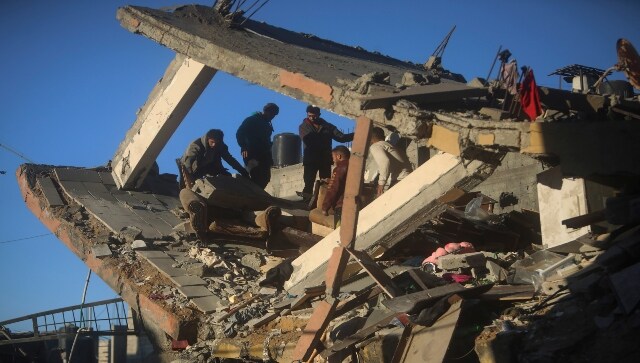 Palestinians inspect the damage of a destroyed house following Israeli airstrikes on Khan Younis, Southern Gaza Strip, on Sunday. AP[/caption]He said this comes in the backdrop of its attention shifting to the southern part of the densely populated Palestinian enclave.Their statements come as the IDF said its forces had killed 40 militants over the past 24 hours in "expanded ground operations including air strikes" in Khan Yunis, and that troops had seized AK-47 assault rifles, rocket launchers and other weapons.The New York Times quoted Hagari as saying Israel had already begun to reduce its troop presence in Gaza and this would continue.Hagari said intensity of operations in northern Gaza has come down as the IDF turns to one-off raids rather than large-scale manoeuvres.Hagari said he expects Gaza to get more aids and tents as the IDF shifts its attention to Khan Younis and Deir al Balah.The Times of Israel quoted Hagari as saying in his daily briefing on Monday, “The war shifted a stage… But the transition will be with no ceremony. It’s not about dramatic announcements.”The newspaper quoted Hagari as adding, “There are still terror operatives and weapons in the north of the Gaza Strip, but they do not function within an organised military framework and now we operate there in [a different] way, and with a different mix of forces,” he said.“At this stage, we are focusing on the center of the Gaza Strip and the south of the Gaza Strip. This is still an intense and complex operational activity.”Meanwhile, Israeli public broadcaster, KAN last week reported that the IDF shifted to the third stage of the war in some areas in the Gaza Strip with limited forces.What’s the new phase?The New York Times reported that Israeli officials hope to move to a phase where Hamas is more precisely targeted.They said they hoped this could be done by January end but that the timeline isn’t fixed.The newspaper reported that US officials say the IDF will shift to small elite units slipping in and out of Gaza to detect and neutralise Hamas leaders, free hostages and abolish tunnels.
But Gallant is also threatening to launch a similar campaign against Hezbollah in Lebanon.Since the war broke out with the Hamas attack of 7 October, fears have grown of an escalating conflict between Israel and its other regional enemies, a loose alliance of Iran-backed armed groups in Lebanon, Syria, Iraq and Yemen.“They see what is happening in Gaza,” the defence minister was quoted as saying by the website AA.com. “They know we can copy-paste to Beirut.”[caption id="attachment_13591282" align="alignnone" width="640"]
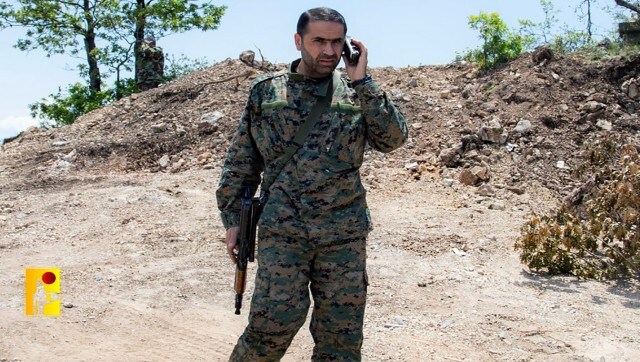 This undated picture released by Hezbollah Military Media shows senior Hezbollah commander Wissam Tawil, who was killed in Kherbet Selem village, south Lebanon, on Monday. AP[/caption]Israel has traded cross-border fire with Hezbollah for three months and more recently killed senior operatives of the Shiite Muslim armed group as well as of Hamas on Lebanese soil, sparking anger and threats of retaliation.Hezbollah said Tuesday it had launched a drone attack on Israel's "northern command centre" in the city of Safed as part of its response to the killings of Hamas deputy leader Saleh al-Aruri and Hezbollah field commander Wissam Tawil.The Israeli army also said Monday it had killed a "central" Hamas figure in Syria, Hassan Akasha, who had led "terrorist cells which fired rockets... toward Israeli territory".“Eighty-thousand people need to be able to go back to their homes safely,” Gallant was quoted as saying by Times of Israel.“Should Hamas, Hezbollah, and Iran be allowed to decide how we live our lives here in Israel?” Gallant asked.“That is something we don’t accept."What do experts say?That Israel is in it for the long haul.“This phase will be less intense, but it will take more time,” Yohanan Plesner, the president of the Israel Democracy Institute and a former Knesset member for the Kadima party, told CNN.“The definition of success will not be to catch or kill all Hamas operatives, but to ensure that Hamas can no longer effectively govern the Gaza Strip,” Plesner said. “Hamas is organized like an army, with command and control centres, regiments and brigades. This command structure is being seriously challenged and dismantled.”
They are also sceptical about the gains Israel can achieve politically.“The record is not very friendly to military campaigns seeking to eradicate political military movement that are deeply rooted,” Bilal Y Saab, an associate fellow in the Middle East and North Africa at Chatham House, told the outlet. “IDF leadership understands very well that the most they can do is severely degrade the military capabilities of Hamas.”“There is a race against time,” Saab added. “At what price is this tactical success going to come, and how much time do the Israelis have to achieve that tactical success without suffering from more significant international outrage?”Meanwhile, Blinken – on his fourth West Asia tour since the war broke out – was back in Israel on Tuesday to meet Prime Minister Benjamin Netanyahu and members of his war cabinet, including Opposition figure Benny Gantz.He also voiced hope that, after the war, Israel could push on with its efforts toward regional integration, following its US-brokered normalisation deals with the United Arab Emirates, Bahrain and other states."I think there actually are real opportunities there but we have to get through this very challenging moment," Blinken said after meeting foreign minister Israel Katz on the latest leg of a tour that has already taken him to Qatar and Saudi Arabia.With inputs from agencies
First Published:Jan 09, 2024, 16:34:26 IST
Advertisement
Advertisement

Delhi Police asks personnel to wear uniform: What the law says on cops in plainclothes during protests
The Delhi Police has instructed all its personnel to wear uniforms when they report for duty at Jantar Mantar for crowd control. This comes after outrage grew over videos of men in civilian clothes or without name tags hitting protesters in the Capital. Is it legal for the police to ditch uniforms during protests?
4 min read
Military drones & police check-ups: How Sri Lanka is fighting against worst dengue outbreak in a decade
Sri Lanka is fighting its most severe dengue outbreak in nearly a decade, with infections rising sharply across the nation. Military drones have been deployed to tackle the outbreak, which has claimed 56 lives. Health officials said the outbreak is being driven primarily by the DENV-2 variant of the virus
3 min read
How Facebook job ad lured 2 Karnataka men into Myanmar cyber scam camp
The Karnataka Cyber Command has rescued two youths from a scam compound in Myanmar operated by Chinese fraudsters. The duo from Karnataka were lured on the pretext of data-entry jobs. They were asked to work for 16 hours a day and were expected to sleep for six hours daily
4 min read
Why is India seeing 95% cloud cover despite a Super El Niño?
India is witnessing nearly 95 per cent cloud cover despite a Super El Niño, a climate event usually linked to weaker monsoons. Regional weather systems, cyclonic circulations, the monsoon trough and moisture from two seas are temporarily overpowering one of the world's strongest climate phenomena
5 min read
What is CJP’s fourth demand to the government as protests in Delhi intensify?
The protest by the Cockroach Janta Party at Delhi’s Jantar Mantar refuses to die down. The group have made a fourth demand to the Centre, asking that no FIRs are filed against the agitators and that no legal action be taken. The government has expressed willingness to speak to the protesters, but refused to accede on the resignation of Education Minister Dharmandra Pradhan
5 min read
Advertisement
Advertisement