


US drops ‘Indo’ from Pacific Command. Is this a warning sign for the Quad?
The US has renamed its Indo-Pacific Command back to Pacific Command, reversing a 2018 decision that highlighted India's strategic role in Asia. Command boundaries remain unchanged, extending from the US West Coast to India's western border, but the move has prompted questions about India's place in US strategic messaging and the future of Quad

The United States Department of Defense has shared its decision restore the name of its largest military command to the US Pacific Command (USPACOM).
Announced on June 16, the move reverses an important change introduced during US President Donald Trump's first term in office, when the command was redesignated as the US Indo-Pacific Command (USINDOPACOM) in 2018.
Although American officials have stressed that the change is limited to nomenclature and does not affect operational priorities, the development has nevertheless sparked questions about the future of the Indo-Pacific concept and what the decision could mean for India's place in Washington's calculations.
What exactly has the Pentagon changed?
The most important point highlighted by American officials is that the change affects only the command's name. According to the Pentagon, the decision is intended to reconnect the command with its long institutional history.
 More from Explainers
"Restoring the legacy USPACOM designation honours the command's deep historical roots, fostering a sense of pride and collective spirit among all who serve in the Pacific," the US Department of Defense said.
The department also pointed out the command's historic role in shaping the regional security architecture that emerged after the Second World War.
"From its critical role in establishing the post-WWII regional security architecture to its coordination of joint forces during the Korean War, the Vietnam War, and countless humanitarian operations, the USPACOM namesake carries decades of military heritage and enduring regional partnerships," it added.
The command remains headquartered in Hawaii and continues to oversee one of the world's most strategically significant regions. Pentagon officials have stated that neither the geographic area covered by the command nor its mission has been altered.
Its area of responsibility continues to stretch from the western coastline of the United States across the Pacific Ocean and into Asia, extending all the way to India's western border. The command still covers vast portions of the Pacific and Indian Oceans, East Asia, Southeast Asia, Australia and parts of South Asia.
The command's stated mission also remains unchanged, including maintaining regional stability and working with partners and allies across the region.
In other words, while the title has changed, the map has not.
Why was the command called the Indo-Pacific Command in the first place?
For more than seven decades after its establishment on January 1, 1947, by US President Harry Truman, the organisation operated under the name US Pacific Command.
That changed during the first Trump administration. At the time, then-US Defence Secretary James Mattis announced that the command would become the US Indo-Pacific Command, reflecting what Washington viewed as the increasing strategic integration of the Indian and Pacific Oceans.
The change was widely interpreted as public acknowledgement that developments in the Indian Ocean were increasingly influencing security dynamics in the Pacific and vice versa.
The renaming also reflected a broader evolution in American strategic thinking. Policymakers increasingly viewed Asia's security environment through a wider geographic lens rather than focusing solely on the Pacific Ocean.
Mattis highlighted the extraordinary scale of the command's area of responsibility when he remarked that it stretched "from Bollywood to Hollywood, and from penguins to polar bears".
At the time, the adoption of the Indo-Pacific terminology was welcomed in India because it elevated New Delhi's strategic importance within American regional planning. The concept effectively linked India's security role to broader regional developments and positioned the country as an important stakeholder in efforts to preserve stability across maritime Asia.
For many observers, the 2018 decision symbolised Washington's recognition that India had become a key component of its long-term approach to the region.
Why has the latest decision raised eyebrows in India?
Much of the reaction in India has centred on symbolism. Although military structures remain intact, the removal of "Indo" from the title has raised questions about how Washington wishes to present its regional priorities.
The Indo-Pacific concept played an important role in bringing India into the centre of strategic discussions involving maritime security, regional connectivity and balancing power dynamics in Asia.
Consequently, some analysts have argued that removing the reference to the Indian Ocean region from the command's title inevitably carries political significance, even if it does not produce operational consequences.
The decision has also drawn attention because it comes at a time when India-US relations have experienced areas of friction. Over the course of the last two years, differences emerged over trade issues and tariffs, while some observers noted a more transactional approach in Washington's dealings with partners.
Congress MP Shashi Tharoor publicly questioned the implications of the decision after the announcement. "One more nail in the coffin of the Quad?" he wrote on X.
For many observers, the issue is not that defence cooperation will suddenly decline but rather that the removal of "Indo" could create the impression that India occupies a less prominent position in Washington's regional narrative than it did when the Indo-Pacific framework was first championed.
Does the move signal changing American priorities?
Discussions have escalated regarding whether the Trump administration is exploring a more transactional relationship with Beijing amid economic pressures and multiple international challenges.
Particular attention was drawn to Trump's recent meeting with Chinese President Xi Jinping, which generated widespread discussion even though it did not produce major policy announcements.
Within that context, some observers have argued that abandoning the Indo-Pacific designation risks creating a perception that India is no longer as central to American strategic messaging as it appeared to be during Trump's first term.
Others note that Beijing consistently preferred the older "Asia-Pacific" formulation and opposed the Indo-Pacific concept, which many viewed as an attempt to create a broader coalition of countries concerned about China's growing influence.
As a result, some argue that removing "Indo" could be interpreted as a symbolic victory for China's preferred framing of regional affairs.
There is also a separate argument advanced by some analysts concerning strategic alignment. Unlike several American allies in East Asia, India has historically maintained strategic autonomy and has avoided entering formal military alliances.
Some observers therefore believe Washington may increasingly be focusing its military attention on areas where treaty commitments are strongest, including Taiwan-related contingencies, the South China Sea, Japan and the Philippines.
However, despite these interpretations, American officials have not announced any changes to defence cooperation with India or to broader regional commitments.
What role has the command played in India-US defence ties?
Over the years, the command has served as one of the principal institutional mechanisms through which military cooperation between India and the United States has expanded. Under the broader Indo-Pacific framework, defence engagement between the two countries deepened considerably.
Joint military exercises increased in scope and frequency, maritime cooperation expanded, information-sharing arrangements became more sophisticated and strategic coordination has escalated.
The command also became a key channel through which the two countries strengthened operational engagement across the maritime domain.
None of these arrangements has been altered by the latest decision. Military engagement remains active, defence agreements remain in force and channels of communication continue to function.
The Pentagon has not announced any rollback of cooperation with India, nor has it indicated any change in the command's responsibilities toward the region.
Is this the beginning of the end for the Quad?
The available evidence suggests that describing the development as a fatal blow to the Quad would be an overstatement. The Quad today is significantly broader than a military command structure.
Since its revival, the grouping has expanded into multiple areas of cooperation, including maritime security, critical and emerging technologies, infrastructure development, cyber security, supply chain resilience and diplomatic coordination.
Regular interactions among member states have helped create institutional momentum that extends well beyond defence matters. More importantly, the strategic factors that encouraged the four countries to strengthen cooperation have not disappeared.
China remains a central security concern for all four members — India, the United States, Japan and Australia. The shared interest in ensuring open sea lanes, protecting regional stability and preventing coercive behaviour continues to provide a strong rationale for cooperation.
No Quad member has indicated any intention to leave the grouping, and there is no evidence that the organisation's agenda is being scaled back because of the Pentagon's decision.
This is why many analysts who view the renaming as symbolically significant nevertheless stop short of describing it as a turning point for the Quad itself.
Has the Quad already been facing challenges?
Although the Quad remains active, it has experienced difficulties in maintaining a consistent schedule of standalone leaders' summits. Domestic political pressures and competing diplomatic priorities have periodically complicated planning.
In 2023, a standalone summit that was scheduled to take place in Sydney was cancelled after then-US President Joe Biden returned to Washington to address debt ceiling negotiations. As a result, Quad leaders instead met briefly on the sidelines of the G7 summit in Hiroshima.
A similar issue emerged the following year. India had hoped to host a Quad summit in January 2024 alongside Republic Day celebrations.
However, the United States declined the invitation because of election-year scheduling constraints, leading to changes in planning and ultimately pushing the summit to September 2024 in Delaware.
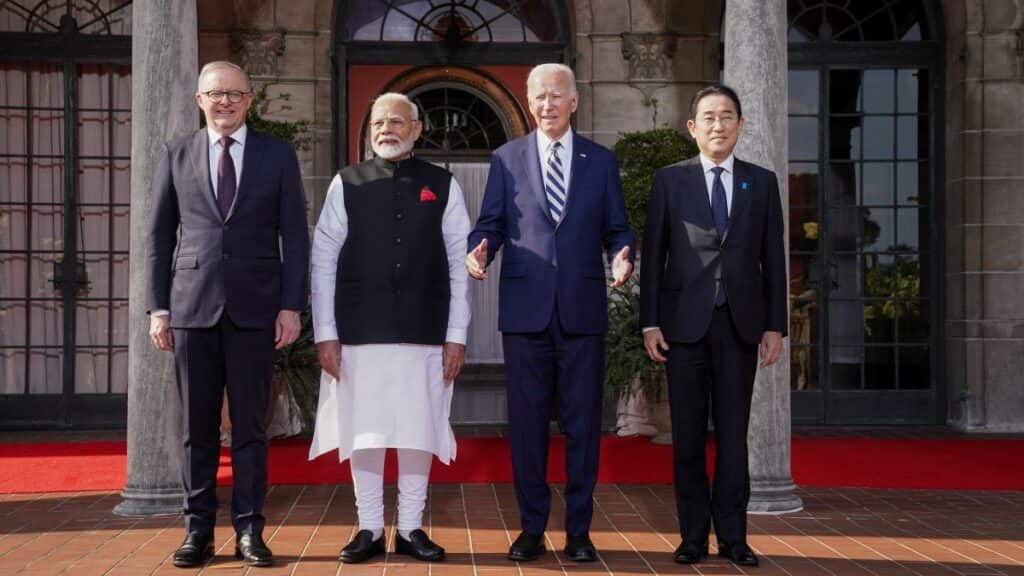
The pattern has continued into 2026. No standalone Quad leaders' summit has taken place since late 2024, reflecting a broader shift toward bilateral diplomacy and transactional engagement under the second Trump administration.
Most recently, the Quad Foreign Ministers' meeting held in New Delhi in May earlier this year concluded without announcing a definitive date for the next leaders' summit.
As a result, expectations have grown that future meetings between leaders may increasingly occur on the margins of larger gatherings such as G20 summits or sessions of the United Nations General Assembly rather than through dedicated annual summits.
These scheduling challenges have contributed to perceptions that the grouping has lost some momentum, although its institutional framework remains intact.
With inputs from agencies
Inhaling global affairs daily, Anmol covers foreign policy & defence with the occasional piece in lifestyle and the thrilling sport of polo, to keep things light when they get too tense. He has far too many disparate interests with a constant itch for travel. You can follow him on X (AnmolSingla001); and please feel free to reach out to him at anmol.singla@nw18.com for interviews, tips, feedback or travel recommendations.

Delhi Police asks personnel to wear uniform: What the law says on cops in plainclothes during protests
Military drones & police check-ups: How Sri Lanka is fighting against worst dengue outbreak in a decade
How Facebook job ad lured 2 Karnataka men into Myanmar cyber scam camp
Why is India seeing 95% cloud cover despite a Super El Niño?
What is CJP’s fourth demand to the government as protests in Delhi intensify?