


US B-52 bomber crashes: Why ‘Buff’ still remains one of America’s most valuable aircraft
Eight people died on Monday after a B-52 bomber crashed in southern California. The incident has once again raised questions about the long-range aircraft, which was first inducted into the American military in the 1950s. Since then, it has been heavily involved in many of the US operations, including Epic Fury against Iran

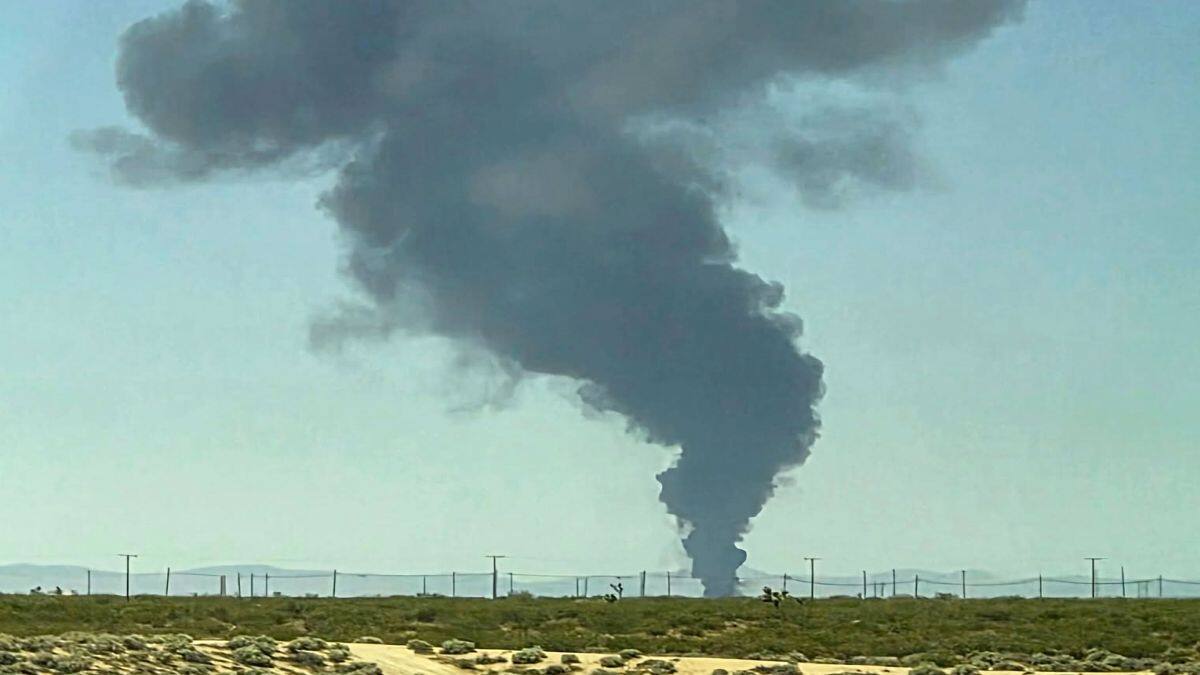
Eight people, including two Boeing employees, died on Monday (June 15) after a US air force B-52 bomber crashed immediately after take-off from Edwards Air Force Base in southern California.
This incident is the deadliest crash involving a B-52 bomber since 1982, during which nine people died.
The incident has renewed interest in the B-52 Stratofortress bomber, which has been in US service since 1955 and has become one of the most important aircraft in the US air force bomber fleet.
What happened to the B-52 bomber on Monday?
>> As part of a routine test mission, a B-52 Stratofortress bomber took off at 11:20 am local time from Edwards Air Force Base, northeast of Los Angeles. However, seconds after the aircraft took off, it crashed, sending a huge plume of black smoke into the air that could be seen for miles.
 More from Explainers
> According to US officials, the aircraft was conducting a test mission in support of a radar modernisation programme when the accident occurred. “Today, Edwards Air Force Base experienced a terrible tragedy, and we lost eight great Americans,” said Col James Hayes, describing them as a “mixed crew of military, government civilians, and government contractors”.
>> Boeing, the manufacturer of the plane, said two of its employees were on Monday’s flight. “We are in contact with their families and are offering support,” Boeing said in a statement.
>> Colonel Hayes added that after reviewing the crash footage, officials concluded that no one could have survived.
>> The cause of the crash is yet to be determined, with Hayes stating that it could take at least six months to complete the investigation. “It’s possible the controls were rigged wrong after maintenance or a catastrophic engine problem or a catastrophic engine problem or a failure of a piece of equipment that was being tested,” said aviation safety expert Jeff Guzzetti to the Associated Press.
>> “I think it was definitely a controllability issue. Now, whether that was tied to an engine failure, a flight control failure, or some new testing device failure, I’m not sure,” he added.
What are the capabilities of the B-52 bomber?
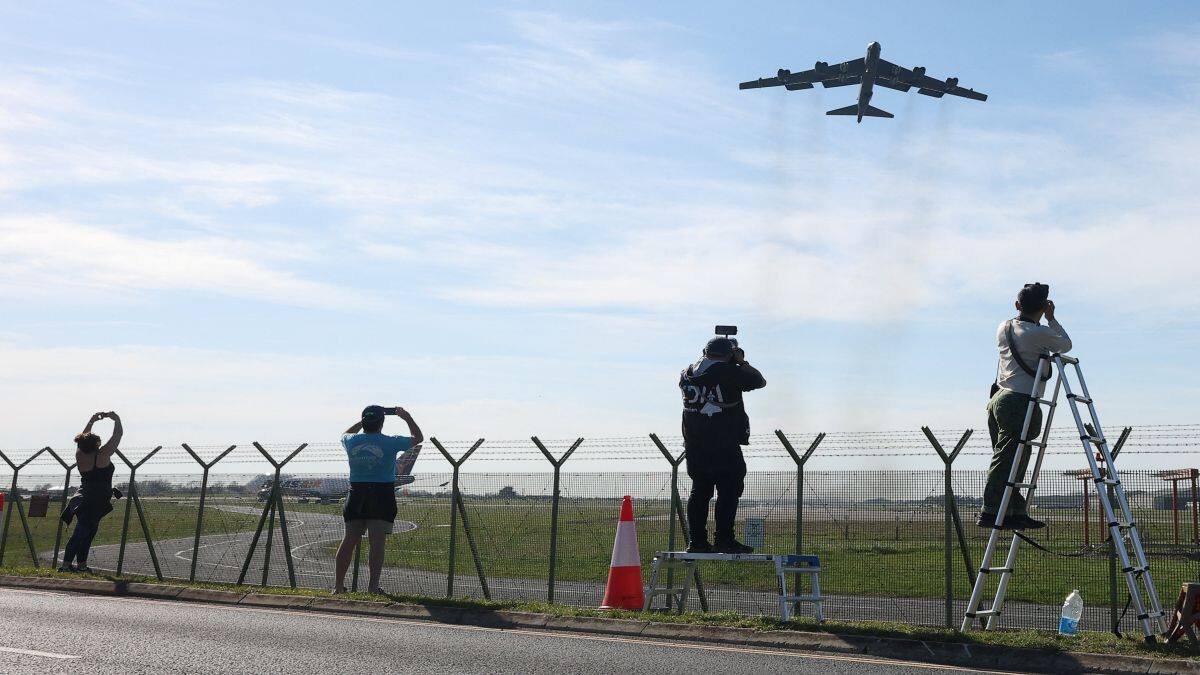
>> Nicknamed ‘the Buff’, which is partly short for “Big Ugly Fat”, the B-52 Stratofortress is manufactured by Boeing and has been in military use since the 1950s.
>> A long-range bomber, the B-52 was introduced at the height of the Cold War and was intended to serve as a nuclear deterrent against the Soviet Union.
>> The B-52 Stratofortress is a massive aircraft, with a wingspan of over 185 feet and a length of over 160 feet. It can carry a wide range of weapons, including nuclear missiles and conventional bombs, weighing up to 7,000 pounds. Defence experts note that no other aircraft currently in the Western bomber inventory comes close to matching that volume of firepower in a single sortie.
>> The aircraft is powered by eight turbojet engines, which give it a top speed of over 650 miles per hour and a range of over 8,000 miles.
>> The B-52 is also highly manoeuvrable, despite its size. It can fly at high altitudes, making it difficult for enemy defences to track, and it can carry out precision strikes using GPS-guided munitions. The aircraft also has an advanced radar system, which allows it to detect and track enemy targets from long distances.
> Another reason that makes the B-52 so appealing to the US air force is the cost. According to 2012 data, the unit cost of the aircraft stands at $84 million, which is relatively far less expensive than other stealth fighters in the US stable.
Why is the B-52 known as the backbone of the US air force?
>> Since being inducted into the US military, it has participated in almost every conflict that the US has been involved in. The aircraft was used extensively for low-level missions during the Vietnam War. In fact, according to one report, the B-52 made history as the largest aircraft to achieve air-to-air kills in the war.
>> During Desert Storm in 1990, B-52s delivered 40 per cent of all the weapons dropped by coalition forces. In 2001, the B-52 contributed to the success of Operation Enduring Freedom, providing the ability to loiter high above the battlefield and provide close air support through the use of precision-guided munitions.
>> And Operation Epic Fury, America’s military action against Iran that began the war, also saw the deployment of the B-52 bomber. In early March, reports came in that the B-52 bombers deployed had struck more than 1,700 targets within Iran in the first 72 hours of the operation.
>> The B-52s have also been used by the US as a show of force against its adversaries, with the heavy bombers being deployed to Europe used as an intimidation tactic against both Iran and Russia.
>> The long-range bombers were used to patrol the coast of Venezuela in the days before the capture of its former president, Nicolas Maduro.
>> Today, the B-52 is a critical part of the United States air force’s arsenal. It has been upgraded several times over the years, with the latest variant, the B-52H, featuring advanced avionics, engines, and weapons systems. The aircraft is expected to remain in service for several more decades, making it one of the longest-serving military aircraft in history.
With inputs from agencies

Delhi Police asks personnel to wear uniform: What the law says on cops in plainclothes during protests
Military drones & police check-ups: How Sri Lanka is fighting against worst dengue outbreak in a decade
How Facebook job ad lured 2 Karnataka men into Myanmar cyber scam camp
Why is India seeing 95% cloud cover despite a Super El Niño?
What is CJP’s fourth demand to the government as protests in Delhi intensify?