


This Week in Explainers: Why is Kerala so prone to landslides?
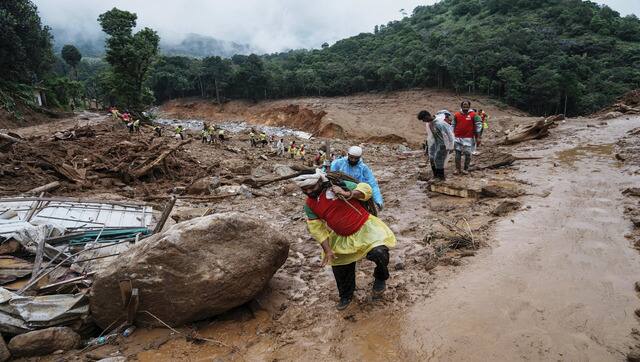
Kerala witnessed deadly landslides that killed hundreds of people in the Wayanad district. Nearly every year, the southern state reels from such landslips in the monsoon. But why does this happen? Here’s this and more in the weekly roundup of stories from India

It was not a good week for India. Landslides in Kerala and waterlogging in Delhi took several innocent lives.
Climate change has made extreme weather events more common. After this week’s disasters in several states, India could witness landslides and urban floods in September.
Indian athletes are representing the country at the Paris Olympics, making us all proud. However, their ikat-inspired uniforms by renowned designer Tarun Tahiliani have failed to impress netizens.
Here are all these developments and more in this weekly roundup of explainers from India.
1. Hundreds of people died after multiple landslides struck Kerala’s Wayanad district on Tuesday morning. Several were missing and hundreds of others were injured after torrential rainfall triggered landslips that hit Mundakkai and Chooralmala villages under Meppadi Panchayat.
 More from Explainers
According to the Indian Meteorological Department (IMD) data, the Wayanad district received 140 mm of rainfall between the mornings of Monday and Tuesday, five times its normal precipitation during this period.
Almost every year, Kerala witnesses landslides in the monsoon season. The southern state is prone to heavy rains and flooding as well. But why? We explain in this story.
2. Deadly landslides hit the Wayanad district, which is part of the Western Ghats mountain range, bringing death and destruction. The Western Ghats is the second-most vulnerable region to landslides in India after the Himalayas.
Multiple reports have demarcated areas along the Western Ghats, including several taluks in the Wayanad and Idukki districts, as ecologically sensitive zones (ESZ). However, none of the recommendations have been implemented so far. The Western Ghats runs through Kerala, Tamil Nadu, Karnataka, Goa, Maharashtra and Gujarat.
Why is the Western Ghats not protected yet and why is it high time to do so? Read our report to find out.
3. Three Union Public Service Commission (UPSC) aspirants died in rain-induced flooding in the basement of a popular IAS coaching centre in Delhi, causing a massive outrage in the capital. The tragic incident brought to light the violation of safety norms, the illegal use of basements as libraries and the “collapse” of the drainage system in Delhi.
Rau’s IAS Study Circle building had four floors, a parking space and a basement. After heavy rainfall which led to waterlogging, the water piled up in the basement where 20–25 students were present at the time. Protests broke out outside the coaching centre over the deaths, with aspirants demanding accountability. We explain in our story how Rau’s IAS Study Circle flouted norms.
4. It is not just Kerala's Wayanad which recorded heavy rainfall this week. Delhi and the National Capital Region (NCR) received downpours on Wednesday night, which inundated streets and delayed flights. The National Capital got more than a hundred millimetres of rainfall in one hour which triggered waterlogging in several areas.
Two people drowned in Delhi after slipping into a waterlogged drain, while three others died in Gurugram. The rain fury brought destruction to the National Capital and its adjoining NCR. Read our story to know how bad it was and why Delhi struggles with flooding.
5. After several disasters this week, there is a possibility of more landslides and urban floods in September. The Indian Meteorological Department (IMD) has predicted ‘above normal’ rainfall in the months of August-September due to La Niña.
“We are moving towards a La Nina weather condition and its impact is becoming visible,” Mrutyunjay Mohapatra, director-general of IMD, said at a press conference adding that “La Nina will play a role in increased rainfall activity in September.”
What is this weather phenomenon and why does it increase the risk of floods and landslides? We explain in this report.
6. Tarun Tahiliani is facing flak for the uniforms he designed for the Indian contingent at the Paris Olympics. Men in kurta-pajamas and women in sarees adorned with the national flag’s colours sailed down the River Seine on a boat at the opening ceremony of the grand event. However, most people were displeased with their attire.
Netizens dubbed the dresses as “uninspired”, “cheap”, and “tacky.” But why were the ikat-inspired uniforms hated so much? Read this story to find out.
7. Are diamonds no longer attractive? The price of both synthetic and natural diamonds has reportedly plunged. India’s overall gems and jewellery exports saw an on-year decline of 13.44 per cent in June at Rs 15,939.77 crore ($1,909.57 million) amid muted demand in overseas markets, according to data by Gem and Jewellery Export Promotion Council (GJEPC).
But why is this happening? We explain this in our report.
You are all caught up for this week. If you like how we explain news, you can bookmark this page.

Why has Bangladesh’s choice of India spokespersons raised eyebrows?
Who is Sandeep Lamba, the Delhi cop removed from protest site duty after slapping female protester?
Explorers discover wreckage of plane 72 years later. Will this help in finding MH370?
Cruise missiles, drones and more... The deadly arsenal of the Houthis
Why India may not witness a medal rush at 2026 Commonwealth Games