


This Week in Explainers: Did Trump gain little and lose more from the Iran war?
Donald Trump has signed a 14-point deal that brings an end to the war after over 100 days of fighting. But did the US president succeed in the objectives he had laid out at the start of the battle? We discuss this and more in our wrap-up of the news this week

When the United States and Israel struck Iran on February 28, it began a war that saw numerous deaths, destruction, and disruptions of global supply chains. Country after country has been grappling with shortages and rising costs of goods as a result of the war between the US and Iran.
But after months of fighting, a breakthrough emerged this week. US President Donald Trump and his Iranian counterpart signed a memorandum of understanding (MoU) that ends the war and, hopefully, brings peace to the region.
Touting this as a big victory, the American leader told news website Axios that the deal reached with Iran amounted to “unconditional surrender”. And when asked what he had learned from the war about the limits to his power, Trump said that “I haven’t learned that lesson yet. I know there are, but there are no limits.”
 More from Explainers
The other big news emerged from the United Kingdom. British Prime Minister Keir Starmer may be staring at a new leadership challenge after Greater Manchester Mayor Andy Burnham emerged triumphant in a special election in Makerfield, northwest England, securing his return to parliament.
Closer home, there’s been some big news from Bangladesh and Pakistan. In Pakistan, a years-long campaign against the ‘pink tax’ in Pakistan — an 18 per cent sales tax on menstrual hygiene products and contraceptives — bore fruit with the federal government proposing to abolish it in its 2026–27 budget.
Meanwhile, in Bangladesh, the construction of a Lord Ram statue has caused tensions to erupt and raised questions about minority rights.
As you sit back this Sunday, here’s a roundup of this and much more.
1) After months of negotiations and threats, US President Donald Trump on Wednesday signed a 14-point memorandum of understanding to end the war at the palace of Versailles in France amid the G7 Summit.
The agreement creates a process for opening the Strait of Hormuz in the short run and lays out a 60-day timetable to address many of the remaining issues, including constraining Iran’s nuclear ambitions and the scope of sanctions relief and financial support for Iran.
For many, the deal is a win for Iran. The MoU confirms an immediate halt to military operations on all fronts, including Lebanon, mutual respect for sovereignty, the reopening of the Strait of Hormuz, and the lifting of the US naval blockade on Iranian shipping.
For Iran, the Lebanon aspect matters. From the very beginning, Tehran has maintained that Lebanon is crucial to a ceasefire and that Israel must cease all operations against the country.
There’s also the $300-billion fund for the reconstruction and economic development of Iran. This becomes another leverage point for the Iranian regime vis-à-vis Gulf countries. Iran will essentially say to them, “You need to fund our reconstruction as per this agreement, otherwise we will block the Strait of Hormuz and attack you again.”
Read the fine print of the deal here and why it’s a win for the Islamic Republic.
2) With US President Donald Trump and Iran signing the 14-point peace plan, the war in West Asia has effectively ended. But many people are asking whether it was really worth it?
When the campaign commenced on February 28, US President Trump laid out an aggressive list of war aims. He pledged to “destroy their missiles,” prevent the regime from rebuilding its nuclear programme, and set the stage for Iranians to “take over” the country’s government.
However, as the US president signed a deal with the Islamic Republic, it appeared that he backed off on some of those ambitions.
In our explainer, we delve into what the United States actually accomplished after months of warfare.
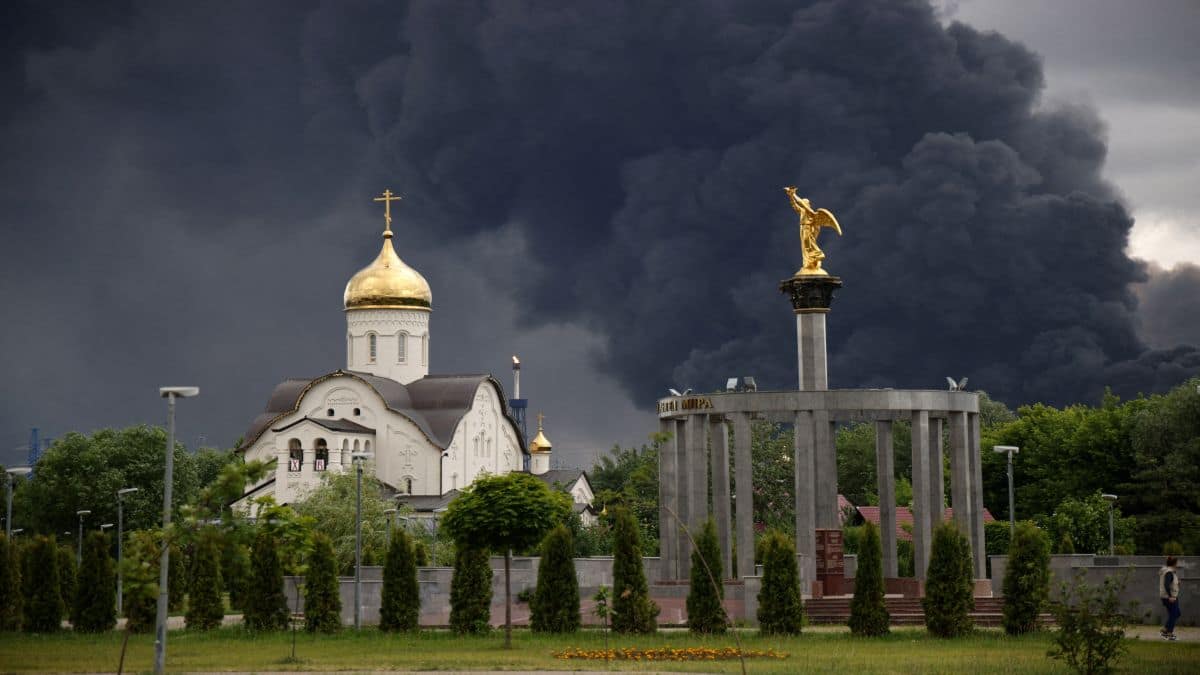
3) While one war seems to have ended, at least for now, another continues to be fought between Russia and Ukraine. In fact, Kyiv has stepped up its attacks this week, raining down drones and missiles on Russia. On Thursday, close to 200 drones struck a major Moscow oil refinery.
Soon after, a wave of social media videos began doing the rounds online, showing cars, windowsills, and streets covered in a greasy, dark film. Many of the videos capture people touching the oily liquid, highlighting how the toxic fallout has spread across local neighbourhoods.
However, municipal officials attempted to downplay the crisis. Local authorities firmly denied that any form of “black rain” was falling over the metropolis.
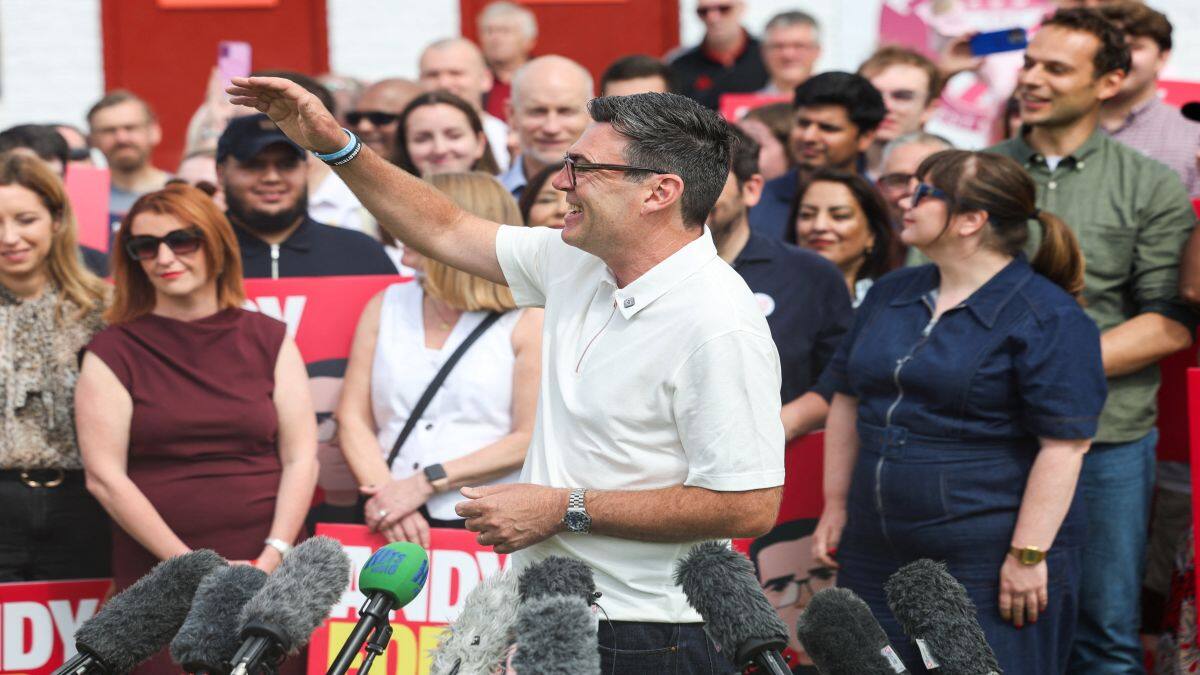
4) In the UK, British Prime Minister Keir Starmer is staring at yet another leadership crisis. This comes after Greater Manchester Mayor Andy Burnham cruised to victory in a high-stakes by-election in northern England.
The win by the mayor could precipitate Starmer’s resignation or set off a leadership contest pitting the prime minister against the outgoing mayor.
But who is Andy Burnham? Our explainer has the answer.
5) This week has been quite significant for Pakistan. It has claimed to play a successful mediator in the US-Iran peace deal. But that’s not all. The country also announced that it was abolishing the sales tax on women’s menstrual products as well as birth control.
For those who are unaware, for decades, sanitary napkins and other menstrual items have been taxed as “luxury goods,” and the price has put these products out of reach for many in Pakistan.
But all this changed this week thanks to the years-long effort by activists. “We’re very happy with this news,” said Mahnoor Omer, a human rights lawyer based in Islamabad. She is the petitioner in a September 2025 lawsuit that aimed to eliminate taxes on menstrual products.
If you want to know more about Pakistan’s ‘pink tax’, read here.

6) While Pakistan celebrated, Bangladesh was on edge this week. Work on the country’s tallest Lord Ram statue was put on pause this week, triggering protests from students as well as questions about the rights of minorities in the country.
But what actually happened? Read on to find out more.
7) There’s often been chatter of clubs where the world’s elite gather and network with one another. However, this week, a data leak actually revealed that such an exclusive, invite-only group does, in fact, exist, and has been started by US billionaire investor Peter Thiel.
Welcome to the world of Dialog, a place for off-the-record relationships among leaders from different fields and ideological backgrounds. This grouping meets at least once a year at lavish locations like the Ritz-Carlton Dove Mountain in Arizona, the Ritz-Carlton in Santa Barbara, California, and the San Clemente Palace in Venice.
And what do these powerful men and women discuss? Our essay has it all.
8) After making headlines for its blockbuster IPO, SpaceX was once again in the news this week when it announced that it would be purchasing AI coding startup Cursor for $60 billion.
This acquisition put a spotlight on the four founders of the startup — Aman Sanger, Sualeh Asif, Michael Truell, and Arvid Lunnemark. Twenty-five-year-old Sanger was brought in New York. But his family has strong Indian roots — his father graduated from the Indian Institute of Technology (IIT) Bombay, while his mother was trained as an orthodontist.
But how did the 25-year-old reach multi-billionaire status? His success story is inspiring.
And with that, we have come to an end to our roundup of the big headlines from around the world. Read more of our stories here.

Delhi Police asks personnel to wear uniform: What the law says on cops in plainclothes during protests
Military drones & police check-ups: How Sri Lanka is fighting against worst dengue outbreak in a decade
How Facebook job ad lured 2 Karnataka men into Myanmar cyber scam camp
Why is India seeing 95% cloud cover despite a Super El Niño?
What is CJP’s fourth demand to the government as protests in Delhi intensify?