
Advertisement


Sections
The public or the state: Who is in charge of the BBC?
The dispute over the close relationship between BBC chairman, Richard Sharp, and former Prime Minister Boris Johnson, has once again put the spotlight on the broadcaster's accountability

What’s the difference between a state broadcaster and a public broadcaster? The dispute over the close relationship between the BBC chairman, Richard Sharp and the former prime minister Boris Johnson, has seen some people — including on one occasion a BBC presenter — refer to it as a “state broadcaster”.The BBC is usually called a public service broadcaster (PSB) — and other PSBs around the world still look to the UK model as an example of good practice. The difference is significant and matters.The formal distinction seems straightforward. State broadcasters — as found in countries such as China, Iran, parts of the Middle East and increasingly eastern Europe — broadcast in the interests of the state.They have leadership directly appointed by the government, high levels of government editorial control or censorship, direct political funding, and are directly accountable to the government.Public Service broadcasters, meanwhile, operate in the interests of the wider public. They enjoy editorial independence from government and are usually funded via some sort of mechanism designed to insulate them from direct political control but provide a degree of open accountability to the public that funds them. How that is achieved, however, can be complex and involve compromises.The latest debate over political influence at the BBC raises some difficult questions about independence and accountability.Forms of governancePublic broadcasters need to demonstrate they are impartial and not politically aligned or directed. At a moment of highly polarised politics, with the increased scrutiny and criticism it brings, this is difficult.![]() For decades, BBC was overseen by a government-appointed board of governors, separate from the management. AFP[/caption]The suspicion is less about direct political interference than soft influence through appointments such as Sharp as chairman shortly after he brokered a £800,000 loan for the then prime minister and the appointment of non-executive directors with recent government experience including Robbie Gibb, formerly director of communications for then Conservative prime minister Theresa May.Question of impartialityGovernments of the past have often appointed those they believe to be politically sympathetic. But there is a sense that the current Conservative government has taken Margaret Thatcher’s famous inquiry of “Is he one of us?” to new levels.The BBC’s management has been openly focused on impartiality — largely interpreting this as political. The chairman is on record as saying he believes the BBC’s staff have a soft-left bias which needs addressing.Their problem is that the current crisis demonstrates that impartiality is as much about independence and accountability as it is about political balance. And those are harder to measure.Further, the unified board means those responsible for demonstrating the BBC’s editorial independence on air, by reporting on itself, are around the same table as colleagues trying to defend the corporate interest. Chinese walls were easier when the governors or trustees sat separately from the management.To stem further decline in trust, the BBC will need to demonstrate political independence at the highest level — beyond what has been required in the past.And it needs to find ways of demonstrating broader public accountability beyond Parliament and watchdog Ofcom. The public cannot practically oversee the BBC — but greater openness away from the committee rooms and boardrooms of London would help.Some senior executives at least recognise this. The new CEO of BBC News, Deborah Turness, announced on her arrival she wanted to bring greater transparency to how news judgments are made. In an all-staff email she said:
For decades, BBC was overseen by a government-appointed board of governors, separate from the management. AFP[/caption]The suspicion is less about direct political interference than soft influence through appointments such as Sharp as chairman shortly after he brokered a £800,000 loan for the then prime minister and the appointment of non-executive directors with recent government experience including Robbie Gibb, formerly director of communications for then Conservative prime minister Theresa May.Question of impartialityGovernments of the past have often appointed those they believe to be politically sympathetic. But there is a sense that the current Conservative government has taken Margaret Thatcher’s famous inquiry of “Is he one of us?” to new levels.The BBC’s management has been openly focused on impartiality — largely interpreting this as political. The chairman is on record as saying he believes the BBC’s staff have a soft-left bias which needs addressing.Their problem is that the current crisis demonstrates that impartiality is as much about independence and accountability as it is about political balance. And those are harder to measure.Further, the unified board means those responsible for demonstrating the BBC’s editorial independence on air, by reporting on itself, are around the same table as colleagues trying to defend the corporate interest. Chinese walls were easier when the governors or trustees sat separately from the management.To stem further decline in trust, the BBC will need to demonstrate political independence at the highest level — beyond what has been required in the past.And it needs to find ways of demonstrating broader public accountability beyond Parliament and watchdog Ofcom. The public cannot practically oversee the BBC — but greater openness away from the committee rooms and boardrooms of London would help.Some senior executives at least recognise this. The new CEO of BBC News, Deborah Turness, announced on her arrival she wanted to bring greater transparency to how news judgments are made. In an all-staff email she said:![The Conversation]() This article is republished from The Conversation under a Creative Commons license. Read the original article.Read all the Latest News, Trending News, Cricket News, Bollywood News,India News and Entertainment News here. Follow us on Facebook, Twitter and Instagram.
This article is republished from The Conversation under a Creative Commons license. Read the original article.Read all the Latest News, Trending News, Cricket News, Bollywood News,India News and Entertainment News here. Follow us on Facebook, Twitter and Instagram.
Users from both the left and the right regularly criticise the BBC for not representing the world as they see it.As a consequence, the BBC has suffered a decline in trust in its services. With that comes scepticism about its impartiality and independence.Traditionally, the BBC — like other public institutions — has enjoyed editorial and operational autonomy while being institutionally accountable to government through the Department for Digital, Culture, Media and Sport (DCMS), the National Audit Office (NAO) and parliamentary select committees.For decades it was overseen by a government-appointed board of governors, separate from the management. This mutated in 2007 into the BBC Trust — still separate from management but with greater resources to scrutinise the executive.In 2016, David Clementi, a former deputy governor of the Bank of England, undertook a further review of the BBC’s governance. He recommended a unified board, with management and non-executive directors around the same table, and a chairman appointed by government.Separate oversight moved to the media regulator Ofcom (whose chair is also government appointed).For most of its 100 years, a form of direct government appointment of non-executive governors, trustees or directors has been the norm. It has largely worked. Even when the World Service was directly funded by government, it was widely recognised that its journalism was independent.But in the current climate of distrust in both media and the UK government, such arrangements are increasingly interpreted as interference. The BBC sometimes attracts accusations of being closer to state broadcasting than a model accountable to the public.[caption id="attachment_12058282" align="alignnone" width="640"]
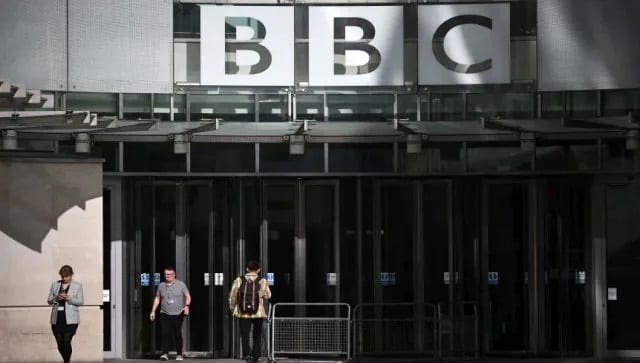 For decades, BBC was overseen by a government-appointed board of governors, separate from the management. AFP[/caption]The suspicion is less about direct political interference than soft influence through appointments such as Sharp as chairman shortly after he brokered a £800,000 loan for the then prime minister and the appointment of non-executive directors with recent government experience including Robbie Gibb, formerly director of communications for then Conservative prime minister Theresa May.Question of impartialityGovernments of the past have often appointed those they believe to be politically sympathetic. But there is a sense that the current Conservative government has taken Margaret Thatcher’s famous inquiry of “Is he one of us?” to new levels.The BBC’s management has been openly focused on impartiality — largely interpreting this as political. The chairman is on record as saying he believes the BBC’s staff have a soft-left bias which needs addressing.Their problem is that the current crisis demonstrates that impartiality is as much about independence and accountability as it is about political balance. And those are harder to measure.Further, the unified board means those responsible for demonstrating the BBC’s editorial independence on air, by reporting on itself, are around the same table as colleagues trying to defend the corporate interest. Chinese walls were easier when the governors or trustees sat separately from the management.To stem further decline in trust, the BBC will need to demonstrate political independence at the highest level — beyond what has been required in the past.And it needs to find ways of demonstrating broader public accountability beyond Parliament and watchdog Ofcom. The public cannot practically oversee the BBC — but greater openness away from the committee rooms and boardrooms of London would help.Some senior executives at least recognise this. The new CEO of BBC News, Deborah Turness, announced on her arrival she wanted to bring greater transparency to how news judgments are made. In an all-staff email she said:
The question I would like to ask you all to think about here, is this: to ‘the pursuit of truth with impartiality and accuracy’, how might we credibly add, ‘and with transparency’ – to lead the world in delivering what consumers say they need, if they are to continue to trust us.Greater independence, open accountability and transparency in operations are hard things to deliver. But they can reassure the public and build trust, they are increasingly recognised as core elements of the impartiality expected of a public broadcaster, and needed to insulate them from any misguided accusations of straying towards state broadcasting.
 This article is republished from The Conversation under a Creative Commons license. Read the original article.Read all the Latest News, Trending News, Cricket News, Bollywood News,India News and Entertainment News here. Follow us on Facebook, Twitter and Instagram.
First Published:Jan 27, 2023, 17:31:02 IST
Advertisement
Advertisement

Military drones & police check-ups: How Sri Lanka is fighting against worst dengue outbreak in a decade
Sri Lanka is fighting its most severe dengue outbreak in nearly a decade, with infections rising sharply across the nation. Military drones have been deployed to tackle the outbreak, which has claimed 56 lives. Health officials said the outbreak is being driven primarily by the DENV-2 variant of the virus
3 min read
How Facebook job ad lured 2 Karnataka men into Myanmar cyber scam camp
The Karnataka Cyber Command has rescued two youths from a scam compound in Myanmar operated by Chinese fraudsters. The duo from Karnataka were lured on the pretext of data-entry jobs. They were asked to work for 16 hours a day and were expected to sleep for six hours daily
4 min read
Why is India seeing 95% cloud cover despite a Super El Niño?
India is witnessing nearly 95 per cent cloud cover despite a Super El Niño, a climate event usually linked to weaker monsoons. Regional weather systems, cyclonic circulations, the monsoon trough and moisture from two seas are temporarily overpowering one of the world's strongest climate phenomena
5 min read
What is CJP’s fourth demand to the government as protests in Delhi intensify?
The protest by the Cockroach Janta Party at Delhi’s Jantar Mantar refuses to die down. The group have made a fourth demand to the Centre, asking that no FIRs are filed against the agitators and that no legal action be taken. The government has expressed willingness to speak to the protesters, but refused to accede on the resignation of Education Minister Dharmandra Pradhan
5 min read
The new geography of war: Why the Houthis can no longer be ignored
The rise of the Houthis marks the emergence of a new geography of war — one in which influence flows not only from capitals and conventional armies, but also from rugged mountains overlooking vital sea lanes
6 min read
Advertisement
Advertisement