


What has changed in Jammu and Kashmir since the abrogation of Article 370?
Jammu and Kashmir does not have a separate flag, Constitution, or anthem anymore. With the scrapping of Article 370 of the Constitution, all central laws have become applicable in the erstwhile state. Here’s how the Union Territory has changed over the last four years

The Supreme Court has delivered its verdict on the validity of the abrogation of Article 370 of the Constitution. The top court on Monday (11 December) upheld the Central government’s decision to scrap Article 370, which granted a special status to the erstwhile state of Jammu and Kashmir.
A five-judge Constitution bench, presided by Chief Justice of India (CJI) DY Chandrachud, also asked the Centre to restore the statehood of J&K at the earliest. The apex court further directed the Election Commission of India (ECI) to take steps to hold elections to the Legislative Assembly of J&K by 30 September next year.
On 5 August 2019, the Centre had abrogated Article 370, which ended the special status provided to J&K. At the time, the erstwhile state was also bifurcated into two Union Territories – Jammu and Kashmir (with legislature) and Ladakh (without legislature).
Over the last four years, J&K has undergone several changes. Let’s take a closer look.
 More from Explainers
Sea of changes
With the scrapping of Article 370, Article 35A also came to an end.
Article 35A defined the erstwhile state’s "permanent residents" and accorded them special rights and privileges. It also prevented residents of other Indian states from buying and selling immovable properties in J&K.
In October 2020, the Ministry of Home Affairs (MHA) amended 14 laws of the erstwhile state of Jammu and Kashmir and repealed 12 others. One of the repealed laws, the Jammu and Kashmir Alienation of Land Act of 1938, barred the transfer of land to anyone who was not a state subject, according to Indian Express.
State subject referred to permanent resident certificate holders of J&K.
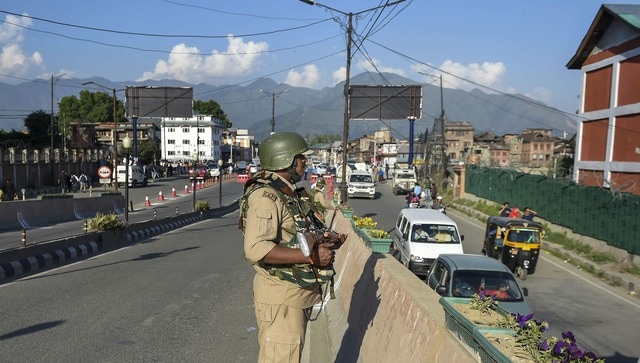
After the 2019 abrogation, J&K does not have a separate flag, Constitution, or anthem. The residents of the then state lost their dual citizenship and have since possessed only citizenship of India.
The Centre introduced the domicile clause through the J&K Reorganisation (adaptation of state laws) Order 2020, revising residence and recruitment rules. Under the 2020 order, any individual who has lived in J&K for 15 years, or has studied for seven years and given Class 10th/12th examination in an educational institution located in the UT, is eligible for a domicile certificate, reported Indian Express. This replaced the previously issued permanent resident certificates.
All central laws became applicable in J&K after Article 370 was revoked. And thus, the Ranbir Penal Code gave way to the Indian Penal Code (IPC).
The prosecution wing was separated from the executive police in J&K in November 2019, reported Indian Express.
ALSO READ: What the SC said on Article 370 and key takeaways of verdict
Security situation
Active militancy has abated in J&K since the abrogation of Article 370.
The number of active militants has plunged from 250 at the end of 2019 to “little above 100” towards the end of 2022, Scroll reported citing official figures.
While 930 militancy incidents had rocked the Valley in the three years before the scrapping of Article 370, only 617 such incidents were reported in the three years after the revocation, according to The New Indian Express (TNIE).
The number of locals recruited by militants has also come down. From 206 in 2018 and 143 in 2019, only 100 Kashmiri youth joined militant groups last year. Less than 12 locals joined militancy till July end of this year, reported Deccan Herald (DH).
A total of 750 militants have been killed by security forces in the UT over the last four years, as per Scroll. From 1 January to 5 August this year, 35 militants were neutralised by security forces in several operations. Last year, 186 militants, including 56 foreigners, were killed, noted DH.
What else is different in J&K since 2019?
There is no J&K cadre now. As Jammu and Kashmir was reorganised as a Union Territory in 2019, the J&K cadre was merged with the Arunachal Pradesh-Goa-Mizoram and Union Territory (AGMUT) cadre of the Indian Administrative Service (IAS).
J&K has set up a State Investigation Agency (SIA) in the recent years for “coordinating with the National Investigation Agency (NIA) and other Central Agencies and shall take such other measures as may be necessary for speedy and effective investigation and prosecution of terrorism related cases,” as per the Indian Express report.
With the state Human Rights Commission, the state Women’s Commission and the state Information Commission becoming defunct, J&K residents have to now petition national-level commissions.
In October 2020, District Development Councils (DDCs) were created through an amendment to Jammu and Kashmir Panchayati Raj Act, 1989. The members of the councils are directly elected by voters in the Union Territory. They were formed as a new unit of governance in the UT, with each district sending 14 elected members (in rural areas) to the DDC.
J&K has also seen a boom in tourism as well as investments in the recent years. As per DH, the erstwhile state had got private investments worth Rs 14,000 crore since Independence. However, following the abrogation and introduction of new Industrial Development Scheme, the UT has received investment proposals to the tune of 81,122 crore in the last two years alone.
With inputs from agencies

Why has Bangladesh’s choice of India spokespersons raised eyebrows?
Who is Sandeep Lamba, the Delhi cop removed from protest site duty after slapping female protester?
Explorers discover wreckage of plane 72 years later. Will this help in finding MH370?
Cruise missiles, drones and more... The deadly arsenal of the Houthis
Why India may not witness a medal rush at 2026 Commonwealth Games