


Silicon Valley Bank collapse: What we learnt from the bank's failure
What brought Silicon Valley Bank down wasn't lending to risky startups, gambling on shady crypto coins, or any other ill-conceived tech scheme. It was an old-fashioned bank run, triggered in 2021 by a series of old-fashioned bad decisions

Started in 1983, the bank had a gold-plated reputation inside the Silicon Valley startup scene.It was known for taking a risk on startups that no other banks would touch. This past week, as it collapsed, startup founders told stories of how they’d gotten their first business loans or their first credit cards from Silicon Valley Bank. Some tech workers got their home mortgages and car loans there.Relationships like those are valuable, and the most likely scenario here is that in the near future, a big Wall Street bank will acquire Silicon Valley Bank out of receivership. The big bank will assume Silicon Valley Bank’s assets and liabilities and make its depositors whole, and nobody will suffer catastrophic losses. (Except SVB’s equity holders.)A fast, orderly transfer of Silicon Valley Bank’s assets and liabilities to a new bank would be a best-case scenario. A worse scenario — one in which no buyer emerges, the bank’s customers have to wait weeks or months to access their money and the entire startup ecosystem collapses because many cannot make payroll — could be catastrophic.But even if the fallout from Silicon Valley Bank’s collapse is contained, lots of questions remain. Are there other banks with ties to the tech industry that are vulnerable to interest rate risk, the way SVB was? If a big bank acquires Silicon Valley Bank, will it be as friendly to startups? And after what just happened, will any startup founder ever trust any bank with their money again?Second, it’s possible that Silicon Valley Bank’s extremely online clientele may have contributed to its downfall.At most normal, midsize regional banks, what happened at Silicon Valley Bank probably wouldn’t have led to a panic. Banks sell assets all the time. They run into liquidity problems and raise short-term capital to solve them. Most of the time, customers never notice or care.But SVB’s depositors are not normal customers. They’re startup founders and investors, the kinds of people who scrutinise banks’ securities filings, who pay close attention to risk and volatility and who (most importantly) talk to one another on the internet all day.Once a few people in tech raised questions about the firm’s solvency, Slack channels and Twitter feeds lit up with dire warnings from venture capitalists, and soon many people were panicking.Would all of this have happened if the bank’s clientele had been made up of restaurant owners and dog groomers, instead of tech startup founders? Possibly. But it seems unlikely. In this case, Silicon Valley Bank’s demise seems to have been hastened by the clubby, herd-following nature of the industry it served.[caption id="attachment_12279382" align="alignnone" width="640"]
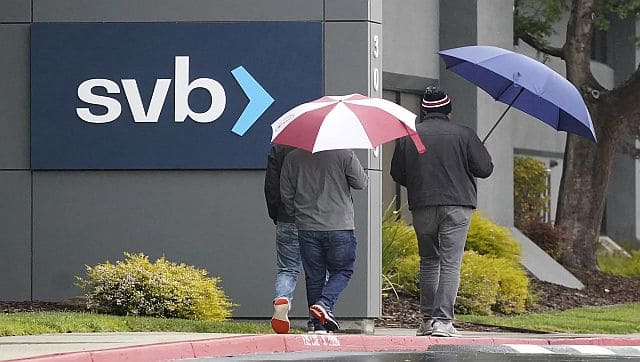
The Federal Deposit Insurance Corporation is seizing the assets of Silicon Valley Bank, marking the largest bank failure since Washington Mutual during the height of the 2008 financial crisis. AP[/caption]The third lesson we can draw from Silicon Valley Bank’s collapse is that bank regulation works. As soon as it was clear Friday that the bank was going under, the Federal Deposit Insurance Corp did what it always does when a bank fails — it swooped in, took over and started trying to make the bank’s customers whole.As a result, customers who had $250,000 (Rs 2 crore) or less deposited in insured accounts will be able to access those funds quickly. With any luck, a big bank will subsume the old SVB seamlessly, make its larger depositors whole, and there will be no domino effect — no taxpayer bailouts, no mass startup failures, just a simple and orderly bank failure.In recent years, a certain set of tech leaders disparaged regulators and government officials as slow, corrupt and a drag on innovation. (Some of these same leaders begged for government bailouts Friday.)But because Silicon Valley Bank was mostly an ordinary bank — not some unregulated crypto casino or risky fintech startup, where investors and deposits might have no recourse if their money disappeared — its failure will, in all likelihood, be more of an inconvenience than a long-term crisis.If that happens, Silicon Valley will have regulation to thank for its survival.Kevin Roose, c.2023 The New York Times CompanyRead all the Latest News, Trending News, Cricket News, Bollywood News,India News and Entertainment News here. Follow us on Facebook, Twitter and Instagram.

Why has Bangladesh’s choice of India spokespersons raised eyebrows?
Who is Sandeep Lamba, the Delhi cop removed from protest site duty after slapping female protester?
Explorers discover wreckage of plane 72 years later. Will this help in finding MH370?
Cruise missiles, drones and more... The deadly arsenal of the Houthis
Why India may not witness a medal rush at 2026 Commonwealth Games