


‘Encouraging progress’, threats and snubs: Inside round 1 of US-Iran talks in Switzerland
After hours of discussions, during which US President Donald Trump threatened Iran, the US and Iranian negotiators agreed to set up a high-level committee, with communication mechanisms for the Strait of Hormuz in round one of the Geneva talks. Curiously, following the conclusion of the negotiations, the Iranian delegation walked out to protest Trump’s threat as Pakistan’s Shehbaz Sharif and JD Vance watched on

On. Off. On… The status of negotiations between the United States and Iran in Switzerland to reach a final deal to end the war remained uncertain, as President Donald Trump continued to issue threats to Tehran and Israel refused to cease hostilities in Lebanon.
But amid speculation of Iran walking out of the talks to protest the US president’s threats, mediators from Pakistan and Qatar noted that the high-stakes talks would continue into the early hours of Monday in Switzerland.
So, what’s going on? What happened on Day 1 of the US-Iran talks at the Swiss mountain resort of Burgenstock? We unpack it all.
Negotiations on Hormuz, Lebanon, and more…
The talks between the US and Iran began on Sunday after the two nations signed a 14-point Memorandum of Understanding, which opened a 60-day window for negotiations to de-escalate the conflict in West Asia.
 More from Explainers
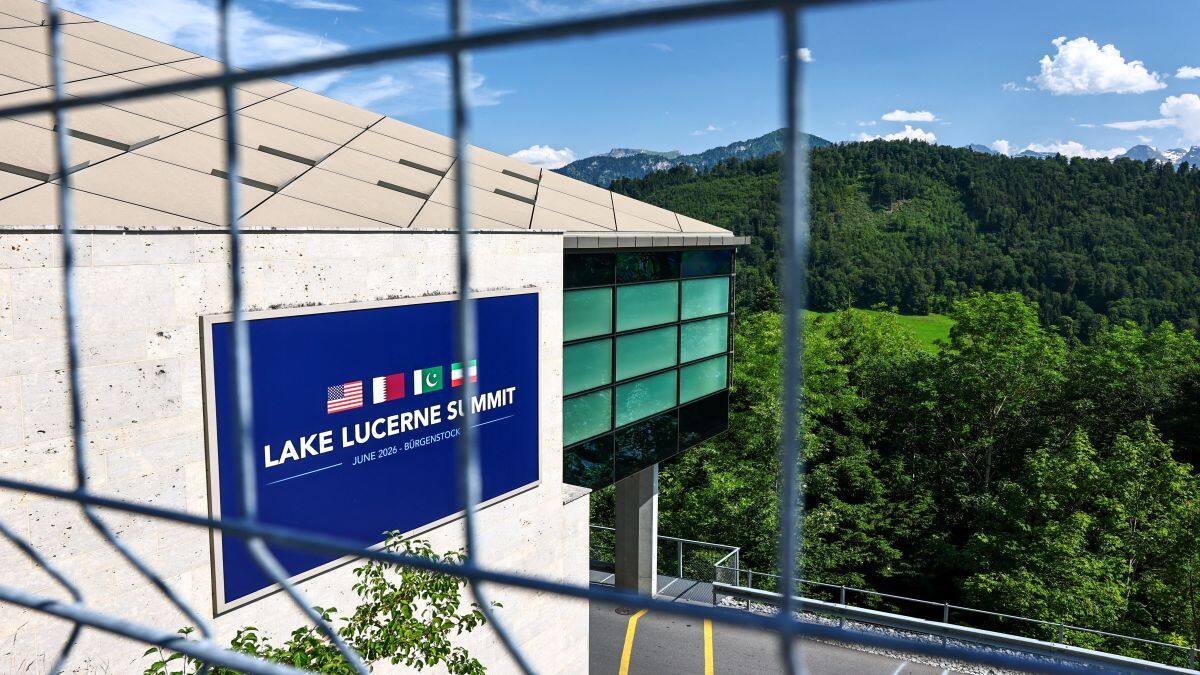
All parties — Pakistan, Qatar, the US, and Iran — arrived in the Swiss city of Lucerne on Sunday and held talks in different formats through the day.
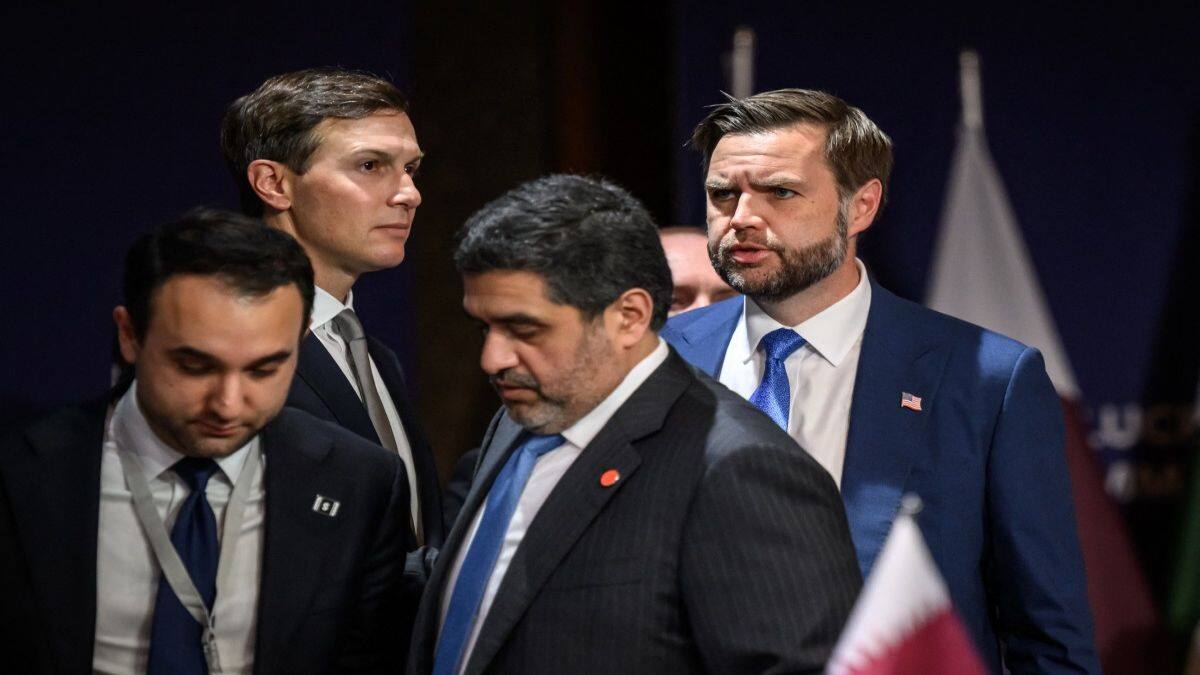
While the US was represented by US Vice President JD Vance, Trump’s special envoy Steve Witkoff, and son-in-law Jared Kushner, Tehran was led by Parliament Speaker Mohammad Bagher Ghalibaf and Foreign Minister Abbas Araghchi. Pakistan’s Prime Minister Shehbaz Sharif and Qatar’s Prime Minister Sheikh Mohammed bin Abdulrahman Al Thani were also present for the talks.
According to an Axios report, the discussions were held throughout the day in multiple formats. The report said one of the main issues discussed was Lebanon, with the focus on “deconfliction mechanisms” and “enforcing the ceasefire” amid Israeli strikes in the country’s south. Negotiations also included the crucial Strait of Hormuz after recent Iranian statements raised concerns over its possible closure. “We made clear we want to ensure it remains fully open. We made good progress on that front,” the US diplomat told Axios.
Apart from this, the delegations also held wide-ranging talks on “all elements of the nuclear deal”. “We’ve had robust discussions on all elements of the nuclear deal,” an official said. “We plan to continue working through each of these issues and using today’s work as a starting point for ongoing technical talks going forward.”
Post the talks that ran late into Sunday night, Iran’s foreign minister said that sanctions on Iran’s oil had been waived, and some of the country’s assets frozen abroad had been released. In the post on X, Abbas Araghchi also said that “a major reconstruction and development plan for Iran has been launched.”
The Iranian leader also said the “first real test” will be the Lebanon de-confliction cell that mediators Qatar and Pakistan said had been agreed to by the US and Iran, and which would help ensure the end of military operations in Lebanon.
Commenting on the same, Iran’s foreign ministry spokesperson Esmaeil Baghaei told Iranian media that the work of Tehran’s negotiating team in Switzerland was now “complete” and that technical teams would continue their work.
“It was agreed that technical teams will continue their work on the issues necessary for the effective implementation of this memorandum of understanding,” he said. “At this stage, the work of the negotiating delegation is complete, but the technical teams will continue their work tomorrow.”
According to the Pakistani and Qatari mediators, the talks were conducted in a “positive and constructive atmosphere,” and “encouraging progress” has been made. In a statement, it was announced that both warring nations have agreed to establish a High-Level Committee to provide “political oversight on the mediation.”
Chief negotiators will report regularly to the High Level Committee and lead working groups “focused on nuclear, sanctions, and a monitoring and dispute resolution group to ensure the effective implementation of the (memorandum of understanding), and on other matters,” the statement said.
The committee has “agreed upon a roadmap towards reaching a final deal within 60 days,” the statement said, adding technical talks will continue for the rest of this week in Switzerland “on all issues.”
The US and Iran also agreed to create a “de-confliction cell” involving Lebanon and facilitated by Qatar and Pakistan, to ensure the end of military operations in Lebanon, the statement added.
Trump's threats almost derail peace talks
Interestingly, the talks between the US and Iran were being held even as both sides traded threats, which almost led to Tehran walking out of the talks. As negotiations began in Switzerland, each side issued public threats as key sticking points risked derailing efforts to end the war.
Just as the negotiations were to begin, US President Donald Trump threatened to renew strikes on Iran if it did not stop Hezbollah from “causing trouble” in Lebanon. In a post on his Truth Social platform, the US president said, “If they don’t, we’ll hit Iran very hard again, just like we did last week, only harder.”
According to Fox News, Trump went even further in an interview, saying he had told Iranian officials if they closed the strait, “you won’t have a country”, and threatening to take over the waterway.
Notably, the threats from Trump came while US Vice President JD Vance expressed hopes of turning a “new leaf” with Iran. “The question before us now is how much more can we accomplish together?”, Vance said, adding, “Can we turn over a new leaf? Can we change relations in the Middle East permanently? Or do we go back to doing things the old way, which is not our preference, but it’s certainly very much something that can happen.”
Iranian officials expressed their displeasure at Trump’s remarks with the delegation in Switzerland, even threatening a walk-out as it violated Article 1 in the US-Iran memorandum of understanding that stipulates that both parties will refrain from threats of using force during the negotiations.
Iran’s chief negotiator, Mohammad Bagher Ghalibaf, later responded to Trump’s threat, warning the United States that “our armed forces are ready to respond”.
“Don’t they think that if their threats had any effect, they would not have reached today’s state of desperation? We do not take American threats into account,” Ghalibaf stated. “They would do better to be careful with their statements; our armed forces are ready to respond to them in a different manner. No matter what they say, we are the ones who act.”
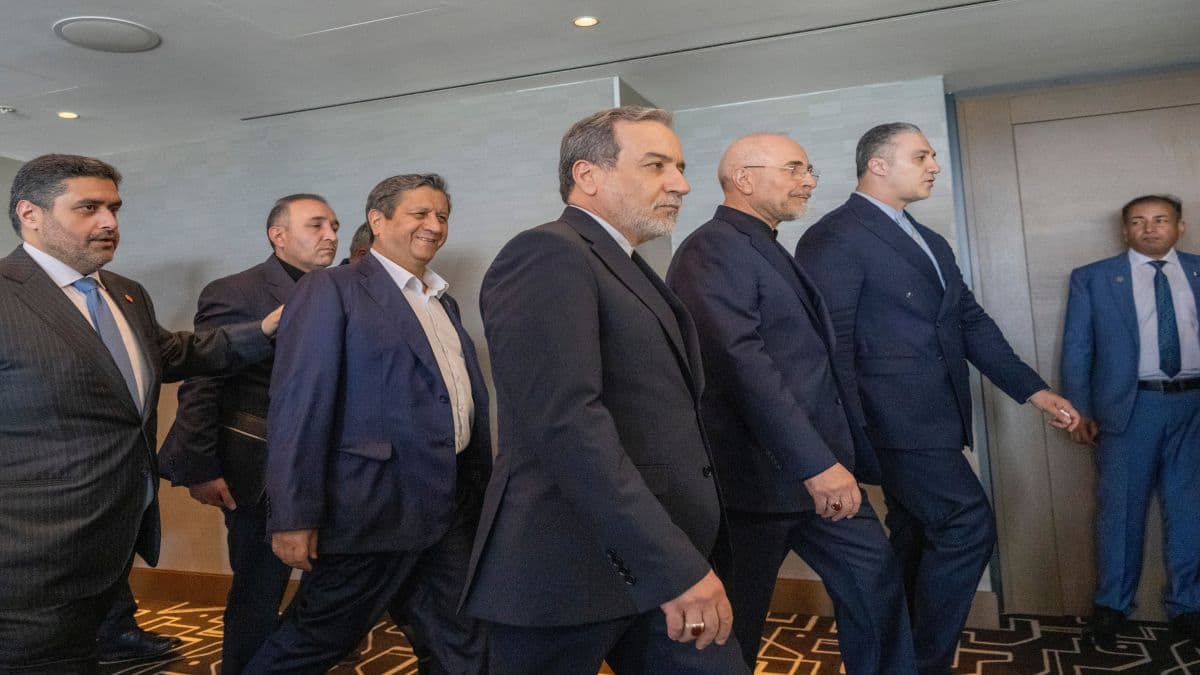
Iran skips photo op; Qatar snubs Vance
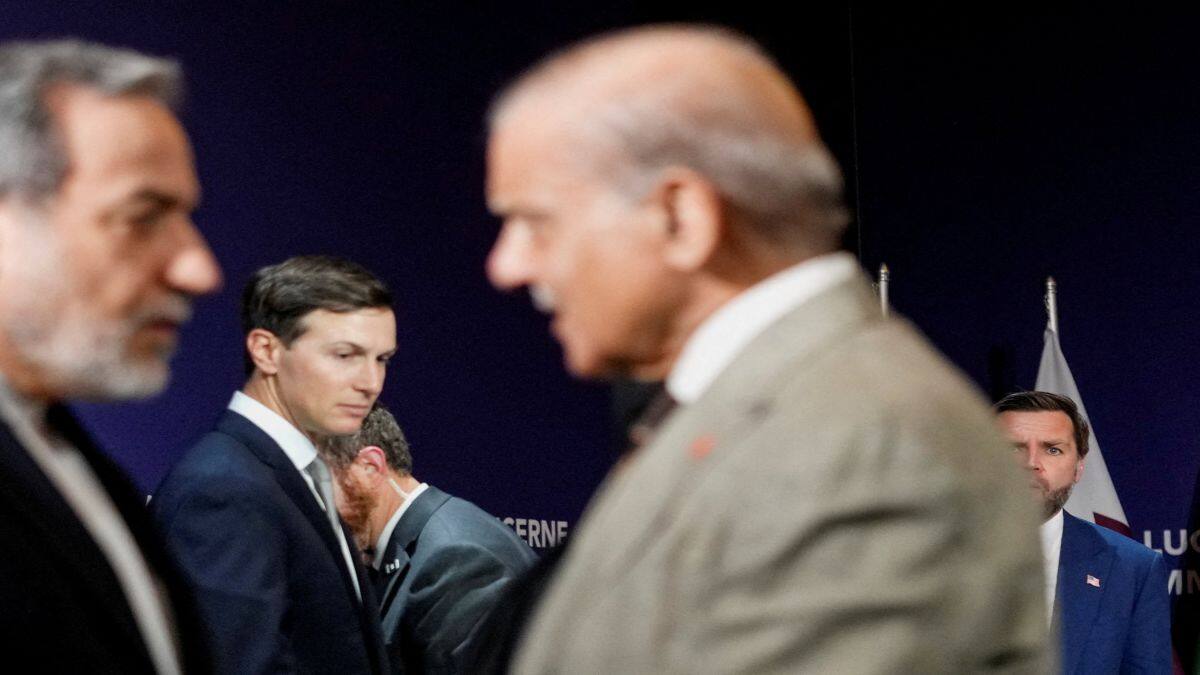
After round one of the talks concluded, the Iranian delegation refused to take part in a planned handshake and joint photo opportunity with American officials.
Video footage shared by Iran’s semi-official Tasnim News Agency showed the Iranian delegation leaving the conference room ahead of the scheduled media event with the US side. According to Iran’s state news agency IRNA, the delegation exited the venue after the meeting owing to Trump issuing threats on social media.
According to one report, Pakistan’s Shehbaz Sharif was shocked at the walkout and then sent the country’s Interior Minister Mohsin Naqvi with the Iranian team as he discussed the matter with another key player, Pakistan’s army chief Asim Munir.
Al Jazeera’s James Bays, who was reporting from Burgenstock, noted that this was indicative of “how tense things are”.
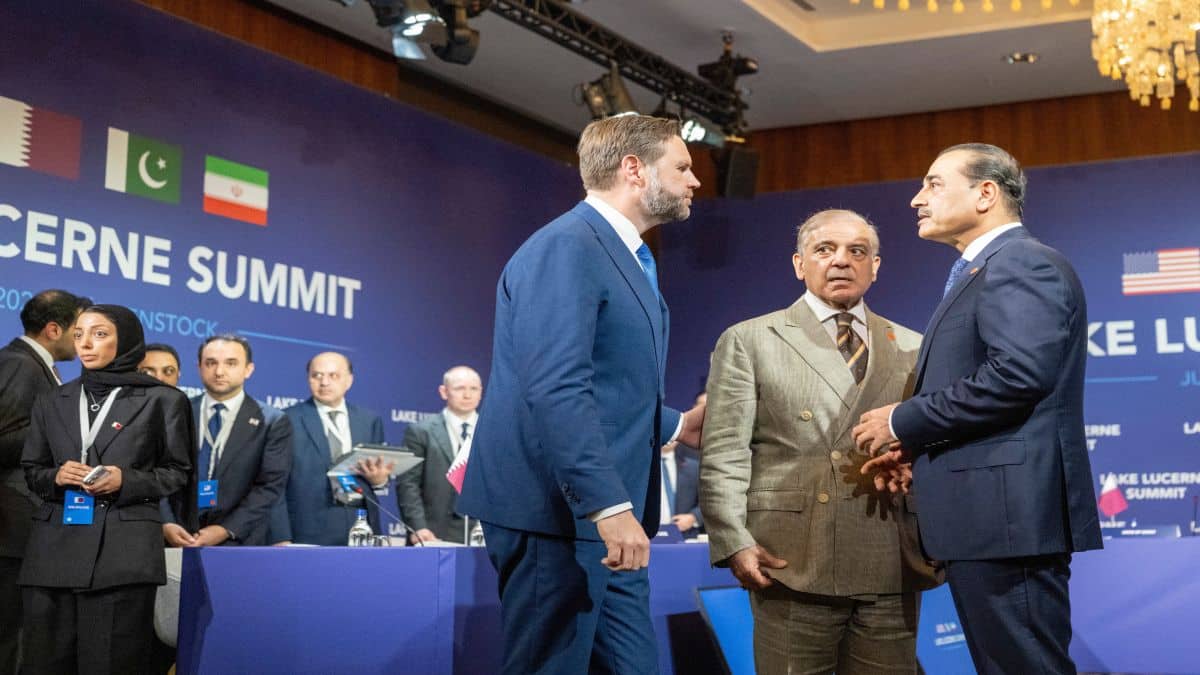
But this isn’t the only snub that took place. A video also showed Qatar’s Prime Minister Sheikh Mohammed bin Abdulrahman Al Thani ignoring JD Vance before warmly hugging Pakistani Prime Minister Shehbaz Sharif.
Many on social media spoke of the slight. However, no official account described the interaction as a diplomatic snub.
We shall have to wait and see what happens next in this US-Iran saga. Will peace hold, or will the countries go back to fighting?
With inputs from agencies

Why has Bangladesh’s choice of India spokespersons raised eyebrows?
Who is Sandeep Lamba, the Delhi cop removed from protest site duty after slapping female protester?
Explorers discover wreckage of plane 72 years later. Will this help in finding MH370?
Cruise missiles, drones and more... The deadly arsenal of the Houthis
Why India may not witness a medal rush at 2026 Commonwealth Games