


Rotten eggs, urine and more: How smelly is space?
Space has myriad odours, most of which are unpleasant. Astronauts have reported getting a unique whiff when they remove their helmets after returning from spacewalks. Here’s what all scents are present in the universe

Space generates fascination among billions of people on Earth. From manned missions to the discovery of planets, everything related to space grabs eyeballs. Not just space enthusiasts, we have all wondered what the daily life of astronauts looks like when they are outside Earth.Have you ever wondered what these astronauts smell when they are in space or what odours are present in space? If not, we have got you covered here.Does space have smells?Space is an airless vacuum. Astronauts protect themselves with spacecraft, spacesuits and space stations in space, "since direct exposure would, of course, kill them," Ofek Birnholtz, an astrophysicist at Bar-Ilan University in Israel, told Live Science.However, space is not a perfect vacuum. It consists of various molecules, many of which have their own strong odours when smelt on Earth, reported Space.com.Smells in spaceThere are myriad scents in the universe, most of which are unpleasant.At the time of the Apollo moon landings, astronauts mentioned a gunpowder-like smell once they returned to the airlock, entered the lunar spacecraft and removed their helmets, as per the Space.com report.Astronauts who come back to International Space Station after spacewalking describe similar odours, including gunpowder, ozone and burnt steak, the report added.[caption id="attachment_13603812" align="alignnone" width="640"]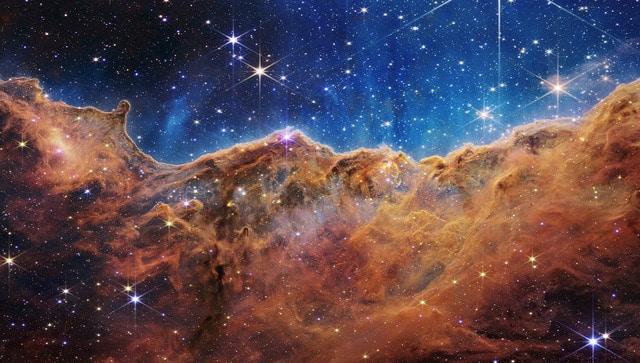 Different corners in the universe have unique odours. Reuters (Representational Image)[/caption]In 2014, when the European Space Agency's Rosetta spacecraft came across comet 67P/Churyumov-Gerasimenko, it detected compounds that emit the stench of rotten eggs, bitter almonds and cat urine, as per BBC.Speaking to Live Science, Steve Pearce, a biochemist and CEO of Omega Ingredients, said astronauts often compare the space of smell to "hot metal, burnt meat, burnt cakes, spent gunpowder and welding of metal”.Uranus, the seventh planet from the Sun, reeks of flatulence as it is made up of hydrogen sulfide, the compound that creates the smell of rotten eggs and human farts, as per New York Post.Saturn's largest moon, Titan, has an odour of gasoline or petrol. This is not surprising as Titan is covered in rivers and lakes of oil. Cassini data showed previously that this moon has hundreds of times more liquid hydrocarbons than all the known oil and natural gas reserves on Earth.Titan’s atmosphere has a molecule consisting of nitrogen, methane and benzene that belongs to a family of molecules called polycyclic aromatic nitrogen heterocycles (PANHs), reported Space.com. It is benzene in the PANHs that gives Titan its distinct petroleum odour.Sagittarius B2 (Sgr B2), one of the largest clouds of molecular gas in the Milky Way, has a lot of alcohol, including vinyl alcohol, methanol and ethanol. It also has a chemical called ethyl formate which is responsible for the sweet fragrances of raspberries and rum, reported Space.com. ALSO READ: From lunar exploration to Martian Moons: The important space missions set to launch in 2024What’s the reason behind these smells?Astronauts report getting a unique odour when they remove their helmets after returning from spacewalks.One theory for the sour, metallic smell experienced by astronauts is that oxygen is present around the International Space Station. When astronauts are on spacewalk, single atoms of oxygen may cling to their spacesuits. After they return to the airlock and repressurise, molecular oxygen (O2) inundates the airlock, mixing with the single oxygen atoms to form ozone (O3), reported Space.com.[caption id="attachment_13603822" align="alignnone" width="640"]
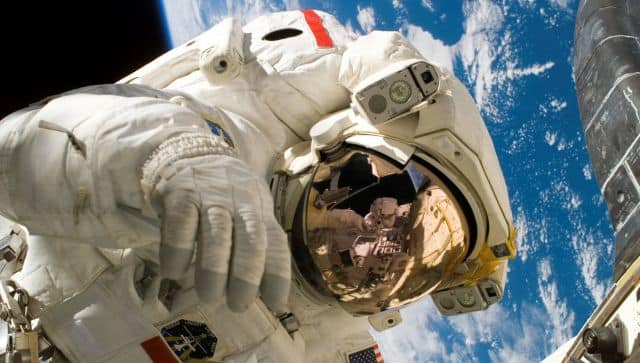 Astronauts report getting a unique odour after returning from spacewalk. Pixabay (Representational Image)[/caption]Polycyclic aromatic hydrocarbons (PAHs) could be behind the charred meat smell reported by astronauts. PAHs are found in burnt toast and barbecued meat."The other much more fun theory is that it's the smell relating to stellar explosions — dying stars," Miranda Nelson, a spacewalk flight controller in Mission Control at NASA's Johnson Space Center in Houston, told Live Science.These outbursts generate PAHs, which are found in coal, food, oil and other materials, she added.With inputs from agencies

Why has Bangladesh’s choice of India spokespersons raised eyebrows?
Who is Sandeep Lamba, the Delhi cop removed from protest site duty after slapping female protester?
Explorers discover wreckage of plane 72 years later. Will this help in finding MH370?
Cruise missiles, drones and more... The deadly arsenal of the Houthis
Why India may not witness a medal rush at 2026 Commonwealth Games