
Advertisement


Sections
Rishi Sunak cancels meet with Greek PM: What’s the row over Parthenon Marbles?
Greece has been for decades demanding that the 2,500-year-old Parthenon Marbles, also known as Elgin Marbles, be returned. But the UK has not budged. Now Prime Minister Rishi Sunak has refused to meet his Greek counterpart Kyriakos Mitsotakis in London, triggering a diplomatic row

Britain is infamous for its collection of treasures, many of which do not belong to them. Among the countries, which are asking for their ancient artefacts back, is Greece. For decades, it has been demanding that the 2,500-year-old Parthenon Marbles, also known as the Elgin Marbles, be returned. But the British have been adamant. And now the controversy has snowballed into a diplomatic row as UK prime minister Rishi Sunak cancelled a meeting with this Greece counterpart Kyriakos Mitsotakis.Why are Britain and Greece sparring? What are the precious Parthenon Marbles? We explain.What happened between Greek, British PMs?Rishi Sunak cancelled Tuesday’s planned talks with Kyriakos Mitsotakis at which the Greek leader hoped to raise the issue of the Parthenon Marbles. Mitsotakis, who is visiting London, expressed his irritation as the scheduled meeting at Downing Street was called off at the 11th hour.“I express my annoyance at the fact that the British prime minister cancelled our scheduled meeting a few hours before it was due to take place,” the centre-right leader said in a statement.“Greece and Britain are united by traditionally strong ties of friendship and the framework of our bilateral relations is exceptionally broad. The views of Greece on the Parthenon sculptures are well known.”Mitsotakis slammed Sunak for failing to rise to the challenge of discussing antiques, which have been a long-standing row. “Whoever believes in the correctness and justice of his views is never afraid of opposing arguments,” it read.[caption id="attachment_13440432" align="alignnone" width="640"]![]() A man looks at the Parthenon Marbles at the British Museum in London. During a visit to the UK, Greek PM Kyriakos Mitsotakis was expected to raise the issue of the return of the antiques with his British counterpart Rishi Sunak. File photo/Reuters[/caption]The Greek PM had a scheduled visit to Downing Street on Tuesday, the last day of his trip to the UK. But on Monday evening, as he met Labour party leader Keir Starmer, he was informed that talks with Sunak had been cancelled.On Sunday, in an interview with the BBC, Mitsotakis reiterated Greece’s persistent request for the Parthenon marbles to be returned. He said that having some of the artefacts in London and the rest in Athens “is like cutting the Mona Lisa in half”. "If I told you [to] cut the Mona Lisa in half... do you think your viewers would appreciate the beauty of the painting,” he asked BBC’s Laura Kuenssberg.While part of the antiques are in the British Museum in London, the rest are now housed in The Parthenon Gallery inside the Acropolis Museum in Athens.Why did Sunak cancel the meeting?Greek officials travelling with the PM said that there was no doubt that Sunak cancelled the meeting after the BBC interview on the carvings, according to a report in The Guardian.The remarks left Sunak miffed to the point that there was no reason to hold the talks, the report says. Insiders in Athen said that the Greek leader’s decision to meet Stramer before Sunak could have also led to the snub by Downing Street.Also read: What are the Parthenon Marbles that Britain may return to Greece after 200 years?What has the UK said?A No 10 spokesperson said, “The UK-Greece relationship is hugely important. From our work together in NATO to tackling shared challenges like illegal migration, to joint efforts to resolve the crisis in the Middle East and war in Ukraine.”A senior source in the Conservative Party was quoted by the BBC, attributing the decision to cancel the meeting to the remarks on the Parthenon Marbles. “It became impossible for this meeting to go ahead following commentary regarding the Elgin Marbles prior to it.”“Our position is clear – the Elgin marbles are part of the permanent collection of the British Museum and belong here. It is reckless for any British politician to suggest that this is subject to negotiation,” he added.[caption id="attachment_13440442" align="alignnone" width="640"]
A man looks at the Parthenon Marbles at the British Museum in London. During a visit to the UK, Greek PM Kyriakos Mitsotakis was expected to raise the issue of the return of the antiques with his British counterpart Rishi Sunak. File photo/Reuters[/caption]The Greek PM had a scheduled visit to Downing Street on Tuesday, the last day of his trip to the UK. But on Monday evening, as he met Labour party leader Keir Starmer, he was informed that talks with Sunak had been cancelled.On Sunday, in an interview with the BBC, Mitsotakis reiterated Greece’s persistent request for the Parthenon marbles to be returned. He said that having some of the artefacts in London and the rest in Athens “is like cutting the Mona Lisa in half”. "If I told you [to] cut the Mona Lisa in half... do you think your viewers would appreciate the beauty of the painting,” he asked BBC’s Laura Kuenssberg.While part of the antiques are in the British Museum in London, the rest are now housed in The Parthenon Gallery inside the Acropolis Museum in Athens.Why did Sunak cancel the meeting?Greek officials travelling with the PM said that there was no doubt that Sunak cancelled the meeting after the BBC interview on the carvings, according to a report in The Guardian.The remarks left Sunak miffed to the point that there was no reason to hold the talks, the report says. Insiders in Athen said that the Greek leader’s decision to meet Stramer before Sunak could have also led to the snub by Downing Street.Also read: What are the Parthenon Marbles that Britain may return to Greece after 200 years?What has the UK said?A No 10 spokesperson said, “The UK-Greece relationship is hugely important. From our work together in NATO to tackling shared challenges like illegal migration, to joint efforts to resolve the crisis in the Middle East and war in Ukraine.”A senior source in the Conservative Party was quoted by the BBC, attributing the decision to cancel the meeting to the remarks on the Parthenon Marbles. “It became impossible for this meeting to go ahead following commentary regarding the Elgin Marbles prior to it.”“Our position is clear – the Elgin marbles are part of the permanent collection of the British Museum and belong here. It is reckless for any British politician to suggest that this is subject to negotiation,” he added.[caption id="attachment_13440442" align="alignnone" width="640"]![]() Britain's prime minister Rishi Sunak cancelled his meeting with Greece's Kyriakos Mitsotakis. File photo/AP[/caption]Even before the meeting, Downing Street retorted to the Greek PM’s remarks likening the sculptures to the Mona Lisa being cut in half. “We have no plans to change our approach and certainly we think that the museum is the right place for them,” a Sunak spokesperson told the media.In 1963, Britain passed legislation that forbids the British Museum to part with its collection. Sunak had earlier clarified that he would not support changing that.What has been the response to Sunak’s decision in the UK?Before the meeting with Mitsotakis, the Greek government was assured by Stramer that if he won the elections next year he would not block a possible return of the Parthenon marbles to Athens.“If a loan deal that is mutually acceptable to the British government and the Greek government will be agreed, we won’t stand in the way,” one of the close allies of the Labour leader told Financial Times.[caption id="attachment_13440492" align="alignnone" width="640"]
Britain's prime minister Rishi Sunak cancelled his meeting with Greece's Kyriakos Mitsotakis. File photo/AP[/caption]Even before the meeting, Downing Street retorted to the Greek PM’s remarks likening the sculptures to the Mona Lisa being cut in half. “We have no plans to change our approach and certainly we think that the museum is the right place for them,” a Sunak spokesperson told the media.In 1963, Britain passed legislation that forbids the British Museum to part with its collection. Sunak had earlier clarified that he would not support changing that.What has been the response to Sunak’s decision in the UK?Before the meeting with Mitsotakis, the Greek government was assured by Stramer that if he won the elections next year he would not block a possible return of the Parthenon marbles to Athens.“If a loan deal that is mutually acceptable to the British government and the Greek government will be agreed, we won’t stand in the way,” one of the close allies of the Labour leader told Financial Times.[caption id="attachment_13440492" align="alignnone" width="640"]![]() Britain's Labour party leader Keir Starmer meets with Mitsotakis in London, on 27 November. File photo/AP[/caption]How did the Parthenon Marbles land in the UK?Parthenon Marbles were carved 2,500 years ago and were part of a frieze that decorated the ancient Parthenon temple at the Acropolis in Athens, Greece. There are 17 sculptures in all and are seen as symbols of freedom in Greece.British diplomat Lord Elgin removed the sculptures from the temple in the early 19th Century. (Hence they are also called Elgin Marbles.) He was then the ambassador of the Ottoman Empire, which ruled Greece.Elgin is said to have claimed that he was permitted by the Ottoman Empire for the transfer of the antiques. But there has been no evidence to support this despite vast documentation from the time, according to a report in Sky News.The diplomat sold the artefacts to the UK government in 1816 before they were passed into the trusteeship of the British Museum. The collection in the UK consists of figures, a frieze and a panel.It was in 1832 that Greece gained independence from the Ottoman Empire.[caption id="attachment_13440522" align="alignnone" width="640"]
Britain's Labour party leader Keir Starmer meets with Mitsotakis in London, on 27 November. File photo/AP[/caption]How did the Parthenon Marbles land in the UK?Parthenon Marbles were carved 2,500 years ago and were part of a frieze that decorated the ancient Parthenon temple at the Acropolis in Athens, Greece. There are 17 sculptures in all and are seen as symbols of freedom in Greece.British diplomat Lord Elgin removed the sculptures from the temple in the early 19th Century. (Hence they are also called Elgin Marbles.) He was then the ambassador of the Ottoman Empire, which ruled Greece.Elgin is said to have claimed that he was permitted by the Ottoman Empire for the transfer of the antiques. But there has been no evidence to support this despite vast documentation from the time, according to a report in Sky News.The diplomat sold the artefacts to the UK government in 1816 before they were passed into the trusteeship of the British Museum. The collection in the UK consists of figures, a frieze and a panel.It was in 1832 that Greece gained independence from the Ottoman Empire.[caption id="attachment_13440522" align="alignnone" width="640"]![]() People walk in front of the British Museum in London, where the Parthenon Marbles are housed. File photo/Reuters[/caption]The campaign to bring back the Parthenon Marbles started in the early 1980s when actress and Greek minister for culture Melina Mercouri vowed to bring back the sculptures. She continued to pressure the British government until she died in 1994.In 2009, Greece stepped up the campaign for the return of the marbles. They opened a new museum at the foot of the Acropolis hill that it hopes will one day house them, Sky News report says.In 2014, human rights lawyer Amal Clooney called on Britain to start talks with Greece on the return of the structure. “This is an injustice that has persisted for too long, and in a world of intractable conflicts,” she said. A year later, Greece ruled out taking any legal action against the UK over the carvings.Last year, there were calls to make it easier for UK museums to consider returning cultural objects. However, the government rejected them. In March, the Vatican returned three fragments, featuring the heads of a bearded man, a horse, and a boy, to Greece as a 'gesture of friendship'. This raised their hope.However, the Greece campaign asking Britain to do the same continues. History will be made if the UK budges.With inputs from agencies
People walk in front of the British Museum in London, where the Parthenon Marbles are housed. File photo/Reuters[/caption]The campaign to bring back the Parthenon Marbles started in the early 1980s when actress and Greek minister for culture Melina Mercouri vowed to bring back the sculptures. She continued to pressure the British government until she died in 1994.In 2009, Greece stepped up the campaign for the return of the marbles. They opened a new museum at the foot of the Acropolis hill that it hopes will one day house them, Sky News report says.In 2014, human rights lawyer Amal Clooney called on Britain to start talks with Greece on the return of the structure. “This is an injustice that has persisted for too long, and in a world of intractable conflicts,” she said. A year later, Greece ruled out taking any legal action against the UK over the carvings.Last year, there were calls to make it easier for UK museums to consider returning cultural objects. However, the government rejected them. In March, the Vatican returned three fragments, featuring the heads of a bearded man, a horse, and a boy, to Greece as a 'gesture of friendship'. This raised their hope.However, the Greece campaign asking Britain to do the same continues. History will be made if the UK budges.With inputs from agencies
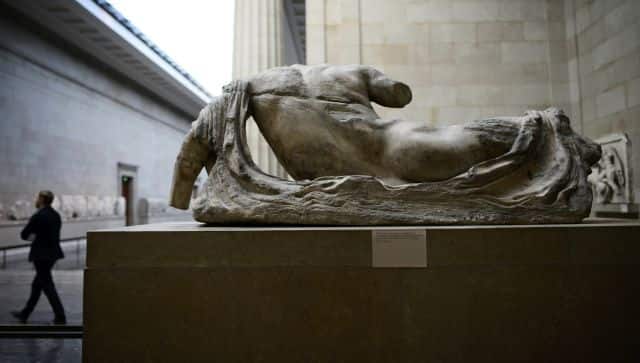 A man looks at the Parthenon Marbles at the British Museum in London. During a visit to the UK, Greek PM Kyriakos Mitsotakis was expected to raise the issue of the return of the antiques with his British counterpart Rishi Sunak. File photo/Reuters[/caption]The Greek PM had a scheduled visit to Downing Street on Tuesday, the last day of his trip to the UK. But on Monday evening, as he met Labour party leader Keir Starmer, he was informed that talks with Sunak had been cancelled.On Sunday, in an interview with the BBC, Mitsotakis reiterated Greece’s persistent request for the Parthenon marbles to be returned. He said that having some of the artefacts in London and the rest in Athens “is like cutting the Mona Lisa in half”. "If I told you [to] cut the Mona Lisa in half... do you think your viewers would appreciate the beauty of the painting,” he asked BBC’s Laura Kuenssberg.While part of the antiques are in the British Museum in London, the rest are now housed in The Parthenon Gallery inside the Acropolis Museum in Athens.Why did Sunak cancel the meeting?Greek officials travelling with the PM said that there was no doubt that Sunak cancelled the meeting after the BBC interview on the carvings, according to a report in The Guardian.The remarks left Sunak miffed to the point that there was no reason to hold the talks, the report says. Insiders in Athen said that the Greek leader’s decision to meet Stramer before Sunak could have also led to the snub by Downing Street.Also read: What are the Parthenon Marbles that Britain may return to Greece after 200 years?What has the UK said?A No 10 spokesperson said, “The UK-Greece relationship is hugely important. From our work together in NATO to tackling shared challenges like illegal migration, to joint efforts to resolve the crisis in the Middle East and war in Ukraine.”A senior source in the Conservative Party was quoted by the BBC, attributing the decision to cancel the meeting to the remarks on the Parthenon Marbles. “It became impossible for this meeting to go ahead following commentary regarding the Elgin Marbles prior to it.”“Our position is clear – the Elgin marbles are part of the permanent collection of the British Museum and belong here. It is reckless for any British politician to suggest that this is subject to negotiation,” he added.[caption id="attachment_13440442" align="alignnone" width="640"]
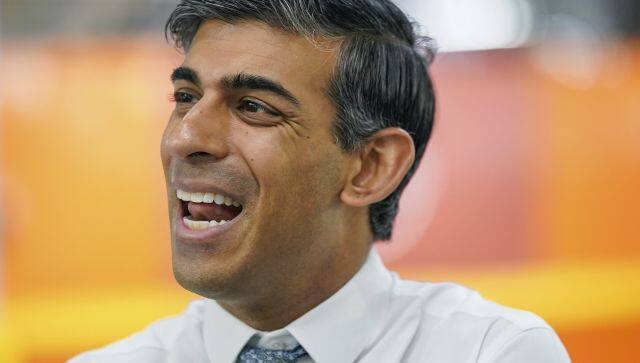 Britain's prime minister Rishi Sunak cancelled his meeting with Greece's Kyriakos Mitsotakis. File photo/AP[/caption]Even before the meeting, Downing Street retorted to the Greek PM’s remarks likening the sculptures to the Mona Lisa being cut in half. “We have no plans to change our approach and certainly we think that the museum is the right place for them,” a Sunak spokesperson told the media.In 1963, Britain passed legislation that forbids the British Museum to part with its collection. Sunak had earlier clarified that he would not support changing that.What has been the response to Sunak’s decision in the UK?Before the meeting with Mitsotakis, the Greek government was assured by Stramer that if he won the elections next year he would not block a possible return of the Parthenon marbles to Athens.“If a loan deal that is mutually acceptable to the British government and the Greek government will be agreed, we won’t stand in the way,” one of the close allies of the Labour leader told Financial Times.[caption id="attachment_13440492" align="alignnone" width="640"]
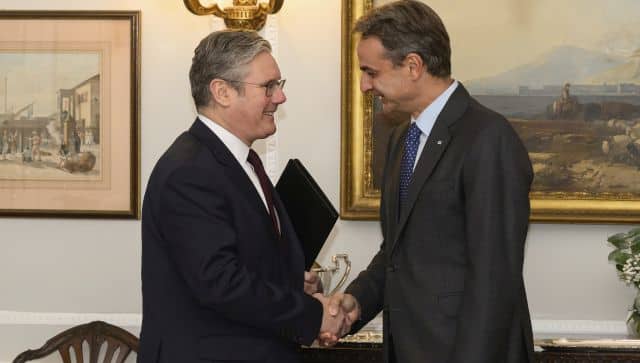 Britain's Labour party leader Keir Starmer meets with Mitsotakis in London, on 27 November. File photo/AP[/caption]How did the Parthenon Marbles land in the UK?Parthenon Marbles were carved 2,500 years ago and were part of a frieze that decorated the ancient Parthenon temple at the Acropolis in Athens, Greece. There are 17 sculptures in all and are seen as symbols of freedom in Greece.British diplomat Lord Elgin removed the sculptures from the temple in the early 19th Century. (Hence they are also called Elgin Marbles.) He was then the ambassador of the Ottoman Empire, which ruled Greece.Elgin is said to have claimed that he was permitted by the Ottoman Empire for the transfer of the antiques. But there has been no evidence to support this despite vast documentation from the time, according to a report in Sky News.The diplomat sold the artefacts to the UK government in 1816 before they were passed into the trusteeship of the British Museum. The collection in the UK consists of figures, a frieze and a panel.It was in 1832 that Greece gained independence from the Ottoman Empire.[caption id="attachment_13440522" align="alignnone" width="640"]
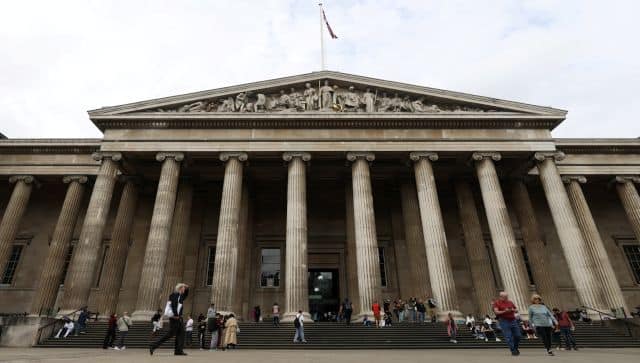 People walk in front of the British Museum in London, where the Parthenon Marbles are housed. File photo/Reuters[/caption]The campaign to bring back the Parthenon Marbles started in the early 1980s when actress and Greek minister for culture Melina Mercouri vowed to bring back the sculptures. She continued to pressure the British government until she died in 1994.In 2009, Greece stepped up the campaign for the return of the marbles. They opened a new museum at the foot of the Acropolis hill that it hopes will one day house them, Sky News report says.In 2014, human rights lawyer Amal Clooney called on Britain to start talks with Greece on the return of the structure. “This is an injustice that has persisted for too long, and in a world of intractable conflicts,” she said. A year later, Greece ruled out taking any legal action against the UK over the carvings.Last year, there were calls to make it easier for UK museums to consider returning cultural objects. However, the government rejected them. In March, the Vatican returned three fragments, featuring the heads of a bearded man, a horse, and a boy, to Greece as a 'gesture of friendship'. This raised their hope.However, the Greece campaign asking Britain to do the same continues. History will be made if the UK budges.With inputs from agencies
 First Published:Nov 28, 2023, 16:31:04 IST
Advertisement
Advertisement

Delhi Police asks personnel to wear uniform: What the law says on cops in plainclothes during protests
The Delhi Police has instructed all its personnel to wear uniforms when they report for duty at Jantar Mantar for crowd control. This comes after outrage grew over videos of men in civilian clothes or without name tags hitting protesters in the Capital. Is it legal for the police to ditch uniforms during protests?
4 min read
Military drones & police check-ups: How Sri Lanka is fighting against worst dengue outbreak in a decade
Sri Lanka is fighting its most severe dengue outbreak in nearly a decade, with infections rising sharply across the nation. Military drones have been deployed to tackle the outbreak, which has claimed 56 lives. Health officials said the outbreak is being driven primarily by the DENV-2 variant of the virus
3 min read
How Facebook job ad lured 2 Karnataka men into Myanmar cyber scam camp
The Karnataka Cyber Command has rescued two youths from a scam compound in Myanmar operated by Chinese fraudsters. The duo from Karnataka were lured on the pretext of data-entry jobs. They were asked to work for 16 hours a day and were expected to sleep for six hours daily
4 min read
Why is India seeing 95% cloud cover despite a Super El Niño?
India is witnessing nearly 95 per cent cloud cover despite a Super El Niño, a climate event usually linked to weaker monsoons. Regional weather systems, cyclonic circulations, the monsoon trough and moisture from two seas are temporarily overpowering one of the world's strongest climate phenomena
5 min read
What is CJP’s fourth demand to the government as protests in Delhi intensify?
The protest by the Cockroach Janta Party at Delhi’s Jantar Mantar refuses to die down. The group have made a fourth demand to the Centre, asking that no FIRs are filed against the agitators and that no legal action be taken. The government has expressed willingness to speak to the protesters, but refused to accede on the resignation of Education Minister Dharmandra Pradhan
5 min read
Advertisement
Advertisement