


What is reverse dieting, the latest weight loss trend on TikTok?
Reverse dieting involves reintroducing calories into eating plans after having adhered to a restrictive diet. The proponents of the strategy claim it is a way to ‘train your metabolism’ to consume more food without gaining weight

There is a new trend in TikTok town – reverse dieting. Influencers on the video platform are claiming reverse dieting is a way to “train your metabolism” to eat more food without gaining weight.
But how true is this?
Let’s take a closer look.
What is reverse dieting?
Reverse dieting is known as “the diet after the diet”, says Healthline.
It includes bringing back calories into your eating plans after completing a calorie-restrictive diet, noted Health.com.
According to Healthline, the idea of reverse dieting is based on adaptive thermogenesis or metabolic adaptation, which is a “protective process that alters the body’s metabolism to increase energy intake and decrease energy output in efforts to slow down weight loss”.
Speaking to TODAY.com, Dr Lilian de Jonge, associate professor at the department of nutrition and food studies at George Mason University, said reverse dieting involves adding back 50 to 100 calories per day — generally in the form of protein – on a weekly basis.
 More from Explainers
This method was first popularised by the bodybuilding community who use the regime to prevent increasing weight rapidly after a competition.

Once the competition is over, bodybuilders return to “sustainable, higher calorie eating styles”, as per Healthline. They do it in such as way as not to regain the weight or fat they lost earlier.
Sohini Banerjee, a consultant dietician at Kolkata's Fortis Hospital and Kidney Institute, told Indian Express, “The goal of a reverse diet is to not gain back mass after dieting. But it also does not mean stuffing your face with anything and everything that has calories.”
“It has been popular in the bodybuilding community as a way to prevent rapid weight gain after a competition. Long-term, restrictive dieting has been associated with changes in certain hormones, including leptin, ghrelin and insulin, which may result in changes to our metabolic rate and, ultimately, weight fluctuations and difficulty losing weight or maintaining weight loss,” Banerjee added.
ALSO READ: Gwyneth Paltrow dubbed an ‘almond mom’: The viral TikTok term and its negative connotation explained
How does reverse dieting work?
It varies from person to person depending on their sex, age, weight, and other factors.
Suppose someone cut back their daily calorie intake to as low as 1,200 to lose weight. For them, this post-diet eating strategy would usually involve adding 50–150 daily calories per week for around 4–10 weeks, as per Health.com.
This means the person will start consuming 1,300 calories daily for one week, 1,400 calories daily the next week and so on. By the eighth week, the daily calorie count would have touched 2,000, explained Health.com.
To understand this better, a tablespoon (16 grams) of peanut butter has about 100 calories.
ALSO READ: How healthy is your keto diet?
Benefits of reverse dieting
There is not much research on the benefits of reverse dieting. However, its propagators claim it has several advantages besides those related to weight.
People, especially those coming from weeks or months-long restrictive diets, are attracted to reverse dieting as it allows them to eat more food in a day.
Dr Robert Kushner, medical director of the Center for Lifestyle Medicine at Northwestern Medicine in Chicago told TODAY.com that “after a period of dieting, slowly reintroducing more food makes sense because it helps you increase the variety of foods you eat and feel more in control while also assessing any weight changes”.
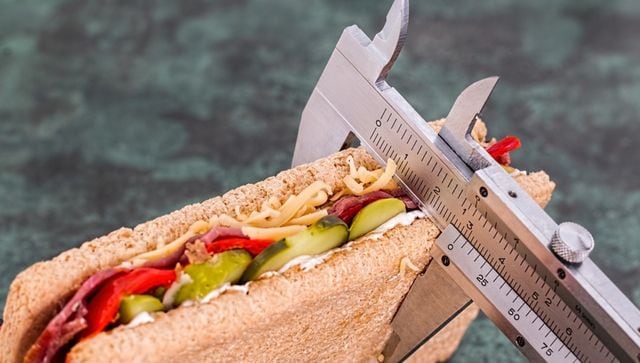
When someone represses their food intake for a long period of time, it can have an emotional and mental impact. As per Healthline, reverse dieting can help in overturning many drawbacks related to restricted dieting such as fall in energy levels, mood swings and concentration problems.
Reverse dieting can also prove beneficial in adopting a more "realistic and enjoyable eating pattern" while maintaining a lower weight, as per Healthline.
Reverse dieting effects on metabolism, weight
When on a strict diet, metabolism falls and the body adapts to a low-calorie diet. Currently, there is no data to ascertain if reverse dieting can restore that lost metabolism.
Moreover, can reverse dieting prevent weight regain after dieting? This is also not yet known.
Keith-Thomas Ayoob, associate clinical professor emeritus in the department of pediatrics at Albert Einstein College of Medicine, told TODAY.com that there is no scientific evidence on reverse dieting yet.
“It doesn’t mean it won’t work, but finding out takes sound studies and time,” he added.
With inputs from agencies
Read all the Latest News, Trending News, Cricket News, Bollywood News, India News and Entertainment News here. Follow us on Facebook, Twitter and Instagram.

Military drones & police check-ups: How Sri Lanka is fighting against worst dengue outbreak in a decade
How Facebook job ad lured 2 Karnataka men into Myanmar cyber scam camp
Why is India seeing 95% cloud cover despite a Super El Niño?
What is CJP’s fourth demand to the government as protests in Delhi intensify?
The new geography of war: Why the Houthis can no longer be ignored