
Advertisement


Sections
Can deepfakes be regulated? What India’s law says
A doctored video of actor Rashmika Mandanna and an AI-generated picture of Katrina Kaif has put the spotlight on deepfakes. While existing Indian laws are being used to tackle the menace, the country doesn’t have specific legislation. What about other nations?

Deepfake is a big danger these days. The AI-generated pictures and videos have triggered buzz and outrage alike after a manipulated clip featuring actor Rashmika Mandanna went viral earlier in the week.Mandanna’s “scary” experience caught the attention of the Indian government, prompting an immediate response from Union minister Rajeev Chandrasekhar. However, the Mandanna case is not an isolated one. On Tuesday, a deepfake picture of actor Katrina Kaif from her upcoming film Tiger 3 surfaced online. While public figures are most vulnerable to digitally altered content, the internet is filled with such doctored images and pictures, often targeting women.The number of online deepfake videos has seen a 550 per cent spike to 95,820 as compared to 2019, according to a 2023 State of Deepfakes report from the United States-based Home Security Heroes. India, it says, is the sixth most vulnerable country. Amid this alarming rise of fake AI-made content, we take a look at what India and other nations are doing to crack down on the growing menace.[caption id="attachment_13363122" align="alignnone" width="640"]![]() After Rashmika Mandanna, a deepfake image of actor Katrina Kaif from her upcoming film Tiger 3 also surfaced. While the original picture (above) shows her clad in a towel, the edited version is a picture of Kaif wearing a low-cut white top and a matching bottom.[/caption]Does India have a law against deepfakes?Responding to the viral deepfake of Rashmika Mandanna, the Indian government has issued a stern reminder to social media networks, governing legal provisions governing deepfakes and the penalties that are applicable for the creation and circulation of such content.The government has cited Section 66D of the Information Technology Act, 2020, which relates to “punishment for cheating by personation by using computer resource”. “Whoever, by means for any communication device or computer resource cheats by personating, shall be punished with imprisonment of either description for a term which may extend to three years and shall also be liable to fine which may extend to one lakh rupees, the section states, according to a report on NDTV.Also read: First Rashmika, now Katrina deepfake: How big is the problem in India and beyondOn Monday, Rajeev Chandrasekhar, Minister of State for Electronics and Information Technology, said that Prime Minister Narendra Modi was committed to ensuring safety and trust for Indians in the digital space.In a post on X, he wrote on Monday, “Under the IT rules notified in April, 2023, it is a legal obligation for platforms to:- ensure no misinformation is posted by any user AND- ensure that when reported by any user or govt, misinformation is removed in 36 hrs- if platforms do not comply wth this, rule 7 will apply and platforms can be taken to court by aggrieved person under provisions of IPC.”“Deep fakes are latest and even more dangerous and damaging form of misinformation and needs to be dealt with by platforms,” warned.India’s law for the protection of copyrights can also be used against individuals who create deepfakes using copyrighted works.However, the use of deepfakes for pornography is a massive concern. While some of the existing laws in India can be applied to counter deepfakes, there is a growing need for specific legislation to tackle the challenges posed by such content.Radhika Roy, advocate and associate legal counsel at Internet Freedom Foundation (IFF), told The Quint, that the term “deepfake” hasn’t been defined explicitly in any statute, but there are legal provisions to tackle it, such as Section 67 of the IT Act, “which can be used for publishing obscene material in electronic form”.“There needs to be clearer explanations with clearer consequences when it comes to deepfakes, given their insidious nature and how it’s sometimes impossible to tell what’s real from what’s fake.”Which countries have laws against deepfakes?China: In January, China introduced the first-of-its-kind regulation around deepfakes. The rules governing “deep synthesis technologies” involved users giving consent if their image is to be used in any such technology. Such services cannot be used to disseminate fake news and the content must have a notification of some kind to inform users that the image or video has been altered with technology, reports CNBC.However, deepfake apps from China-based developers have been downloaded in the US and remain available to app stores, according to an NBC News report.[caption id="attachment_13363212" align="alignnone" width="640"]
After Rashmika Mandanna, a deepfake image of actor Katrina Kaif from her upcoming film Tiger 3 also surfaced. While the original picture (above) shows her clad in a towel, the edited version is a picture of Kaif wearing a low-cut white top and a matching bottom.[/caption]Does India have a law against deepfakes?Responding to the viral deepfake of Rashmika Mandanna, the Indian government has issued a stern reminder to social media networks, governing legal provisions governing deepfakes and the penalties that are applicable for the creation and circulation of such content.The government has cited Section 66D of the Information Technology Act, 2020, which relates to “punishment for cheating by personation by using computer resource”. “Whoever, by means for any communication device or computer resource cheats by personating, shall be punished with imprisonment of either description for a term which may extend to three years and shall also be liable to fine which may extend to one lakh rupees, the section states, according to a report on NDTV.Also read: First Rashmika, now Katrina deepfake: How big is the problem in India and beyondOn Monday, Rajeev Chandrasekhar, Minister of State for Electronics and Information Technology, said that Prime Minister Narendra Modi was committed to ensuring safety and trust for Indians in the digital space.In a post on X, he wrote on Monday, “Under the IT rules notified in April, 2023, it is a legal obligation for platforms to:- ensure no misinformation is posted by any user AND- ensure that when reported by any user or govt, misinformation is removed in 36 hrs- if platforms do not comply wth this, rule 7 will apply and platforms can be taken to court by aggrieved person under provisions of IPC.”“Deep fakes are latest and even more dangerous and damaging form of misinformation and needs to be dealt with by platforms,” warned.India’s law for the protection of copyrights can also be used against individuals who create deepfakes using copyrighted works.However, the use of deepfakes for pornography is a massive concern. While some of the existing laws in India can be applied to counter deepfakes, there is a growing need for specific legislation to tackle the challenges posed by such content.Radhika Roy, advocate and associate legal counsel at Internet Freedom Foundation (IFF), told The Quint, that the term “deepfake” hasn’t been defined explicitly in any statute, but there are legal provisions to tackle it, such as Section 67 of the IT Act, “which can be used for publishing obscene material in electronic form”.“There needs to be clearer explanations with clearer consequences when it comes to deepfakes, given their insidious nature and how it’s sometimes impossible to tell what’s real from what’s fake.”Which countries have laws against deepfakes?China: In January, China introduced the first-of-its-kind regulation around deepfakes. The rules governing “deep synthesis technologies” involved users giving consent if their image is to be used in any such technology. Such services cannot be used to disseminate fake news and the content must have a notification of some kind to inform users that the image or video has been altered with technology, reports CNBC.However, deepfake apps from China-based developers have been downloaded in the US and remain available to app stores, according to an NBC News report.[caption id="attachment_13363212" align="alignnone" width="640"]![]() China introduced a law to regulate deepfakes in January. Representational picture/Pixabay[/caption]South Korea: In 2020, South Korea passed a law that makes it illegal to distribute deepfakes that could “cause harm to public interest”, with offenders facing up to five years in prison or fines of up to 50 million won or approximately 43,000 USD, according to Responsible Artificial Intelligence Institute.Also read:TechTalk: Rashmika Mandanna, Katrina Kaif deepfakes tip of the iceberg, India needs an enforceable law What about the US and Europe? The United States: In the US, there is no national legislation that specifically addresses deepfakes. However, in early September the country’s biggest technology executives held a closed-door meeting with US senators to discuss possible government regulation.A bill was introduced in September to protect individuals nationwide from being misrepresented by “deepfakes”, a category that includes deceptive political messages, computer-generated sexual abuse material and more, according to an ABC News report.Democratic Representative Yvette Clarke, who introduced the proposal, told the publication that her DEEPFAKES Accountability Act would provide prosecutors, regulators and particularly victims with resources, like detection technology. It also seeks to address harms caused by nonconsensual deepfake pornography.If passed, the legislation would require creators to label all deepfakes uploaded to online platforms and make transparent any alterations made to a video or other type of content, the ABC News report says.[caption id="attachment_13363202" align="alignnone" width="640"]
China introduced a law to regulate deepfakes in January. Representational picture/Pixabay[/caption]South Korea: In 2020, South Korea passed a law that makes it illegal to distribute deepfakes that could “cause harm to public interest”, with offenders facing up to five years in prison or fines of up to 50 million won or approximately 43,000 USD, according to Responsible Artificial Intelligence Institute.Also read:TechTalk: Rashmika Mandanna, Katrina Kaif deepfakes tip of the iceberg, India needs an enforceable law What about the US and Europe? The United States: In the US, there is no national legislation that specifically addresses deepfakes. However, in early September the country’s biggest technology executives held a closed-door meeting with US senators to discuss possible government regulation.A bill was introduced in September to protect individuals nationwide from being misrepresented by “deepfakes”, a category that includes deceptive political messages, computer-generated sexual abuse material and more, according to an ABC News report.Democratic Representative Yvette Clarke, who introduced the proposal, told the publication that her DEEPFAKES Accountability Act would provide prosecutors, regulators and particularly victims with resources, like detection technology. It also seeks to address harms caused by nonconsensual deepfake pornography.If passed, the legislation would require creators to label all deepfakes uploaded to online platforms and make transparent any alterations made to a video or other type of content, the ABC News report says.[caption id="attachment_13363202" align="alignnone" width="640"]![]() A green wireframe model covers an actor's lower face during the creation of a synthetic facial reanimation video, known alternatively as a deepfake, in London, Britain. File photo/Reuters[/caption]The United Kingdom: England and Wales are also mulling laws to curb the menace of such content. Sharing deepake intimate images will be criminalised.Amendments to the online safety bill will make it illegal to share explicit images or videos that have been digitally manipulated to look like someone else without their consent, according to a report in The Guardian from June 2023.Australia: The Australian government is also considering a ban on “high-risk” uses of AI and automated decision-making, warning of potential harms including the creation of deepfakes and algorithmic bias.Australia will make search engines draft new codes to prevent the sharing of child sexual abuse material created by AI and the production of deepfake versions of the same material, the country's internet regulator said on 8 September, reports Reuters.France: France is also debating regulating a bill to “secure and regulate digital space” from pornography and online harassment. Portions of the bill concern deepfakes, according to a report in French newspaper Le Monde.The European Union: The EU in June last year released an overhauled set of rules designed to curb the flow of disinformation. It ordered tech giants like Google, Meta to take serious steps to counter deepfakes and fake accounts on their online platforms. The bloc updated its Code of Practice which allows it to charge hefty fines to these firms if they don’t act against fake accounts and deepfakes.With inputs from agencies
A green wireframe model covers an actor's lower face during the creation of a synthetic facial reanimation video, known alternatively as a deepfake, in London, Britain. File photo/Reuters[/caption]The United Kingdom: England and Wales are also mulling laws to curb the menace of such content. Sharing deepake intimate images will be criminalised.Amendments to the online safety bill will make it illegal to share explicit images or videos that have been digitally manipulated to look like someone else without their consent, according to a report in The Guardian from June 2023.Australia: The Australian government is also considering a ban on “high-risk” uses of AI and automated decision-making, warning of potential harms including the creation of deepfakes and algorithmic bias.Australia will make search engines draft new codes to prevent the sharing of child sexual abuse material created by AI and the production of deepfake versions of the same material, the country's internet regulator said on 8 September, reports Reuters.France: France is also debating regulating a bill to “secure and regulate digital space” from pornography and online harassment. Portions of the bill concern deepfakes, according to a report in French newspaper Le Monde.The European Union: The EU in June last year released an overhauled set of rules designed to curb the flow of disinformation. It ordered tech giants like Google, Meta to take serious steps to counter deepfakes and fake accounts on their online platforms. The bloc updated its Code of Practice which allows it to charge hefty fines to these firms if they don’t act against fake accounts and deepfakes.With inputs from agencies
 After Rashmika Mandanna, a deepfake image of actor Katrina Kaif from her upcoming film Tiger 3 also surfaced. While the original picture (above) shows her clad in a towel, the edited version is a picture of Kaif wearing a low-cut white top and a matching bottom.[/caption]Does India have a law against deepfakes?Responding to the viral deepfake of Rashmika Mandanna, the Indian government has issued a stern reminder to social media networks, governing legal provisions governing deepfakes and the penalties that are applicable for the creation and circulation of such content.The government has cited Section 66D of the Information Technology Act, 2020, which relates to “punishment for cheating by personation by using computer resource”. “Whoever, by means for any communication device or computer resource cheats by personating, shall be punished with imprisonment of either description for a term which may extend to three years and shall also be liable to fine which may extend to one lakh rupees, the section states, according to a report on NDTV.Also read: First Rashmika, now Katrina deepfake: How big is the problem in India and beyondOn Monday, Rajeev Chandrasekhar, Minister of State for Electronics and Information Technology, said that Prime Minister Narendra Modi was committed to ensuring safety and trust for Indians in the digital space.In a post on X, he wrote on Monday, “Under the IT rules notified in April, 2023, it is a legal obligation for platforms to:- ensure no misinformation is posted by any user AND- ensure that when reported by any user or govt, misinformation is removed in 36 hrs- if platforms do not comply wth this, rule 7 will apply and platforms can be taken to court by aggrieved person under provisions of IPC.”“Deep fakes are latest and even more dangerous and damaging form of misinformation and needs to be dealt with by platforms,” warned.India’s law for the protection of copyrights can also be used against individuals who create deepfakes using copyrighted works.However, the use of deepfakes for pornography is a massive concern. While some of the existing laws in India can be applied to counter deepfakes, there is a growing need for specific legislation to tackle the challenges posed by such content.Radhika Roy, advocate and associate legal counsel at Internet Freedom Foundation (IFF), told The Quint, that the term “deepfake” hasn’t been defined explicitly in any statute, but there are legal provisions to tackle it, such as Section 67 of the IT Act, “which can be used for publishing obscene material in electronic form”.“There needs to be clearer explanations with clearer consequences when it comes to deepfakes, given their insidious nature and how it’s sometimes impossible to tell what’s real from what’s fake.”Which countries have laws against deepfakes?China: In January, China introduced the first-of-its-kind regulation around deepfakes. The rules governing “deep synthesis technologies” involved users giving consent if their image is to be used in any such technology. Such services cannot be used to disseminate fake news and the content must have a notification of some kind to inform users that the image or video has been altered with technology, reports CNBC.However, deepfake apps from China-based developers have been downloaded in the US and remain available to app stores, according to an NBC News report.[caption id="attachment_13363212" align="alignnone" width="640"]
 China introduced a law to regulate deepfakes in January. Representational picture/Pixabay[/caption]South Korea: In 2020, South Korea passed a law that makes it illegal to distribute deepfakes that could “cause harm to public interest”, with offenders facing up to five years in prison or fines of up to 50 million won or approximately 43,000 USD, according to Responsible Artificial Intelligence Institute.Also read:TechTalk: Rashmika Mandanna, Katrina Kaif deepfakes tip of the iceberg, India needs an enforceable law What about the US and Europe? The United States: In the US, there is no national legislation that specifically addresses deepfakes. However, in early September the country’s biggest technology executives held a closed-door meeting with US senators to discuss possible government regulation.A bill was introduced in September to protect individuals nationwide from being misrepresented by “deepfakes”, a category that includes deceptive political messages, computer-generated sexual abuse material and more, according to an ABC News report.Democratic Representative Yvette Clarke, who introduced the proposal, told the publication that her DEEPFAKES Accountability Act would provide prosecutors, regulators and particularly victims with resources, like detection technology. It also seeks to address harms caused by nonconsensual deepfake pornography.If passed, the legislation would require creators to label all deepfakes uploaded to online platforms and make transparent any alterations made to a video or other type of content, the ABC News report says.[caption id="attachment_13363202" align="alignnone" width="640"]
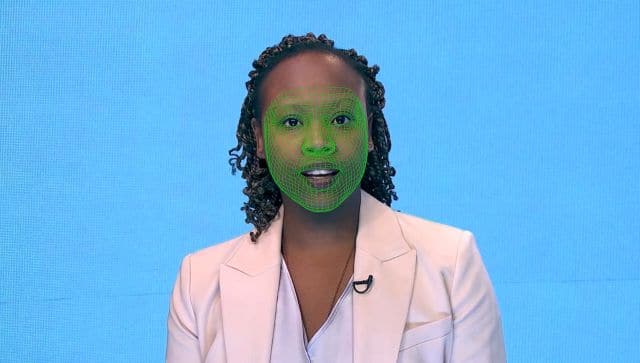 A green wireframe model covers an actor's lower face during the creation of a synthetic facial reanimation video, known alternatively as a deepfake, in London, Britain. File photo/Reuters[/caption]The United Kingdom: England and Wales are also mulling laws to curb the menace of such content. Sharing deepake intimate images will be criminalised.Amendments to the online safety bill will make it illegal to share explicit images or videos that have been digitally manipulated to look like someone else without their consent, according to a report in The Guardian from June 2023.Australia: The Australian government is also considering a ban on “high-risk” uses of AI and automated decision-making, warning of potential harms including the creation of deepfakes and algorithmic bias.Australia will make search engines draft new codes to prevent the sharing of child sexual abuse material created by AI and the production of deepfake versions of the same material, the country's internet regulator said on 8 September, reports Reuters.France: France is also debating regulating a bill to “secure and regulate digital space” from pornography and online harassment. Portions of the bill concern deepfakes, according to a report in French newspaper Le Monde.The European Union: The EU in June last year released an overhauled set of rules designed to curb the flow of disinformation. It ordered tech giants like Google, Meta to take serious steps to counter deepfakes and fake accounts on their online platforms. The bloc updated its Code of Practice which allows it to charge hefty fines to these firms if they don’t act against fake accounts and deepfakes.With inputs from agencies
 First Published:Nov 08, 2023, 12:35:42 IST
Advertisement
Advertisement

Why India may not witness a medal rush at 2026 Commonwealth Games
A 125-strong Indian contingent is in Glasgow for the 2026 Commonwealth Games, starting today (July 23), chasing international glory. However, with a roster of sports such as badminton and wrestling being cut from the event, the country’s medal chances have been drastically reduced
4 min read
Delhi Police asks personnel to wear uniform: What the law says on cops in plainclothes during protests
The Delhi Police has instructed all its personnel to wear uniforms when they report for duty at Jantar Mantar for crowd control. This comes after outrage grew over videos of men in civilian clothes or without name tags hitting protesters in the Capital. Is it legal for the police to ditch uniforms during protests?
4 min read
Military drones & police check-ups: How Sri Lanka is fighting against worst dengue outbreak in a decade
Sri Lanka is fighting its most severe dengue outbreak in nearly a decade, with infections rising sharply across the nation. Military drones have been deployed to tackle the outbreak, which has claimed 56 lives. Health officials said the outbreak is being driven primarily by the DENV-2 variant of the virus
3 min read
How Facebook job ad lured 2 Karnataka men into Myanmar cyber scam camp
The Karnataka Cyber Command has rescued two youths from a scam compound in Myanmar operated by Chinese fraudsters. The duo from Karnataka were lured on the pretext of data-entry jobs. They were asked to work for 16 hours a day and were expected to sleep for six hours daily
4 min read
Why is India seeing 95% cloud cover despite a Super El Niño?
India is witnessing nearly 95 per cent cloud cover despite a Super El Niño, a climate event usually linked to weaker monsoons. Regional weather systems, cyclonic circulations, the monsoon trough and moisture from two seas are temporarily overpowering one of the world's strongest climate phenomena
5 min read
Advertisement
Advertisement