
Advertisement


Sections
Beer ban, radical sermons and more: The influence of Islam on the Qatar World Cup
It is hard to miss how the Qatar World Cup is restrictive. There is a ban on beer sales at the stadiums and the import of pork is outlawed. That's not all. A look at how religion has come into focus at the major sporting event

As Qatar hosts the 2022 FIFA World Cup, the Muslim nation has come under scrutiny for its various restrictions and laws. How religion has grabbed the spotlight amid the football tournament can also be seen after reports of Zakir Naik being in the country emerged.The controversial Islamic preacher, who is wanted in India over allegations of terror-related activities and hate speeches, is reportedly in Qatar to give sermons on Islam. Faisal Alhajri, a presenter at the Qatari state-owned sports channel Alkass, announced on Twitter on Saturday (19 November), that Naik is “present in Qatar during the World Cup and will give many religious lectures throughout the tournament.”Naik, who has been living in exile in Malaysia, is also accused of acquiring $28 million worth of “criminal assets” to buy properties in India. His Islamic Research Foundation was banned by New Delhi for “promoting or attempting to promote feelings of enmity, hatred, or ill-will between different religious communities and groups", as per India Today. Naik’s presence in Qatar may sour relations between New Delhi and Doha. Earlier, the diplomatic ties between the two nations were affected in June over now-former BJP leader Nupur Sharma’s comments against the Prophet Muhammad.Besides Naik preaching religion, in what other ways has Islam affected the FIFA World Cup in Qatar? We explain.Beer banIn a U-turn, Qatar banned the sale of beer at World Cup stadiums on Friday much to the discontentment of football fans.The alcohol will be served at the FIFA Fan Festival, one of the only spots where fans can get beer outside of upscale hotel bars, reports Associated Press (AP).Meanwhile, non-alcoholic beverages like Budweiser Zero will continue to be sold at the eight stadiums and fan villages.Notably, the host nation had earlier agreed to FIFA’s requirements of selling alcohol in stadiums, according to AP.[caption id="attachment_11668661" align="alignnone" width="640"]![beer ban qatar]() Besides luxury hotels, alcohol will be served at the FIFA Fan Festival in Qatar. AP[/caption]Following the ban, fans have been rushing to bars and nightclubs in Doha, some rare places where alcohol is allowed. Qatar permits the sale of alcohol at hotel restaurants and bars, however, it is illegal to consume it in general public places.BOOM notes that the country charges a 100 per cent tax on alcohol that it levies on "health-damaging" goods.ALSO READ: FIFA World Cup 2022: From La’eeb to Willie, a history of mascots at the World Cup‘Modest’ clothingBeing a conservative country, the visiting fans have been urged to "respect the culture”. But no one will be “detained or barred” from the matches over their clothes, reports AP.In a section on cultural awareness in its guide for fans, the local organizing committee said, "People can generally wear their clothing of choice. Shoulders and knees should be covered when visiting public places like museums and other government buildings”.Rothna Begum, a senior researcher at Human Rights Watch, told AP, "There isn't anyone is going to go around arresting you for this because there isn't an official dress code”."There isn't a compulsory dress code and you can't get sanctioned for it. It's just a social restriction, a social tradition,” Begum added.Women in Qatar usually wear a headscarf (hijab) and loose cloak (abaya) in public places, while the men wear traditional long, loose white garments called thoub.Homosexuality ‘illegal’In Qatar, homosexuality is considered ‘illegal’. This has generated a lot of flak among activists as the country is hosting one of the biggest sporting events.Although, Qatar has said "everyone is welcome” for the tournament, LGBTQ+ football fans are not so sure.“I don’t feel comfortable traveling out to Qatar and being in any way visible because if I’m visibly showing I’m an LGBT+ football fan, all I’m doing is drawing a target on the back of a local who is anything other than hostile towards me,” Rob Sanderson, special projects officer of Pride in Football, told CNN.Other restrictionsLike some other countries in the Middle East, Qatar has restrictions on the import and consumption of pork meat.Informing its citizens visiting the Muslim-majority country about the law, the UK Foreign Travel Advice government website said, “Importing drugs, alcohol, pornography, pork products and religious books and material into Qatar is illegal”.[caption id="attachment_11668671" align="alignnone" width="640"]
Besides luxury hotels, alcohol will be served at the FIFA Fan Festival in Qatar. AP[/caption]Following the ban, fans have been rushing to bars and nightclubs in Doha, some rare places where alcohol is allowed. Qatar permits the sale of alcohol at hotel restaurants and bars, however, it is illegal to consume it in general public places.BOOM notes that the country charges a 100 per cent tax on alcohol that it levies on "health-damaging" goods.ALSO READ: FIFA World Cup 2022: From La’eeb to Willie, a history of mascots at the World Cup‘Modest’ clothingBeing a conservative country, the visiting fans have been urged to "respect the culture”. But no one will be “detained or barred” from the matches over their clothes, reports AP.In a section on cultural awareness in its guide for fans, the local organizing committee said, "People can generally wear their clothing of choice. Shoulders and knees should be covered when visiting public places like museums and other government buildings”.Rothna Begum, a senior researcher at Human Rights Watch, told AP, "There isn't anyone is going to go around arresting you for this because there isn't an official dress code”."There isn't a compulsory dress code and you can't get sanctioned for it. It's just a social restriction, a social tradition,” Begum added.Women in Qatar usually wear a headscarf (hijab) and loose cloak (abaya) in public places, while the men wear traditional long, loose white garments called thoub.Homosexuality ‘illegal’In Qatar, homosexuality is considered ‘illegal’. This has generated a lot of flak among activists as the country is hosting one of the biggest sporting events.Although, Qatar has said "everyone is welcome” for the tournament, LGBTQ+ football fans are not so sure.“I don’t feel comfortable traveling out to Qatar and being in any way visible because if I’m visibly showing I’m an LGBT+ football fan, all I’m doing is drawing a target on the back of a local who is anything other than hostile towards me,” Rob Sanderson, special projects officer of Pride in Football, told CNN.Other restrictionsLike some other countries in the Middle East, Qatar has restrictions on the import and consumption of pork meat.Informing its citizens visiting the Muslim-majority country about the law, the UK Foreign Travel Advice government website said, “Importing drugs, alcohol, pornography, pork products and religious books and material into Qatar is illegal”.[caption id="attachment_11668671" align="alignnone" width="640"]![qatar world cup]() Football fans have been asked to adhere to certain norms while in Qatar. AP[/caption]“Swearing and making rude gestures are considered obscene acts and offenders can be jailed and/or deported,” the website adds.
Football fans have been asked to adhere to certain norms while in Qatar. AP[/caption]“Swearing and making rude gestures are considered obscene acts and offenders can be jailed and/or deported,” the website adds.
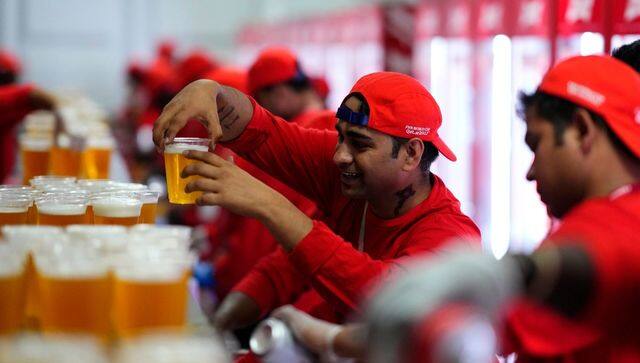 Besides luxury hotels, alcohol will be served at the FIFA Fan Festival in Qatar. AP[/caption]Following the ban, fans have been rushing to bars and nightclubs in Doha, some rare places where alcohol is allowed. Qatar permits the sale of alcohol at hotel restaurants and bars, however, it is illegal to consume it in general public places.BOOM notes that the country charges a 100 per cent tax on alcohol that it levies on "health-damaging" goods.ALSO READ: FIFA World Cup 2022: From La’eeb to Willie, a history of mascots at the World Cup‘Modest’ clothingBeing a conservative country, the visiting fans have been urged to "respect the culture”. But no one will be “detained or barred” from the matches over their clothes, reports AP.In a section on cultural awareness in its guide for fans, the local organizing committee said, "People can generally wear their clothing of choice. Shoulders and knees should be covered when visiting public places like museums and other government buildings”.Rothna Begum, a senior researcher at Human Rights Watch, told AP, "There isn't anyone is going to go around arresting you for this because there isn't an official dress code”."There isn't a compulsory dress code and you can't get sanctioned for it. It's just a social restriction, a social tradition,” Begum added.Women in Qatar usually wear a headscarf (hijab) and loose cloak (abaya) in public places, while the men wear traditional long, loose white garments called thoub.Homosexuality ‘illegal’In Qatar, homosexuality is considered ‘illegal’. This has generated a lot of flak among activists as the country is hosting one of the biggest sporting events.Although, Qatar has said "everyone is welcome” for the tournament, LGBTQ+ football fans are not so sure.“I don’t feel comfortable traveling out to Qatar and being in any way visible because if I’m visibly showing I’m an LGBT+ football fan, all I’m doing is drawing a target on the back of a local who is anything other than hostile towards me,” Rob Sanderson, special projects officer of Pride in Football, told CNN.Other restrictionsLike some other countries in the Middle East, Qatar has restrictions on the import and consumption of pork meat.Informing its citizens visiting the Muslim-majority country about the law, the UK Foreign Travel Advice government website said, “Importing drugs, alcohol, pornography, pork products and religious books and material into Qatar is illegal”.[caption id="attachment_11668671" align="alignnone" width="640"]
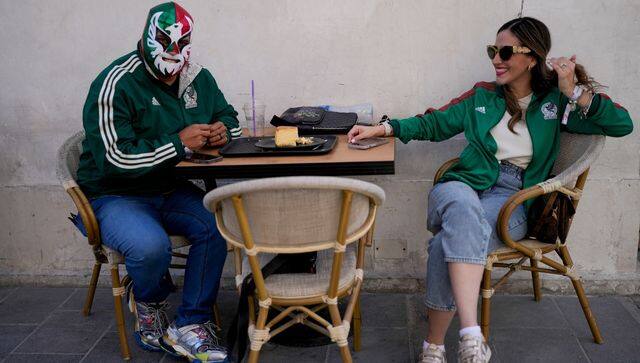 Football fans have been asked to adhere to certain norms while in Qatar. AP[/caption]“Swearing and making rude gestures are considered obscene acts and offenders can be jailed and/or deported,” the website adds.
Unmarried couples cannot stay together in Qatar, notes the UK website.The US’ Library of Congress, citing Qatari law, mentions that the country can penalise those engaging in “indecent acts and the act of sexual intercourse outside of marriage”.The punishment can include a fine or six months prison sentence for anyone found guilty of "immoral" actions or gestures in public to up to seven years imprisonment for having sex outside marriage, NPR cited the Library of Congress as saying.Drugs are a strict no-no in Qatar. As per the UK government website, the use of, trafficking, smuggling and possession of drugs can attract heavy fines and even imprisonment.Status of womenThe World Cup in Qatar has also brought the freedom and rights of women to the fore.The country has given opportunities to women in politics, education and other fields.Last year, Qatar’s emir Sheikh Tamim bin Hamad Al Thani appointed women to two Cabinet posts, taking the cumulative tally to three female ministers, which is the highest in the country’s history, as per AP.Qatari women also hold other high-level positions. Sheikh Tamim had selected two women for the country’s advisory Shura Council last year.However, the country often ranks at the bottom of the World Economic Forum’s Global Gender Gap Report.Rights groups have pointed out that the legal system in the country, which follows Islamic law or Shariah, “hinders women’s advancement”, reports AP.Women under the age of 25 in Qatar have to secure a male guardian’s permission to leave the country. Husbands and fathers can bar women from travelling.Single women who get pregnant face prosecution for indulging in sex without marriage, reports AP.Even though the law calls for the right to equal pay for Qatari women and men, it is not followed strictly. There is no law against gender discrimination in the workplace.Women also need permission from a male guardian to work in the government and special institutions, reports AP. Women are also expected to obey their husbands and are considered legally in charge of the household. AP notes they can lose financial assistance if they defy their husbands.With inputs from agenciesRead all the Latest News, Trending News, Cricket News, Bollywood News,India News and Entertainment News here. Follow us on Facebook, Twitter and Instagram.
First Published:Nov 21, 2022, 17:19:34 IST
Advertisement
Advertisement

Military drones & police check-ups: How Sri Lanka is fighting against worst dengue outbreak in a decade
Sri Lanka is fighting its most severe dengue outbreak in nearly a decade, with infections rising sharply across the nation. Military drones have been deployed to tackle the outbreak, which has claimed 56 lives. Health officials said the outbreak is being driven primarily by the DENV-2 variant of the virus
3 min read
How Facebook job ad lured 2 Karnataka men into Myanmar cyber scam camp
The Karnataka Cyber Command has rescued two youths from a scam compound in Myanmar operated by Chinese fraudsters. The duo from Karnataka were lured on the pretext of data-entry jobs. They were asked to work for 16 hours a day and were expected to sleep for six hours daily
4 min read
Why is India seeing 95% cloud cover despite a Super El Niño?
India is witnessing nearly 95 per cent cloud cover despite a Super El Niño, a climate event usually linked to weaker monsoons. Regional weather systems, cyclonic circulations, the monsoon trough and moisture from two seas are temporarily overpowering one of the world's strongest climate phenomena
5 min read
What is CJP’s fourth demand to the government as protests in Delhi intensify?
The protest by the Cockroach Janta Party at Delhi’s Jantar Mantar refuses to die down. The group have made a fourth demand to the Centre, asking that no FIRs are filed against the agitators and that no legal action be taken. The government has expressed willingness to speak to the protesters, but refused to accede on the resignation of Education Minister Dharmandra Pradhan
5 min read
The new geography of war: Why the Houthis can no longer be ignored
The rise of the Houthis marks the emergence of a new geography of war — one in which influence flows not only from capitals and conventional armies, but also from rugged mountains overlooking vital sea lanes
6 min read
Advertisement
Advertisement