


Could India face a cooking oil shortage? How much does the country import?
PM Narendra Modi has urged citizens to reduce the use of imported oils – both crude and edible. India is among the world’s largest importers of edible oil, depending on shipments for nearly 60 per cent of its total needs

Prime Minister Narendra Modi has called on Indian households to cut down on the consumption of cooking oil. In a recent public address, he appealed to citizens to reduce the use of edible oil by 10 per cent, saying it will benefit both the body and the nation.
His request to lessen the use of imported oils – both crude and edible – comes as the government seeks to conserve foreign exchange. India is staring at a weakened rupee and an expanding current account deficit (CAD) amid the war in West Asia that has sparked a global energy crisis.
But what has cooking oil got to do with it? We explain.
How much cooking oil does India consume?
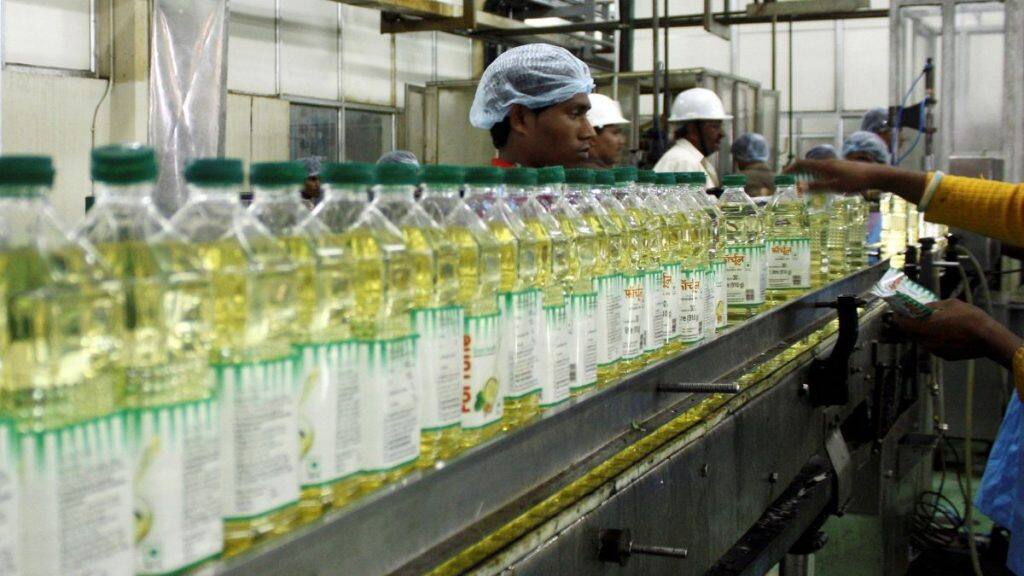
India is among the world’s largest importers of edible oil, buying roughly 60 per cent of its total requirement from overseas.
The South Asian country reportedly spends about Rs 1.61 lakh crore every year to buy around 16 million tonnes of edible oil.
 More from Explainers
Edible oil imports jumped to 13.08 lakh tonnes in April this year, an 11 per cent rise from 11.73 lakh tonnes in March, according to the Solvent Extractors Association of India's (SEA) import data for vegetable oils, both edible and non-edible.
Overall, imports totalled 1,310,193 tonnes in April 2026, compared to 975,025 tonnes during the same period last year.
Between November 2025 and April 2026, total vegetable oil imports touched 7,937,376 tonnes, up by 13 per cent from 7,042,948 tonnes in the same period last year.
Vegetable oil shipments surged 8 per cent year-on-year between November 2025 and March 2026, reported Livemint.
India's import bill has also increased in recent years.
In the 2024-25 oil year (November–October), India spent over Rs 1.6 trillion on palm, soy and sunflower oil imports. This bill stood at Rs 72,000 crore in 2019-20.
Where is India getting its edible oil from?
India meets nearly 44 per cent of its edible oil requirements through domestic production. Its total edible oil production was recorded at 12.18 million tonnes during 2023-24, as per Press Information Bureau, which cited a NITI Aayog report.
However, most of the cooking oil used in Indian kitchens comes from abroad.
Palm oil, which forms the bulk of India’s edible oil imports, is mainly imported from Indonesia and Malaysia.
For sunflower oil, India largely relies on supplies from the Black Sea region, especially Ukraine and Russia. The South Asian country usually imports 150,000-200,000 tonnes of sunflower oil each month, CNN-News18 reported, citing industry experts.
Soybean oil imports arrive from countries like Brazil and Argentina.
These imports are highly affected by geopolitical tensions, such as wars and export restrictions.
Why India relies heavily on edible oil imports
India was once self-reliant in oilseed production with crops such as mustard, groundnut, sesame and coconut.
However, following population growth and rapid urbanisation, the consumption of edible oil spiked, widening the gap between demand and domestic production.
Today, India’s oilseed yields are significantly below global averages. Soybean yields in the US, Brazil and Argentina are three to four times higher than in India.
Speaking to NDTV, Dr Himanshu Pathak, Director General of the International Crops Research Institute for the Semi-Arid Tropics (ICRISAT), said that India imports 15-16 million tonnes of edible oil every year because farmers view oilseeds as risky crops.
"Rice and wheat are very stable crops," Dr Pathak, who is also the former Director General of the Indian Council of Agricultural Research (ICAR), said. "They are backed by assured procurement and strong policy support. Oilseeds do not enjoy the same confidence among farmers."
Oilseed crops are mostly being cultivated by marginal farmers with limited irrigation, limiting productivity. Around 60-70 per cent of oilseed cultivation in India depends on rain, making it vulnerable to unreliable monsoon and climate change, reported News18.
Oilseeds are often grown on marginal lands with poor soil fertility. However, farmers are more inclined towards high-yield, irrigated food grains, such as wheat or rice.
When irrigation is sufficient, farmers tend to switch to cereals, which come with lower risk and stronger price support. Crops like rice or wheat offer more stable returns.
So far, India has also not adopted genetically modified (GM) technology in key oilseeds such as mustard and soy, restricting productivity gains, noted Livemint.
Highlighting the importance of PM Modi's call to reduce the consumption of edible oil, SEA said it would help curb the country's reliance on imports, lessen vulnerability to global supply shocks and save foreign exchange.
“With climate uncertainties rising, biodiesel mandates tightening global vegetable oil supplies, and geopolitical tensions adding fresh risks, this is perhaps the right moment for the nation to think long term. Along with boosting domestic oilseed production, balanced consumption habits will play a crucial role in reducing vulnerability," SEA Executive Director BV Mehta told CNN-News18.
How edible oil imports affect India’s foreign exchange
Edible oil prices increased 5.9 per cent month-on-month in April, reaching their highest level since July 2022, according to the Food and Agriculture Organization’s world food price index.
As edible oil becomes costlier, the surge in the import bill puts more pressure on India’s foreign exchange.
“Increase in oil and gas prices is usually followed by rise in agriculture prices because naphtha/natural gas are used as feedstock in urea manufacture. In the current scenario, because of shutdown of Qatar’s LNG plant, and reduced oil flow from West Asia, there will be a physical shortage of urea, and consequently, a shortage of downstream agri-products. There are some reports of reduced sowing in East Asian countries," Amit Bhandari, senior fellow, energy, investment and connectivity at Gateway House, told CNN-News18.
“While India is self-sufficient in cereals, we are an importer of cooking oil. So, there will be the impact of shortage and rising price. Weaker rupee further heightens the impact," Bhandari said.
With inputs from agencies

Delhi Police asks personnel to wear uniform: What the law says on cops in plainclothes during protests
Military drones & police check-ups: How Sri Lanka is fighting against worst dengue outbreak in a decade
How Facebook job ad lured 2 Karnataka men into Myanmar cyber scam camp
Why is India seeing 95% cloud cover despite a Super El Niño?
What is CJP’s fourth demand to the government as protests in Delhi intensify?