


FTAs, a reset in India-US ties and more: Why PM Modi’s France visit was a superhit
It’s a 10/10 for PM Narendra Modi. During his France visit for the G7 Summit, the Indian leader not only deepened trade and economic ties with Paris, but also rekindled his friendship with US President Donald Trump after several bumps in the relationship. While the FTA with the UK would be implemented on July 15, progress was also made on trade pacts with the EU and Canada

“Priya mitra Narendra, mujhe bahut khushi hai aap ka Nice, Evian aur Paris, daure ke liye swagat karte, France Bharat ki dosti amar rahe (Dear friend Narendra, I feel very happy to welcome you on your trip to Nice, Evian, and Paris, and I wish the friendship between France and India remains eternal),” said French President Emmanuel Macron as he bid adieu to PM Modi.
Macron’s farewell wishes came after PM Modi completed his visit to France, which included the G7 summit. Modi’s French trip began on June 13, when he visited Nice, inaugurated the Bharat Innovates programme alongside Macron, and held a bilateral meeting with the French president.
After travelling to Slovakia for two days, the Indian leader then made his way back to France’s Evian-Les-Bains for the G7 Summit on June 16 and 17, during which he met with US President Donald Trump for the first time in 16 months. Modi concluded his trip in Paris on Thursday, where he addressed the Indian diaspora and the technology forum VivaTech 2026.
 More from Explainers
But what did India gain from Modi’s visit to France? We decode the big outcomes from the trip.
Defence, trade and AI… India-France ties further deepen
After arriving in France on June 13, PM Modi visited the city of Nice and met with French President Emmanuel Macron. The two leaders held extensive talks, which included India’s plan to procure 114 Rafale fighter jets from French defence major Dassault Aviation.
Following their talks, the two leaders agreed to elevate India-France ties to a Special Global Strategic Partnership. They also discussed cooperation in space situational awareness to strengthen capabilities to track activities in orbit, safeguard critical satellite infrastructure, and deepen coordination on space security amid growing strategic competition and military activity in the space domain.
India and France also agreed to establish a high-level mechanism to double bilateral trade within five years. The two leaders called for the early implementation of the India-EU Free Trade Agreement and agreed to strengthen supply-chain resilience, particularly in critical minerals.
Several MoUs were also signed, including those for establishing a National Centre of Excellence for Skilling in Aeronautics and Allied Sectors at NSTI Kanpur, expanding the use of the Unified Payments Interface (UPI) in France, incubating an additional 10 Indian startups, and setting up a Centre of Digital Sciences. Letters of Intent were also exchanged between the Indian Council of Medical Research (ICMR) and France’s Health Data Hub, and between ISRO and CNES for cooperation in microgravity research and human space exploration.
In Paris during the last leg of the trip, PM Modi told the Indian diaspora that the two countries will jointly launch the Trishna satellite next year to contribute to global food and water security. According to the Indian space agency, the Trishna (Thermal InfraRed Imaging Satellite for High-resolution Natural resource Assessment) mission is a joint Earth observation satellite project between India and France designed to monitor land and water resources through advanced thermal infrared imaging.
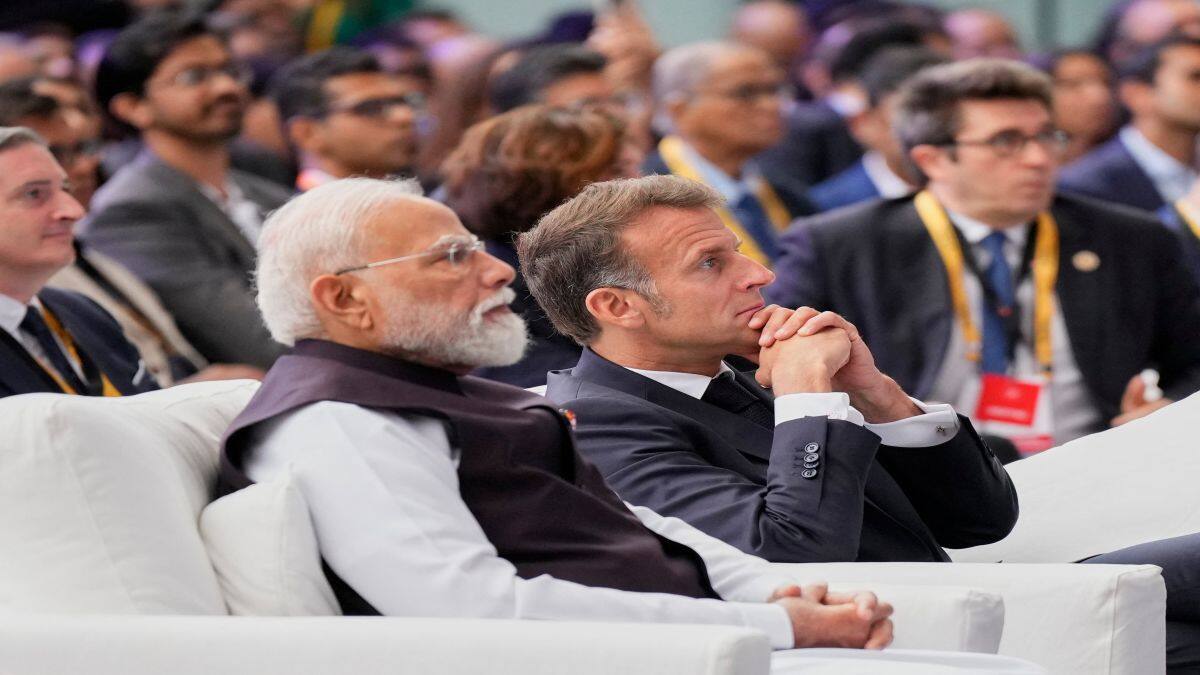
It is a mission developed by the Indian Space Research Organisation (Isro) and the French space agency CNES. The satellite is expected to provide crucial data on agriculture, water management, climate monitoring, and environmental sustainability, supporting efforts to strengthen food and water security worldwide.
A reset of Modi-Trump friendship
Another big outcome of Modi’s France visit was seen during the G7 summit at the French commune of Evian-Les-Bains. It was here that PM Modi, who had been invited, met with US President Donald Trump for the first time in 16 long, bruising, and bumpy months in India-US relations.
Before the meeting, India-US ties had dipped to their lowest in this period — there was the tariff dispute, the Operation Sindoor ceasefire, the purchase of Russian oil, the deaths of Indian seafarers in US strikes, and several statements undermining India and its economy.
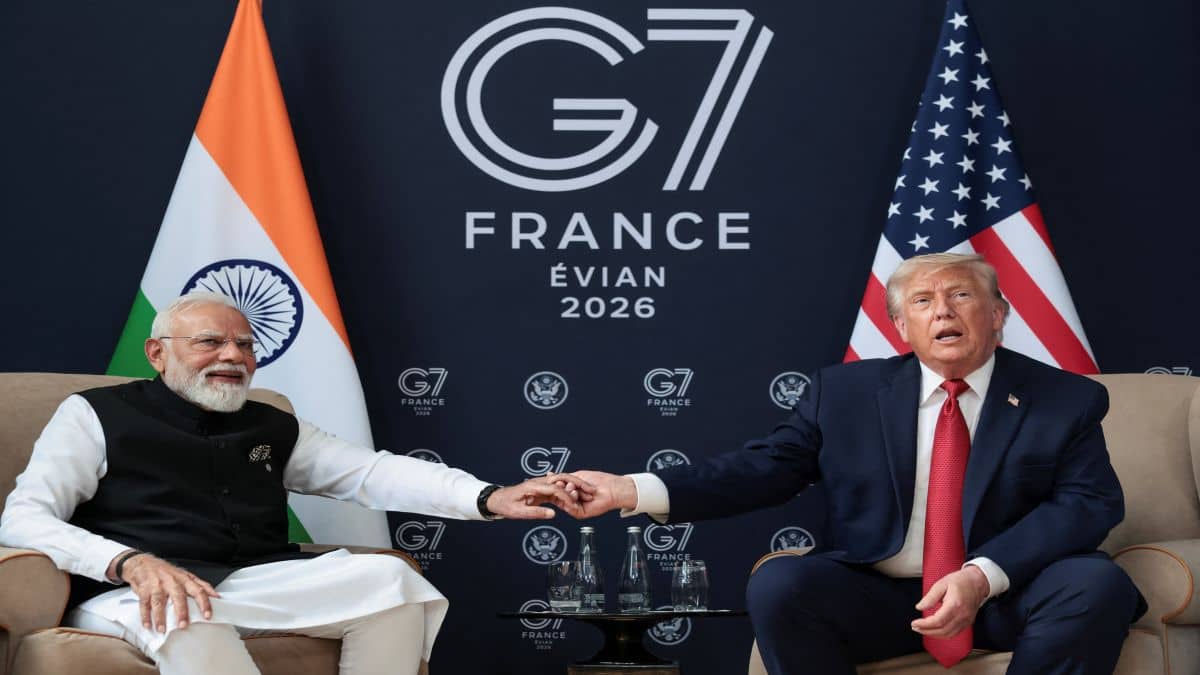
However, it seems that following these months of strain, PM Modi and Donald Trump have reset their friendship amid the G7 summit. The two leaders met on the sidelines of the event following which the American leader described Modi as “a tough negotiator”, and spoke about future engagement with India. Lavishing praise on Modi, Trump also went as far as to say that “if anybody attacks that man, we're going to be there”, in what seemed to be a subtle message to Pakistan.
Officials on both sides also highlighted progress in trade negotiations and reiterated their commitment to deepening strategic cooperation. India’s Foreign Secretary Vikram Misri told reporters later, “With the United States, we have made significant progress already on the conclusion of an interim bilateral trade agreement. We are in the final stages of concluding that agreement,” adding that US Trade Representative Jamieson Greer will visit India next week to take the discussions forward.
India extends its trade relations with UK and Canada
On the sidelines of the G7 Summit in France, PM Modi also sought to deepen relations with other nations. In fact, it was during the G7 Summit that UK Prime Minister Keir Starmer and Modi agreed to implement the free trade agreement (FTA) they signed nearly a year ago.
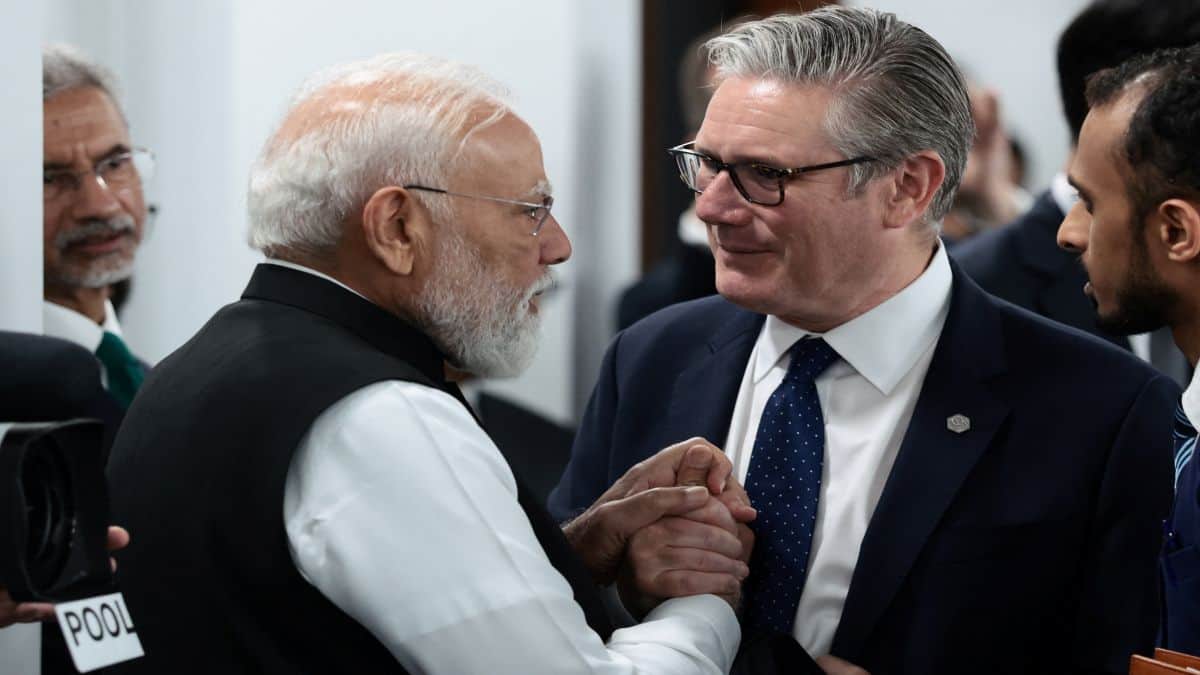
The two countries announced on Wednesday that the deal will enter into force on July 15. “We are bringing our landmark trade deal with India into force as quickly as we can, because we want businesses and the public to feel the benefits immediately, including cuts to tariffs of £400 million within the first year alone,” said UK Business and Trade Secretary, Peter Kyle.
The deal is the largest trade pact the UK has forged post-Brexit and is expected to boost UK GDP by £4.8 billion annually.
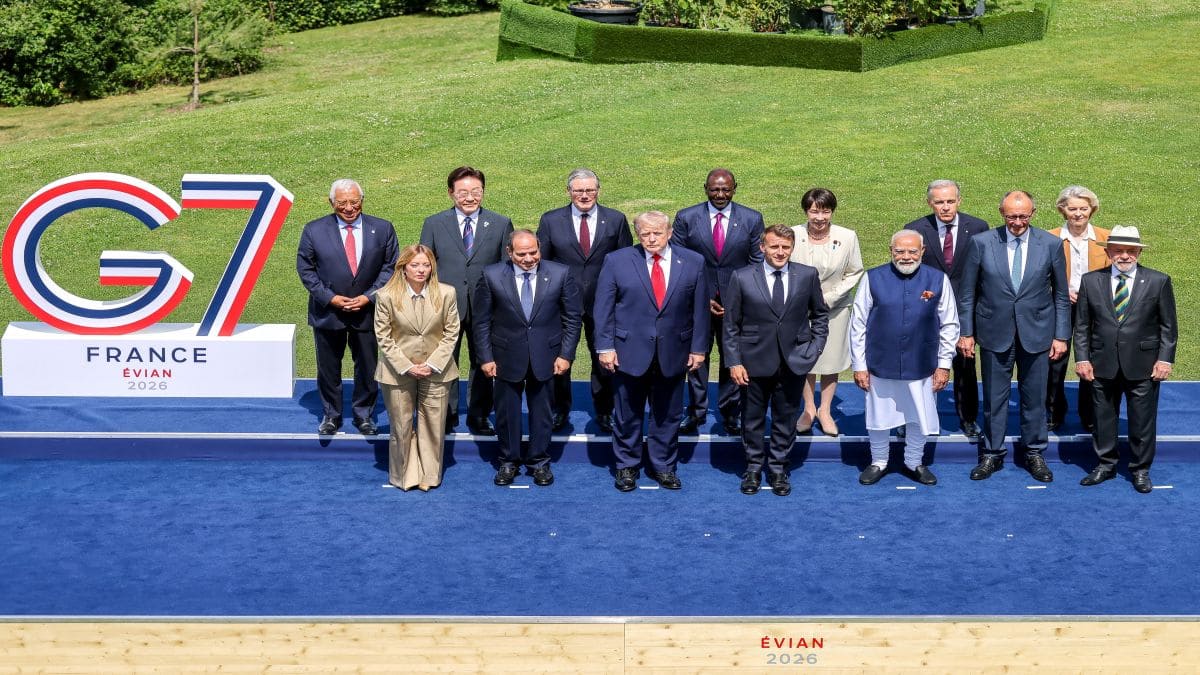
Besides Starmer, Modi also met with Canadian PM Mark Carney on the sidelines of the G7 summit, during which they agreed to launch negotiations for a new intelligence sharing pact. The two also expressed their desire to conclude the long-pending Comprehensive Economic Partnership Agreement (CEPA) by 2026.
Standing up for Indian concerns
In France, PM Modi also made it a point to flag concerns about the safety of Indians amid the West Asia war. Addressing G7 leaders, PM Modi said that all countries must ensure that maritime routes remain secure and that seafarers can perform their duties without fear.
On Tuesday, Modi said disruptions to maritime trade in the Strait of Hormuz have harmed the global economy and that many Indian citizens have lost their lives in the conflict. His remarks came against the backdrop of growing anger in India over the killing of the three Indian crew members in a US military attack on a merchant ship off the coast of Oman last week.
“We welcome the progress made in peace efforts in West Asia. This conflict has caused loss of life and property in our friendly countries in the region,” Modi said. It is our responsibility to ensure the safety of the seafarers who connect all nations through global maritime trade. We must ensure that maritime routes remain secure and that seafarers can perform their duties without fear,” he said.
All in all, one could say that PM Modi’s visit to France was a highly successful one with big outcomes on the diplomatic as well as the economic front.
With inputs from agencies

Delhi Police asks personnel to wear uniform: What the law says on cops in plainclothes during protests
Military drones & police check-ups: How Sri Lanka is fighting against worst dengue outbreak in a decade
How Facebook job ad lured 2 Karnataka men into Myanmar cyber scam camp
Why is India seeing 95% cloud cover despite a Super El Niño?
What is CJP’s fourth demand to the government as protests in Delhi intensify?