


‘Will cut off hands that…’: Why Indus Waters Treaty riles up Pakistan
A Pakistani minister has once again issued a threat to India, stating that Islamabad would ‘cut off the hands’ of those who sought claim to the country’s waters under the Indus Waters Treaty. These threats highlight just how important the water agreement is to the neighbouring country

“We will cut off those hands who lay claim to our share of water,” said Pakistan’s Climate Change Minister Musadik Malik on the matter of the Indus Waters Treaty (IWT) that India has put in abeyance since last year following the Pahalgam terror attack.
This latest unprovoked aggression from Pakistan comes as tensions over the decades-old water-sharing pact continue to deepen. In fact, Malik’s remarks come just days after Pakistan’s Defence Minister Khawaja Muhammad Asif said during an interview that water security could become a cause for war if Islamabad believes its national interests are threatened. “The moment we feel our national security is under threat, and water is part of our national security, we will go to war [with India],” he said.
But what is it about the Indus Waters Treaty that provokes such strong reactions from Islamabad? Why does this water pact from the 1960s matter so much?
Pakistan’s many threats to India over IWT
On Monday (June 29), Pakistan’s Climate Change Minister Musadik Malik said that the issue of the Indus Waters Treaty had been raised at various international forums during the last month or two. “Pakistan’s stance was also endorsed at the international court of arbitration,” he was quoted as saying by The Dawn.
 More from Explainers
Malik further stated, “There is a tap being controlled by the prime minister of a neighbouring country. He says he will not let even a drop of water flow into Pakistan.”
He added that Pakistan had declared that anyone trying to deprive it of its water would face severe consequences. “And we have shown this as well,” he said. “But, there is also the question of justice. We will protect ourselves, […] but what about other countries and the poor elsewhere? Does every upper riparian now have the right to stop the flow of water to the lower riparian?” he said.
Then came the strongest comments in which Malik warned that the country “would cut off those hands who lay claim to our share of water”.
At the same meeting, Pakistan’s Information Minister Attaullah Tarar also noted that the IWT couldn’t be unilaterally changed or revoked. He added that Prime Minister Shehbaz Sharif and Chief of Defence Forces and Chief of Army Staff Field Marshal Asim Munir had stated multiple times that “water is our lifeline, as well as our red line”.
Earlier, in an interview with ARY News, the ever-controversial Khawaja Asif warned that Islamabad could resort to military action if it believes India’s moves on the Indus river system threaten Pakistan’s water security.
“The moment we feel that our national security — and water is part of our national security — is being threatened, we will go to war against India. Definitely,” he said.
In mid-June, Pakistan Peoples Party (PPP) Chairman Bilawal Bhutto-Zardari also upped the anti-India rhetoric, telling parliament, “Pakistan will fight for its water share and rights,” adding that any attempt to stop or divert water would trigger a response from Islamabad.
The Indus Waters Treaty, explained
But what exactly is the Indus Waters Treaty that has sparked such strong reactions from Pakistan?
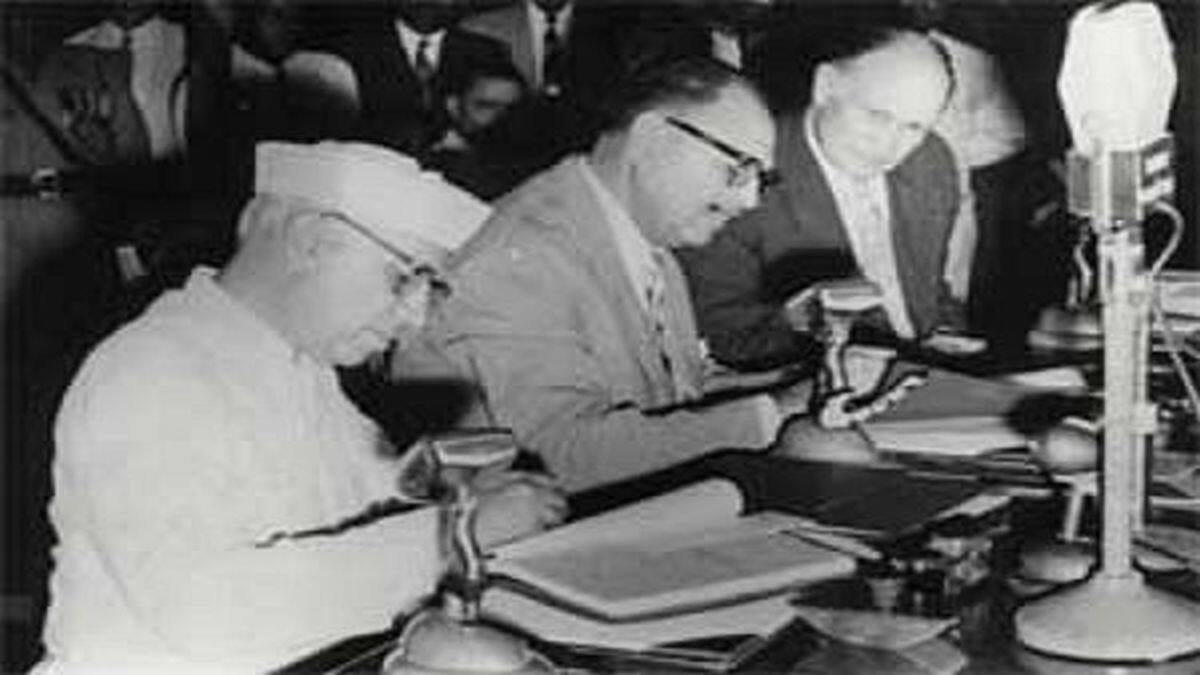
A pact brokered by the World Bank in 1960 between India and Pakistan, the Indus Waters Treaty splits the Indus and its tributaries between the two countries and regulates water sharing. As per the agreement, India was granted the use of water from three eastern rivers — Sutlej, Beas, and Ravi — while Pakistan was granted most of the three western rivers — Indus, Jhelum, and Chenab.
Under the IWT, India does indeed have a right to “limited hydropower generation” upstream on the western tributaries allotted to Pakistan, including the Chenab and the Jhelum.
Following the Pahalgam terror attack last year, India put the treaty in abeyance, noting that it would continue to do so “until Pakistan credibly and irrevocably abjures its support for cross-border terrorism”.
This, in fact, became the first time that New Delhi suspended the treaty, which had until now endured two wars between the nations.
At the time of placing the Indus Waters Treaty in abeyance, PM Narendra Modi had stated that blood and water cannot flow together. He also added, “Pehle Bharat ke haq ka paani bhi bahar ja raha tha... ab Bharat ka paani, Bharat ke haq mein bahega, Bharat ke haq mein rukega aur Bharat ke hi kaam aayega (Earlier, even India’s rightful share of water used to flow out, now, India’s water will flow for India, stay for India, and serve India).”
Why the Indus Waters Treaty matters to Pakistan
Pakistan has repeatedly stated that the Indus waters are its lifeline as well as a red line.
India’s neighbour is highly dependent on the Indus. Over three-quarters of the country’s annually available renewable water resources come from outside its borders, almost entirely from the Indus. Data shows that Pakistan relies on the Indus River and its tributaries for approximately 80 per cent of its irrigated agriculture.
The CSIS, in a report, noted that agriculture constitutes the backbone of the economy, representing 22.9 per cent of GDP, accounting for 24.4 per cent of exports, providing livelihoods for two-thirds of the rural population, and employing 37.4 per cent of the total labour force. Essentially, the Indus system waters more than 90 per cent of the nation’s crops.
Similarly, Pakistan generates one-fifth of its electricity from hydropower. Every one of the country’s 21 hydroelectric plants is located in the Indus Basin.
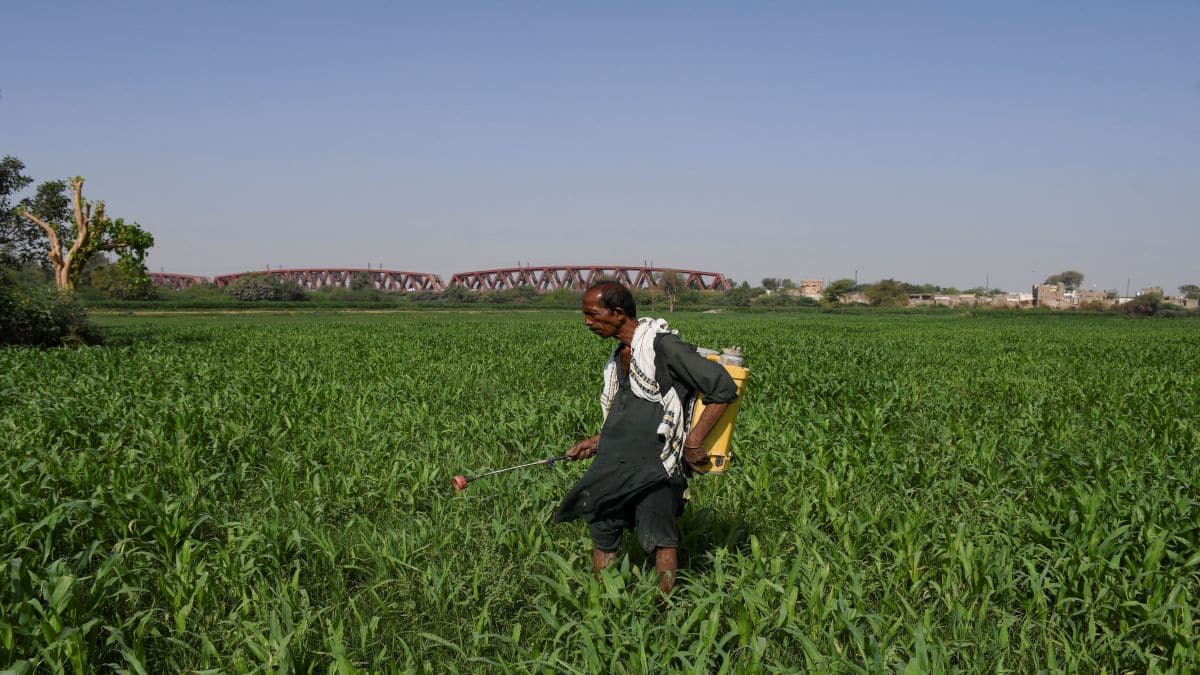
Commenting on the same, Ghasharib Shaokat, the head of product at Pakistan Agriculture Research, told The Business Line that the treaty is the backbone of the country’s agriculture sector. “It puts our agricultural future on shaky ground. If water flows become erratic, the entire system takes a hit —especially irrigation-dependent crops such as wheat, rice, and sugarcane,” Shaokat said.
“Yields could drop. Costs could rise. Food prices would likely spike. And small-scale farmers, who already operate on thin margins, would bear the brunt of it.”
Even Adil Najam, a professor of international relations and of earth and environment at the Frederick S Pardee School of Global Studies at Boston University, noted that the Indus Waters are crucial for Pakistan. “For Pakistan, it is existential. The red line is there not because water is some mythical thing, but because Pakistan is essentially a dry country,” he was quoted as telling NPR.
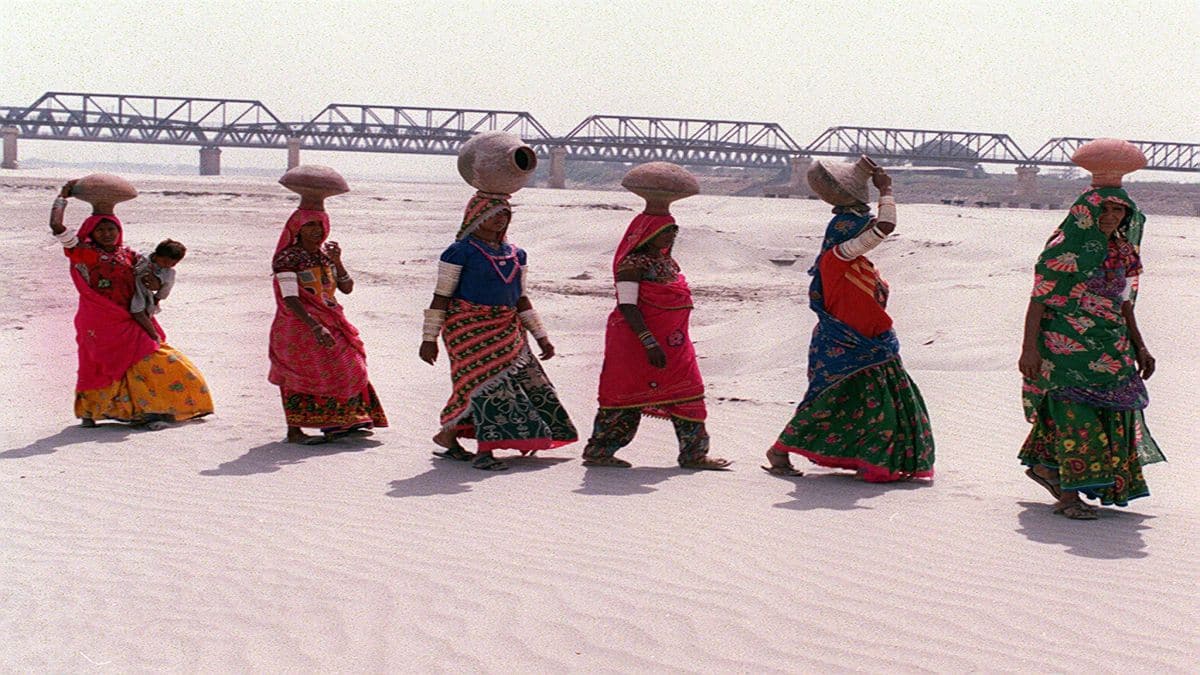
Dr Dan Haines, an associate professor in the Department of Risk and Disaster Reduction, University College London, also concurred with this assessment. In a Scroll report, he notes, “The decision could have serious impacts on Pakistan’s economy, especially the agricultural sector, threatening the livelihoods of rural people.”
There’s also the fact that the Indus Waters Treaty imposed design restrictions on building structures like dams on the Indus and its tributaries. However, with India placing the treaty in abeyance, New Delhi is no longer obligated to take Pakistan’s concerns into consideration when planning dams and other infrastructure.
In fact, India has begun work on 17 projects on waterways part of the Indus River System, including the Chenab-Beas Link Tunnel project, with the intention of transferring 1.9m acre feet of water annually from Chenab into the Beas system.
It’s a wait and watch game to see if Pakistan translates its threats against India on the issue of the Indus Waters Treaty into action.
With inputs from agencies

Military drones & police check-ups: How Sri Lanka is fighting against worst dengue outbreak in a decade
How Facebook job ad lured 2 Karnataka men into Myanmar cyber scam camp
Why is India seeing 95% cloud cover despite a Super El Niño?
What is CJP’s fourth demand to the government as protests in Delhi intensify?
The new geography of war: Why the Houthis can no longer be ignored