


How Pakistan army chief Asim Munir’s big lies on Operation Sindoor are exposed
Pakistan’s army chief Asim Munir is fond of making tall claims. At an event, he said that India approached the US for mediation amid Operation Sindoor. However, lobbying disclosures reveal another story. It was Islamabad that mounted an intense diplomatic outreach, logging 60 interactions with US officials between May 6 and May 9

It appears that Pakistan refuses to learn some lessons. A year after India’s Operation Sindoor, the military hostilities that took place last May, Pakistan’s Chief of Defence Forces Asim Munir’s tall claims have been exposed.
Speaking at an event to mark the first anniversary of ‘Marka-e-Haq’, the name given by Islamabad for the four-day hostilities last year, Field Marshal Munir claimed that India had sought United States involvement for a ceasefire. However, documents filed by a lobbying firm suggest otherwise, exposing Munir’s claims to be just that.
So, what’s going on? What did Munir claim, and what do the disclosures reveal?
Asim Munir’s big Op Sindoor claim
On Sunday, Pakistan’s Field Marshal Asim Munir addressed a ceremony at General Headquarters in Rawalpindi to mark the first anniversary of ‘Marka-e-Haq’. Speaking at the event, the Pakistan military leader noted that the country’s military strategy was “superior” during the hostilities.
 More from Explainers
Munir alleged that India “violated the sovereignty and territory” of Pakistan between the night of May 6-7 and May 10 last year, and said Pakistan responded, “with full national unity and military force”.
“Marka-e-Haq was not merely a traditional war fought between two countries or militaries, but in reality, it was a decisive marka (battle) between two ideologies,” he said.
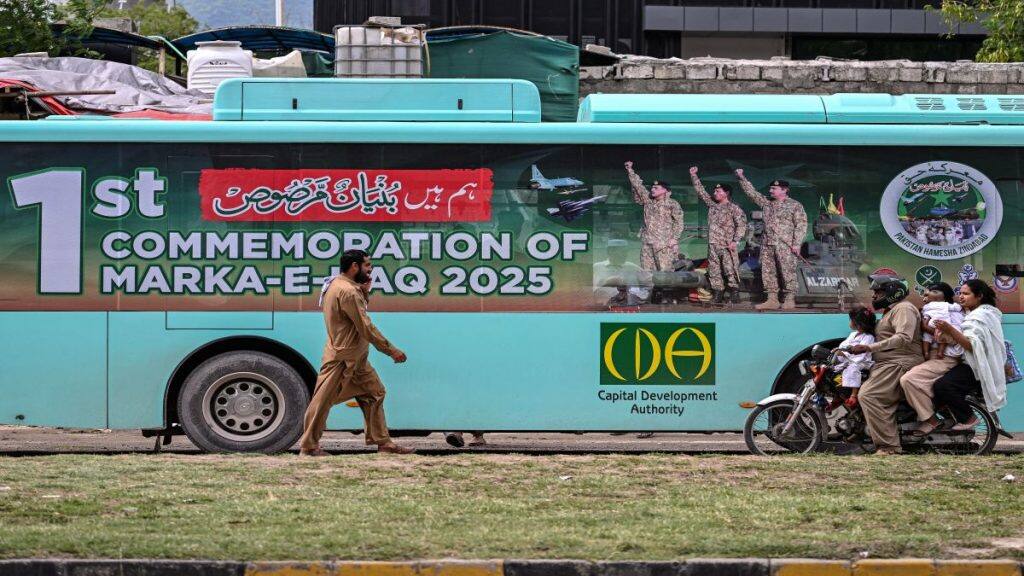
He further stated that Islamabad had struck 26 targets during the conflict. But provided no evidence to back this claim.
He further warned that any future “misadventure” against Pakistan would bring “extremely widespread, dangerous, far-reaching and painful” consequences for the enemy.
“Our enemies should know that if any attempt is made in the future to carry out a misadventure against Pakistan, then the impact of war would not be limited, but extremely widespread, dangerous, far-reaching, and painful.”
In his address, Munir also claimed that India sought the involvement of the United States for a ceasefire. Again, he provided no proof to back this claim.
Documents expose Munir’s lie
However, lobbying disclosures filed in the US are in stark contrast to Munir’s remarks. According to an ANI news report, filings made under the US Foreign Agents Registration Act (FARA) show that Islamabad logged nearly 60 interactions with US officials, including lawmakers and defence-linked personnel in the time period of May 6 and May 9.
After India initiated attacks against terror infrastructure in Pakistan and Pakistan-occupied Kashmir, Islamabad, as per the documents, initiated nearly 30 separate contacts, most of them seeking meetings for Pakistan’s Ambassador with congressional and Senate offices. The filings repeatedly used the description “Meeting request with the Ambassador”.
Then, on May 7 and 8, Pakistan began to “discuss tensions in the region”. One document reveals that on May 7, Islamabad held a call with Chairman Brian Mast, who chairs the influential House Foreign Affairs Committee, discussing “tensions in the region”.
Another May 7 filing records a call with Wyndee Parker, national security adviser to Representative Hakeem Jeffries, regarding scheduling a meeting with the minority leader.
On May 8, Pakistan requested a meeting with Ryan Kaldahl from Senate Majority Leader John Thune’s office for an “ambassador discussion about tensions in the region”. On the same day, there was a call with Meghan Gallagher, Policy Adviser to House Majority Leader Steve Scalise.
The disclosures revealed that on May 9, there was intense lobbying with Islamabad requesting and reaching out to nearly 25 members from the US leadership circles.
The filings also reveal coordination with a journalist from a leading American newspaper regarding an interview during the same period.
What is most interesting is that while Pakistan rushed to seek engagement with the US during the period of May 6-9, India had no talks with Washington. In fact, India’s engagement with the US focused on the Pahalgam terror attack, urging for condemnation of terrorism and building diplomatic support.
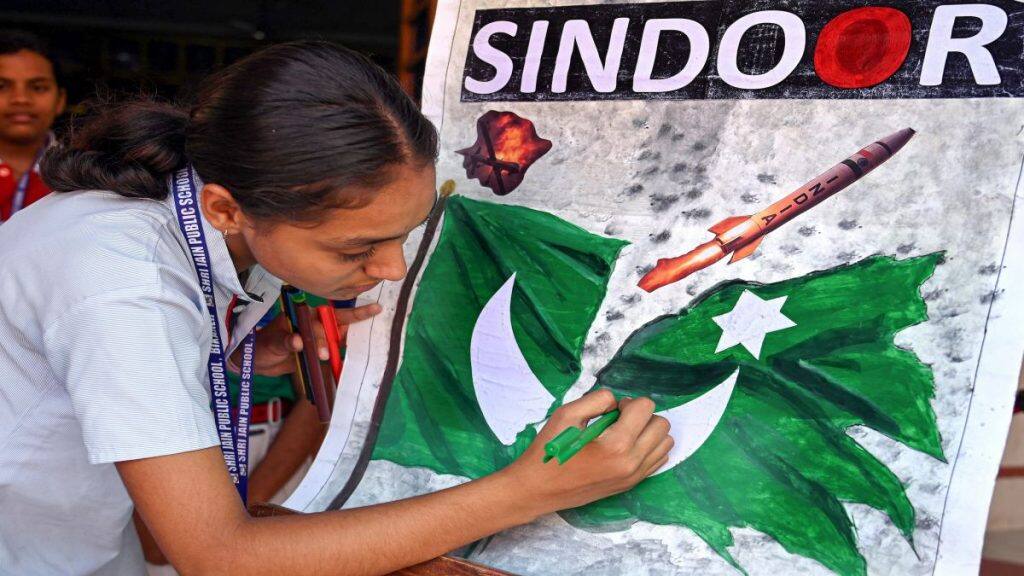
India’s position on Operation Sindoor ceasefire
The filings revealed by ANI also align with India’s stance on the ceasefire called on May 10. New Delhi has maintained that the cessation of hostilities was reached following direct DGMO-level communication between the two militaries.
Then DGMO Lieutenant General Rajiv Ghai reportedly received a hotline message from his Pakistani counterpart, after which a ceasefire understanding was reached. India has also rejected claims of third-party mediation.
This, despite the numerous claims made by US President Donald Trump that he was the one responsible for mediating a truce between the two nuclear-powered nations.
These assertions by Trump and Pakistan have been countered by several high-ranking officials within the Indian government. “The record of what happened at that time was very clear, and the ceasefire was something which was negotiated between the DGMOs of the two countries...” External Affairs Minister S Jaishankar said last year.
Foreign Secretary Vikram Misri also noted that PM Modi had relayed to Trump that a ceasefire between India and Pakistan after a four-day conflict in May was achieved through talks between the two militaries and not US mediation.
“Talks for ceasing military action happened directly between India and Pakistan through existing military channels, and on the insistence of Pakistan. Prime Minister Modi emphasised that India has not accepted mediation in the past and will never do,” Misri said in a statement last June.
A year since Operation Sindoor
Last week, India marked the one-year anniversary of Operation Sindoor. The operation was a military masterclass in which New Delhi decimated Pakistan terror hubs and flexed its military might.
PM Modi also said that the armed forces had given a fitting response to those who dared to attack innocent Indians at Pahalgam. He noted that Operation Sindoor reflected India’s firm response against terrorism and its unwavering commitment to safeguarding national security. Moreover, Operation Sindoor highlighted the professionalism, preparedness, and coordinated strength of the armed forces. He further said that it showcased the growing jointness among the forces and underlined the strength that India’s quest for self-reliance in the defence sector has brought to national security.
With inputs from agencies

Delhi Police asks personnel to wear uniform: What the law says on cops in plainclothes during protests
Military drones & police check-ups: How Sri Lanka is fighting against worst dengue outbreak in a decade
How Facebook job ad lured 2 Karnataka men into Myanmar cyber scam camp
Why is India seeing 95% cloud cover despite a Super El Niño?
What is CJP’s fourth demand to the government as protests in Delhi intensify?