


Did a pager explosion bring down the chopper of Iran’s Ebrahim Raisi?
Amid heightened tensions between Israel and Hezbollah, an Iranian member of parliament has claimed that a pager exploded inside the chopper of former Iranian President Ebrahim Raisi in May, leading it to crash in the woods. The theory reportedly surfaced last week after thousands of pagers belonging to Hezbollah fighters detonated across Lebanon and a picture of Raisi with a device went viral

Amid the heightened tensions between Israel and Hezbollah, an Iranian member of parliament has claimed that a pager exploded inside the chopper of former Iranian President Ebrahim Raisi in May, leading it to crash in the woods.
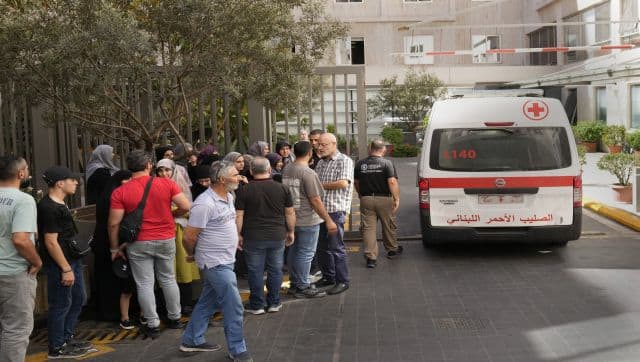
The assertions come a few days after pagers and walkie-talkies used by Hezbollah members exploded in two days of attacks on September 16 and 17.
The attacks, widely believed to have been carried out by Israel, killed 39 people and injured more than 3,000.
However, the Jewish nation has neither confirmed nor denied its involvement.
The pager explosion theory
Speaking to the Iranian media outlet Didban Iran, Ahmad Bakhshayesh Ardestani, member of the National Security Commission of Parliament, said, “One likely scenario regarding the deadly helicopter crash that killed Iran’s President Ebrahim Raisi is the explosion of his pager.”
 More from Explainers
“Raisi used a pager, although the type of the pager he used might be different from the ones Hezbollah forces had. However, one of the likely scenarios regarding the chopper crash is the explosion of his pager,” he said.
He further stated that Tehran was involved in purchasing the pagers held by Hezbollah militants.
“(Iranian forces) certainly played a role in the purchase of Hezbollah’s pagers, and therefore, our own intelligence agencies must also investigate this matter,” he added.
Raisi using a pager theory reportedly surfaced last week after his picture with the outgoing Iraqi Parliament Speaker Mohammad al-Halboosi went viral. The picture showed a pager on the table in the background.
However, it is still unclear if he used the same pager brand as Hezbollah operatives.
The investigation report
An official investigation into the helicopter crash in May that resulted in the death of Iran’s President Ebrahim Raisi and seven other people found it was caused by challenging climatic and atmospheric conditions.
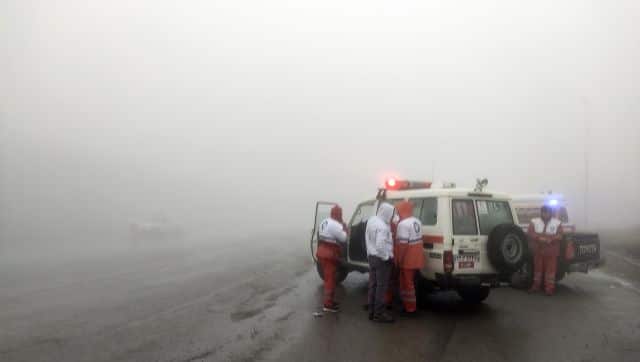
The final report of the Supreme Board of the General Staff of the Armed Forces said the main cause of the chopper crash was the complex climatic conditions, like thick masses of dense fog, of the region in spring, Iranian state TV reported.
The report said that the technical, engineering, electronic, and navigation aspects of the helicopter were thoroughly examined and that the findings adhered to established standards and regulations.
It also ruled out signs of sabotage in parts and systems.
The report attributed the crash to the region’s “complicated climatic and atmospheric conditions during spring,” which led to the formation of dense fog and caused the helicopter to crash into a mountain.
The chopper crash
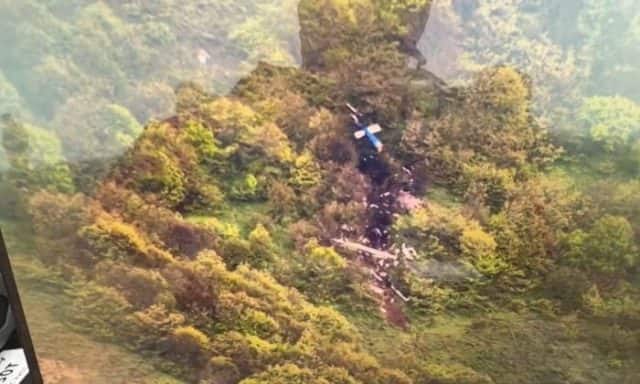
Iranian President Ebrahim Raisi died alongside seven others when their Bell 212 helicopter crashed in a remote mountainous area in East Azerbaijan province on May 19.
The other deceased were identified as Raisi’s Foreign Minister Hossein AmirAbdollahian, the governor of Iran’s East Azerbaijan province, a senior cleric from Tabriz, a Revolutionary Guard official and three crew members.
Footage released by IRNA showed the crash site, across a steep valley in a green mountain range.
Raisi was a hardliner who was seen as a potential successor to Supreme Leader Ayatollah Ali Khamenei.
His government has faced years of mass protests over the ailing economy and women’s rights.
The growing tensions between Israel and Hezbollah
A serious escalation was witnessed last week in the nearly yearlong conflict between Israel and Lebanon-based Hezbollah.
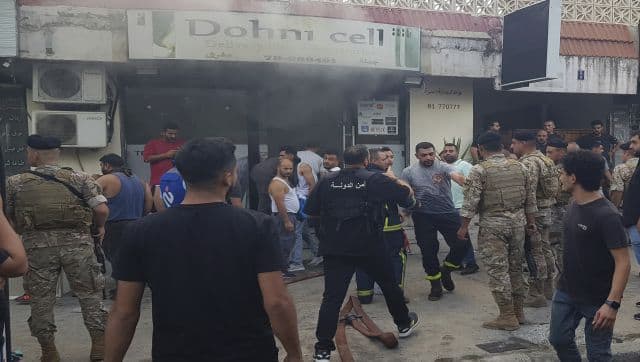
First came two days of exploding pagers and walkie-talkies, an unprecedented assault on the militant group’s communications. The attacks in different parts of Lebanon killed 39 people and wounded nearly 3,000.
While Lebanon blamed Israel for the attacks, the latter did not confirm or deny its responsibility.
It was followed by the assassination of Ibrahim Aqil, a top Hezbollah commander, who died in a Friday airstrike that also killed dozens of fighters and civilians, including women and children.
Hezbollah responded by launching around 150 rockets, missiles and drones targeting both military facilities and civilian neighbourhoods just north and east of Hafia.
In the first warning of its kind, the Israeli military on Monday called on residents of southern Lebanon to immediately evacuate homes and other buildings where Hezbollah stores weapons. It said it was carrying out “extensive strikes” against the militant group.
The escalating strikes and counter-strikes have raised fears of an all-out war, even as Israel still battles Hamas in Gaza and tries to return scores of hostages abducted on October 7.
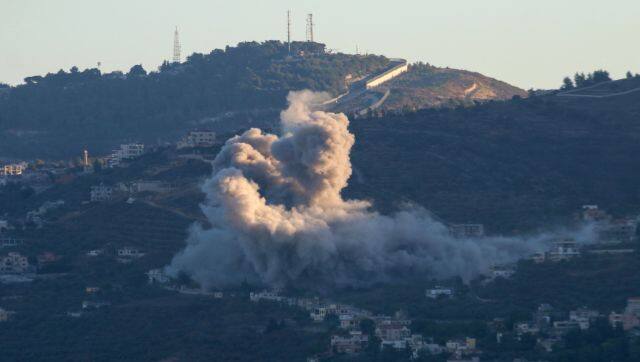
Continuing its solidarity with the Palestinians and Hamas, a fellow Iran-backed militant group, Hezbollah began firing into Israel a day after the October 7 attack.
While Israel said it is committed to returning calm to the border by retaliating with airstrikes.
The fighting has killed hundreds of people in Lebanon and dozens in Israel and displaced tens of thousands on both sides of the border.
With inputs from agencies

Military drones & police check-ups: How Sri Lanka is fighting against worst dengue outbreak in a decade
How Facebook job ad lured 2 Karnataka men into Myanmar cyber scam camp
Why is India seeing 95% cloud cover despite a Super El Niño?
What is CJP’s fourth demand to the government as protests in Delhi intensify?
The new geography of war: Why the Houthis can no longer be ignored