
Advertisement


Sections
Why Mahatma Gandhi was never awarded the Nobel Peace Prize
Despite being nominated five times, Mahatma Gandhi was never honoured with the Nobel Peace Prize for one reason or the other. Although the Norwegian Nobel Committee considered awarding him posthumously in 1948, the idea did not come to fruition. Here’s why

The winner(s) of the keenly-awaited Nobel Peace Prize will be announced today (6 October) in Norway’s capital Oslo. The highlight of the Nobel season, the Peace prize comes in the wake of rising geopolitical tensions. Ukrainian president Volodymyr Zelenskyy and Swedish environmental activist Greta Thunberg are reportedly among this year’s 351 nominees for the Peace Nobel.As the Norwegian Nobel Committee announces the recipient of its annual Nobel Peace Prize, the question that often emerges is why the coveted award was never bestowed upon the greatest advocate for peace in the modern era – Mahatma Gandhi.Let’s try to decode why Gandhi was never honoured with the Peace Nobel.Nominated multiple timesIt’s not that Gandhi was not in the orbit of the Norwegian Nobel Committee for the Nobel Peace Prize. In fact, he was nominated five times – in 1937, 1938, 1939, 1947, and then a few days before he was assassinated in January 1948.However, Gandhi, described as the “strongest symbol of non-violence in the 20th century” by the Nobel Prize website, was never ultimately picked.In its article ‘Mahatma Gandhi, the missing laureate’, the website acknowledges that the Norwegian Nobel Committee’s “horizon” may seem “too narrow” now. “Up to 1960, the Nobel Peace Prize was awarded almost exclusively to Europeans and Americans. In retrospect, the horizon of the Norwegian Nobel Committee may seem too narrow,” the article states.[caption id="attachment_13208732" align="alignnone" width="640"]![nobel peace prize]() A picture of an 18-carat gold Nobel Peace Prize medal. Reuters File Photo[/caption]As The Hindu noted, the first time the Nobel Peace Prize was awarded to a non-American and non-western European was in 1936. In 1960, the first African won the prize, while the first Asian bagged the Peace Prize in 1973.The first missAfter being nominated for the Nobel Peace Prize in 1937 by Ole Colbjørnsen, a Labour member of Norway’s Parliament, Gandhi made it to the Norwegian Nobel Committee’s shortlist of 13 candidates.The eloquent motivation for Gandhi’s nomination was written by women of the Norwegian branch of “Friends of India”.However, the Nobel Committee’s then adviser, Professor Jacob Worm-Müller, wrote a critical piece on Gandhi as a politician. Although he called Bapu a “good, noble and ascetic person”, Worm-Müller said there are “sharp turns in his (Gandhi’s) policies, which can hardly be satisfactorily explained by his followers. (…) He is a freedom fighter and a dictator, an idealist and a nationalist. He is frequently a Christ, but then, suddenly, an ordinary politician.”Citing Gandhi’s critics, the Nobel Committee adviser pointed out that the Indian leader was not always “pacifist”. To justify his point, he referred to the first Non-Cooperation Movement in 1920-1921 when a crowd killed many police personnel and set the police station ablaze in Chauri Chaura of the United Provinces.
A picture of an 18-carat gold Nobel Peace Prize medal. Reuters File Photo[/caption]As The Hindu noted, the first time the Nobel Peace Prize was awarded to a non-American and non-western European was in 1936. In 1960, the first African won the prize, while the first Asian bagged the Peace Prize in 1973.The first missAfter being nominated for the Nobel Peace Prize in 1937 by Ole Colbjørnsen, a Labour member of Norway’s Parliament, Gandhi made it to the Norwegian Nobel Committee’s shortlist of 13 candidates.The eloquent motivation for Gandhi’s nomination was written by women of the Norwegian branch of “Friends of India”.However, the Nobel Committee’s then adviser, Professor Jacob Worm-Müller, wrote a critical piece on Gandhi as a politician. Although he called Bapu a “good, noble and ascetic person”, Worm-Müller said there are “sharp turns in his (Gandhi’s) policies, which can hardly be satisfactorily explained by his followers. (…) He is a freedom fighter and a dictator, an idealist and a nationalist. He is frequently a Christ, but then, suddenly, an ordinary politician.”Citing Gandhi’s critics, the Nobel Committee adviser pointed out that the Indian leader was not always “pacifist”. To justify his point, he referred to the first Non-Cooperation Movement in 1920-1921 when a crowd killed many police personnel and set the police station ablaze in Chauri Chaura of the United Provinces.![Mahatma Gandhi]() The Norwegian Nobel Committee had considered awarding the Peace Prize to Mahatma Gandhi posthumously. File File Photo[/caption]Another of the Committee’s adviser, lawyer Ole Torleif Røed, had sought Swedish prize-awarding institutions' opinions on posthumous awards. However, he did not receive positive replies, with the argument being that it should be done only when the “laureate died after the Committee’s decision had been made.”That year, the Norwegian Nobel Committee declared there was “no suitable living candidate” for the Peace prize.To sum up, as the Nobel Prize website’s article says: “Gandhi was very different from earlier Laureates. He was no real politician or proponent of international law, not primarily a humanitarian relief worker and not an organiser of international peace congresses. He would have belonged to a new breed of Laureates.”With inputs from agencies
The Norwegian Nobel Committee had considered awarding the Peace Prize to Mahatma Gandhi posthumously. File File Photo[/caption]Another of the Committee’s adviser, lawyer Ole Torleif Røed, had sought Swedish prize-awarding institutions' opinions on posthumous awards. However, he did not receive positive replies, with the argument being that it should be done only when the “laureate died after the Committee’s decision had been made.”That year, the Norwegian Nobel Committee declared there was “no suitable living candidate” for the Peace prize.To sum up, as the Nobel Prize website’s article says: “Gandhi was very different from earlier Laureates. He was no real politician or proponent of international law, not primarily a humanitarian relief worker and not an organiser of international peace congresses. He would have belonged to a new breed of Laureates.”With inputs from agencies
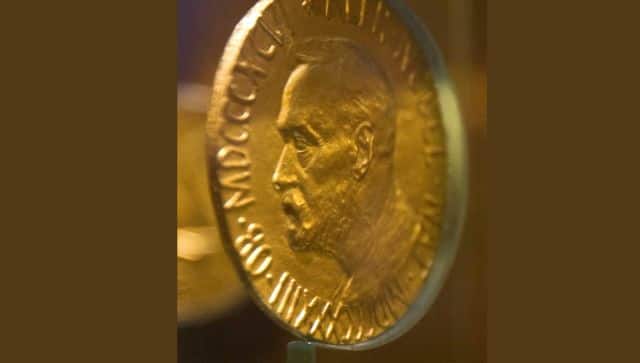 A picture of an 18-carat gold Nobel Peace Prize medal. Reuters File Photo[/caption]As The Hindu noted, the first time the Nobel Peace Prize was awarded to a non-American and non-western European was in 1936. In 1960, the first African won the prize, while the first Asian bagged the Peace Prize in 1973.The first missAfter being nominated for the Nobel Peace Prize in 1937 by Ole Colbjørnsen, a Labour member of Norway’s Parliament, Gandhi made it to the Norwegian Nobel Committee’s shortlist of 13 candidates.The eloquent motivation for Gandhi’s nomination was written by women of the Norwegian branch of “Friends of India”.However, the Nobel Committee’s then adviser, Professor Jacob Worm-Müller, wrote a critical piece on Gandhi as a politician. Although he called Bapu a “good, noble and ascetic person”, Worm-Müller said there are “sharp turns in his (Gandhi’s) policies, which can hardly be satisfactorily explained by his followers. (…) He is a freedom fighter and a dictator, an idealist and a nationalist. He is frequently a Christ, but then, suddenly, an ordinary politician.”Citing Gandhi’s critics, the Nobel Committee adviser pointed out that the Indian leader was not always “pacifist”. To justify his point, he referred to the first Non-Cooperation Movement in 1920-1921 when a crowd killed many police personnel and set the police station ablaze in Chauri Chaura of the United Provinces.
In his report, Professor Worm-Müller also doubted if Gandhi’s ideals were “universal or primarily Indian”.“One might say that it is significant that his well-known struggle in South Africa was on behalf of the Indians only, and not of the blacks whose living conditions were even worse,” he wrote, according to the Nobel Prize website.That year’s Nobel Peace Prize winner was Lord Cecil of Chelwood.While Ole Colbjørnsen nominated Gandhi in 1938 and then again the next year, it would take 10 years for the Indian leader to make it to the committee’s shortlist once more.What happened in 1947?In 1947, Gandhi’s name was among the six shortlisted candidates by the Nobel Committee. He was nominated by BG Kher, Govindh Bhallabh Pant and GV Mavalankar that year. In his supporting argument, Pant described Gandhi as the “greatest living exponent of the moral order and the most effective champion of world peace today”.The then Committee’s adviser, Jens Arup Seip, gave a “rather favourable, yet not explicitly supportive” report on Gandhi due to India’s partition that led to conflict and violence.The diary of Committee chairman Gunnar Jahn has revealed that while two members, Christian conservative Herman Smitt Ingebretsen, and Christian liberal Christian Oftedal, favoured Gandhi, three others – including Labour politician Martin Tranmæl and former foreign minister Birger Braadland – were reluctant to give him the prize.The Nobel for that year went to The Quakers.ALSO READ: Nobel Prize season is here: Why is there no prize for mathematics?Why was he not awarded posthumously?In 1948, Gandhi made it to the Norwegian Nobel Committee’s shortlist for the third time. As the key leader of India’s freedom struggle was assassinated on 30 January 1948, the Committee was in a conundrum as the Nobel Peace Prize was never awarded posthumously before.In his report on Gandhi, Committee adviser Seip wrote that given the “profound mark” he left on a large number of people within and outside India, he “can only be compared to the founders of religions”.At the time, it was possible to award Nobel Prizes posthumously under some circumstances as per the statutes of the Nobel Foundation. But there were many unanswered questions. “Gandhi did not belong to an organisation, he left no property behind and no will; who should receive the Prize money?” the Nobel Prize website’s article mentioned.[caption id="attachment_13208742" align="alignnone" width="640"]
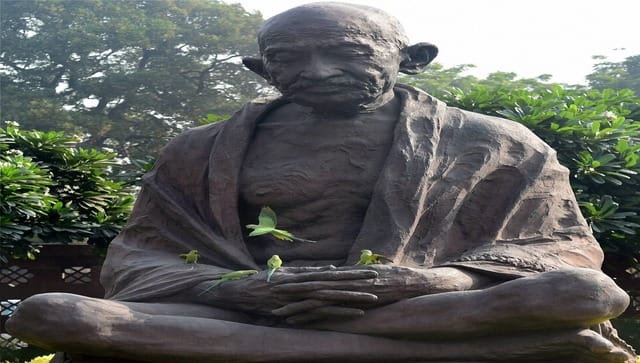 The Norwegian Nobel Committee had considered awarding the Peace Prize to Mahatma Gandhi posthumously. File File Photo[/caption]Another of the Committee’s adviser, lawyer Ole Torleif Røed, had sought Swedish prize-awarding institutions' opinions on posthumous awards. However, he did not receive positive replies, with the argument being that it should be done only when the “laureate died after the Committee’s decision had been made.”That year, the Norwegian Nobel Committee declared there was “no suitable living candidate” for the Peace prize.To sum up, as the Nobel Prize website’s article says: “Gandhi was very different from earlier Laureates. He was no real politician or proponent of international law, not primarily a humanitarian relief worker and not an organiser of international peace congresses. He would have belonged to a new breed of Laureates.”With inputs from agencies
First Published:Oct 06, 2023, 08:30:30 IST
Advertisement
Advertisement

Delhi Police asks personnel to wear uniform: What the law says on cops in plainclothes during protests
The Delhi Police has instructed all its personnel to wear uniforms when they report for duty at Jantar Mantar for crowd control. This comes after outrage grew over videos of men in civilian clothes or without name tags hitting protesters in the Capital. Is it legal for the police to ditch uniforms during protests?
4 min read
Military drones & police check-ups: How Sri Lanka is fighting against worst dengue outbreak in a decade
Sri Lanka is fighting its most severe dengue outbreak in nearly a decade, with infections rising sharply across the nation. Military drones have been deployed to tackle the outbreak, which has claimed 56 lives. Health officials said the outbreak is being driven primarily by the DENV-2 variant of the virus
3 min read
How Facebook job ad lured 2 Karnataka men into Myanmar cyber scam camp
The Karnataka Cyber Command has rescued two youths from a scam compound in Myanmar operated by Chinese fraudsters. The duo from Karnataka were lured on the pretext of data-entry jobs. They were asked to work for 16 hours a day and were expected to sleep for six hours daily
4 min read
Why is India seeing 95% cloud cover despite a Super El Niño?
India is witnessing nearly 95 per cent cloud cover despite a Super El Niño, a climate event usually linked to weaker monsoons. Regional weather systems, cyclonic circulations, the monsoon trough and moisture from two seas are temporarily overpowering one of the world's strongest climate phenomena
5 min read
What is CJP’s fourth demand to the government as protests in Delhi intensify?
The protest by the Cockroach Janta Party at Delhi’s Jantar Mantar refuses to die down. The group have made a fourth demand to the Centre, asking that no FIRs are filed against the agitators and that no legal action be taken. The government has expressed willingness to speak to the protesters, but refused to accede on the resignation of Education Minister Dharmandra Pradhan
5 min read
Advertisement
Advertisement